



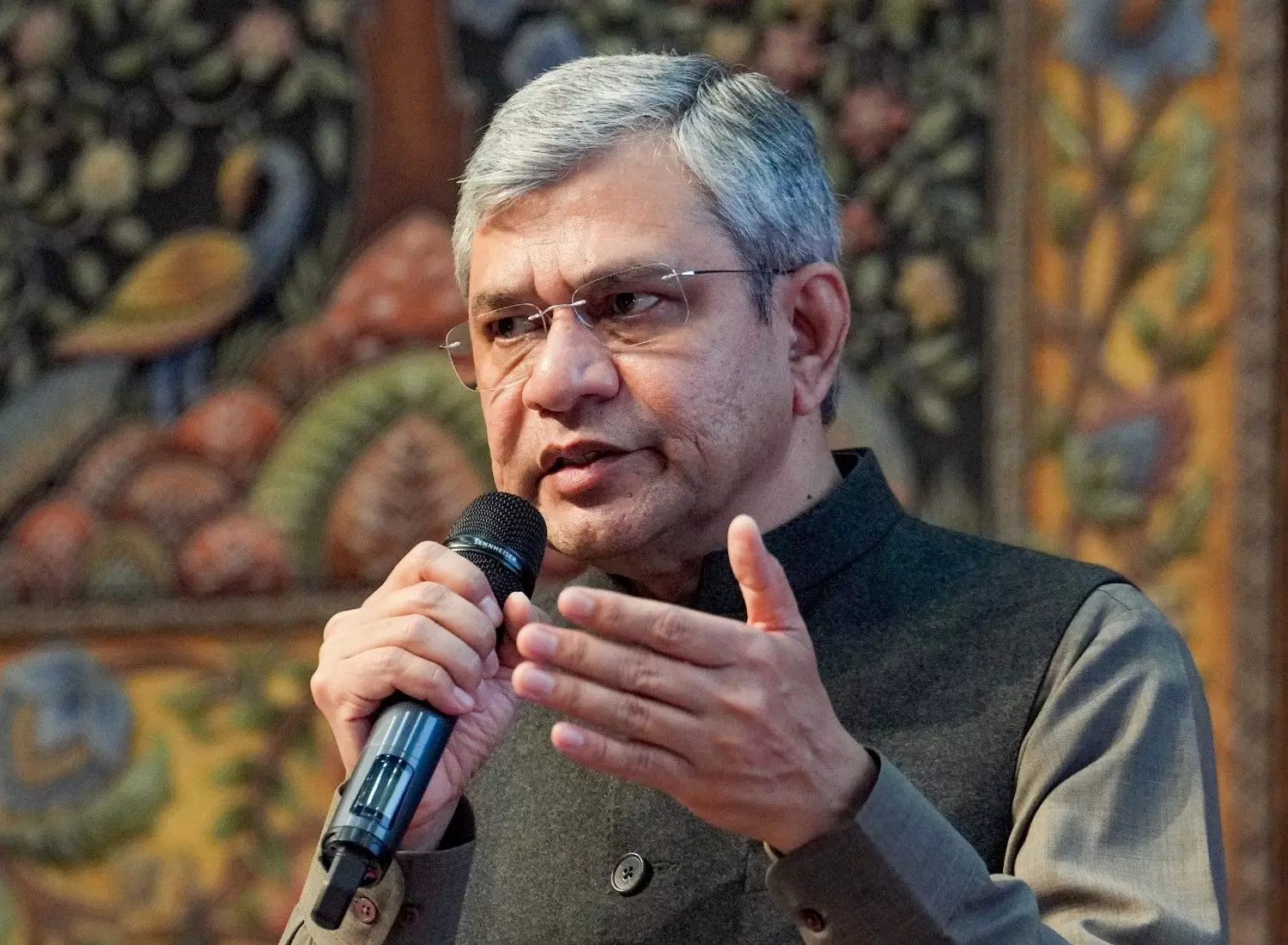
Union Information and Broadcasting Minister Ashwini Vaishnaw briefs the media on Union cabinet decisions in New Delhi on February 14, 2026. Photo: PTI
Cabinet approves Rs 1 lakh cr Urban Challenge Fund for urban uplift
The government said the initiative will lead to a total investment of Rs 4 lakh crore in the urban sector in the next five years

In a significant enhancement to urban infrastructure, the Union Cabinet has sanctioned the initiation of the Urban Challenge Fund (UCF) with total central support of Rs 1 lakh crore, as stated by Union Information and Broadcasting Minister Ashwini Vaishnaw on Saturday (February 14).
Under the programme, central funding will account for 25 per cent of a project's expenses, on the condition that a minimum of 50 per cent of the financing is sourced from the market.
Also read: How artists are collaborating with local communities to bring about change in urban India
The government announced officially that the initiative will result in investment worth Rs 4 lakh crore in the urban sector in the next five years.
The transition signifies a fundamental change in India's strategy for urban development, shifting from grant-based funding to a market-oriented, reform-focused, and results-driven infrastructure creation, the government statement said.
Urban Challenge Fund
- Big push for urban infra: The Union Cabinet has cleared the Urban Challenge Fund with Rs 1 lakh crore central support, aiming to unlock Rs 4 lakh crore of investment in cities over the next five years.
- New funding model: The Centre will fund 25 per cent of each project, but at least 50 per cent must come from market sources like municipal bonds, bank loans, and PPPs—marking a shift from grants to market-driven, results-focused development.
- What it’s trying to build: The programme targets resilient, productive, inclusive, and climate-responsive cities, using private participation and citizen-centric reforms to deliver higher-quality infrastructure.
- Who and how projects get picked: Projects will be chosen through a transparent, competitive challenge process, focusing on high-impact, reform-oriented proposals. Big cities, state/UT capitals, major industrial cities, and even smaller or hill/Northeast ULBs are covered (with special support).
- Timeline and extra support: The fund runs from FY 2025-26 to FY 2030-31 (extendable to 2033-34), and a Rs 5,000 crore Credit Repayment Guarantee Scheme will help smaller and first-time cities access market financing.
The UCF will leverage market financing, private sector participation and citizen-centric reforms to deliver high-quality urban infrastructure, it added.
Fund eyes resilient cities
The fund seeks to develop cities that are resilient, productive, inclusive, and responsive to climate change, thereby establishing them as essential catalysts for the country’s next stage of economic growth, it said.
The UCF will be operational from FY 2025-26 to FY 2030-31, with an extendable implementation period up to FY 2033-34. It gives effect to the government's vision announced in Budget 2025-26 to implement proposals relating to cities as growth hubs, creative redevelopment of cities, and water and sanitation.
Also read: How India’s water crisis is not just due to climate change, but also governance failure
According to the government, a minimum of 50 per cent of project financing must be mobilised from market sources, including municipal bonds, bank loans and Public-Private Partnerships (PPPs). The remaining share can be contributed by states, Union Territories, Urban Local Bodies (ULBs) or other sources.
Projects will be selected through a transparent and competitive challenge mode, ensuring support to high-impact and reform-oriented proposals, it said.
To cover cities with 10 lakh or more people
The fund will cover cities with a population of 10 lakh or more (2025 estimates); all state and Union Territory capitals not included in that category, and major industrial cities with a population of 1 lakh or more, the statement said.
Additionally, all ULBs in hilly and north-eastern states, as well as smaller ULBs with a population below 1 lakh, will be eligible for support under the Credit Repayment Guarantee Scheme. In principle, all cities will be covered under the UCF, it said.
"Projects will be evaluated on their ability to deliver transformative outcomes — economic, social and climate, including revenue mobilisation, private investment, job creation, improved safety, inclusiveness, service equity and cleanliness," it said.
Also read: Madras HC halts luxury housing project near Pallikaranai Ramsar wetland
The UCF is expected to catalyse large-scale private investment, strengthen urban governance, and accelerate the creation of future-ready cities aligned with national development priorities, it said.
To facilitate first-time access to market finance for cities/ULBs in northeastern and hill states, and for smaller ULBs (with population less than 1 lakh) in other states/UTs, a Credit Repayment Guarantee Scheme of Rs 5,000 crore has been approved.
(With agency inputs)