



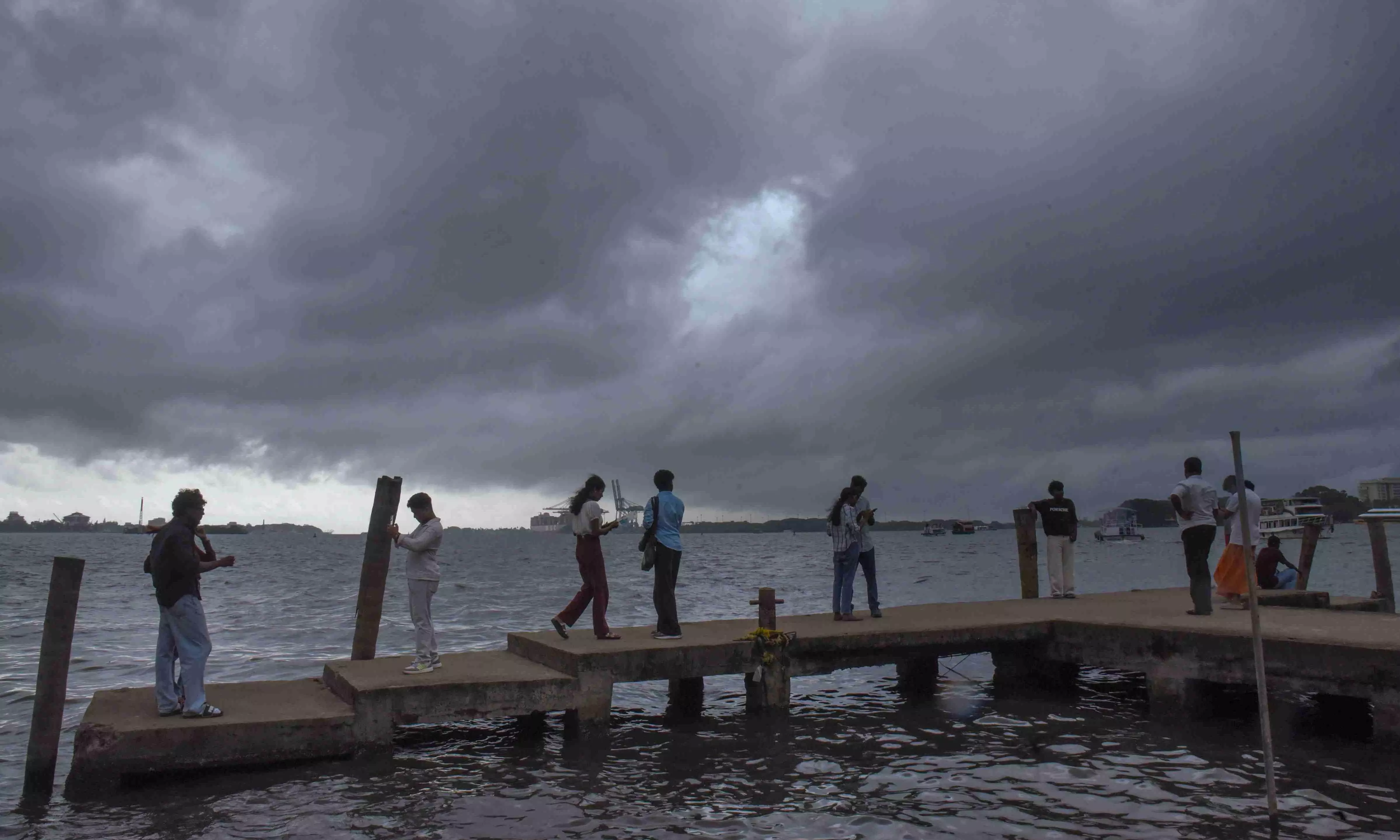
Amid El Nino concerns, North Atlantic ‘cold blob’ complicates India’s monsoon outlook
A new study links the cooling patch south of Greenland to shifts in jet streams, altering rainfall patterns and raising drought risks in parts of India

The changing pattern of the Indian monsoon over the past two decades may owe as much to distant oceans as to local factors. A new study suggests that a vast patch of cold water in the North Atlantic, thousands of kilometres away, could be playing a key role.
More than a billion people across South Asia depend on the monsoon for economic stability, making any further shifts in the weather system potentially disruptive. Yet scientists have struggled to predict how the monsoon will evolve because many widely used climate models have failed to capture changes that have already taken place.
The mystery cold patch
The North Atlantic “cold blob” is a massive patch of the ocean south of Greenland and Iceland where the water is surprisingly cooling down despite the wider trend of rising ocean temperatures. In recent years, it has attracted considerable interest among climate scientists because of its links to ocean currents and the global climate system.
Also read | World braces for 'Godzilla El Nino'. Should India be worried?
According to the study, this cold marine region south of Greenland, known as the “cold blob”, is influencing atmospheric circulation and jet streams, thereby altering the direction of the Indian monsoon and the distribution of rainfall. As a result, northwestern India has been experiencing a tendency toward increased rainfall, while parts of the Gangetic plains and some other regions could face reduced precipitation and a higher risk of drought.
Atlantic link to monsoon
The study, published in the journal AGU Advances, notes that the Indian monsoon has undergone notable changes over the past 25 years. Several parts of northwestern India have been receiving above-normal rainfall, whereas some traditionally rain-rich regions have shown signs of declining precipitation. Researchers say many existing climate models do not adequately account for changes in North Atlantic temperatures and their far-reaching effects.
The researchers found that when the effects of the cold blob were incorporated into climate models, the simulations of the Indian monsoon aligned much more closely with actual observations. This suggests that changes occurring in the Atlantic Ocean can have a significant influence on weather patterns over the Indian subcontinent.
The study finds that the most important impact of the cold blob is on the jet stream. Jet streams are fast-flowing air currents in the upper atmosphere that play a crucial role in determining the direction and intensity of weather systems. The researchers say that the cold region in the Atlantic alters the behaviour of these jet streams. As a result, moisture from the Arabian Sea is drawn toward northwestern India, increasing the likelihood of rainfall in Rajasthan, Punjab, Haryana and neighbouring regions. At the same time, weather systems in some areas may weaken, leading to reduced rainfall.
Mechanism behind monsoon changes
The scientists describe this process as the “barotropic governor mechanism.” In simple terms, it is a process in which large-scale atmospheric systems begin to control smaller-scale weather activities. When large-scale winds in the upper atmosphere become dominant, they can suppress the development of smaller storms and local weather systems. This directly affects the distribution of rainfall and can alter precipitation patterns across different regions. The researchers believe that this mechanism may play a key role in explaining the changes observed in the Indian monsoon.
Also read | IMD downgrades monsoon forecast to 90 pc as heatwave fears rise
As per the scientists, the significance of the study extends beyond the Indian monsoon. It could also help explain changing or intensifying storm activity in other mid-latitude regions around the world. The research highlights how oceanic or climatic changes in one part of the Earth can influence weather patterns thousands of kilometres away.
The researchers believe that if future climate models can more accurately account for the connection between the Atlantic Ocean and the Indian monsoon, forecasts of monsoons, droughts and floods could become far more reliable. Such improvements would have important implications for agriculture, water management, disaster preparedness and the protection of the livelihoods of millions of people.