AI With Sanket
'Phuket-Delhi episode must become a turning point for aviation safety'
Aviation experts call for stricter pilot drug testing and greater transparency after an Air India pilot reportedly tested positive following a mid-air incident

A routine flight last week turned into a safety scare, and now it's raising uncomfortable questions about who's really allowed in the cockpit.
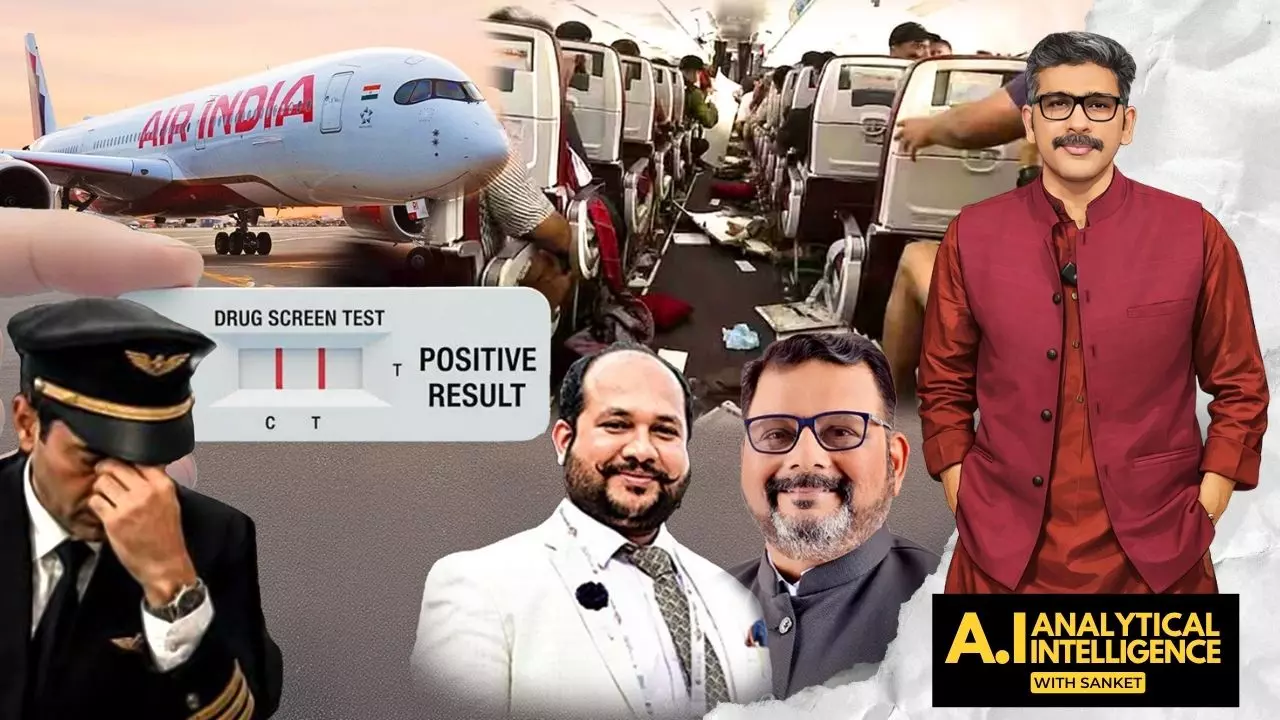
After an Air India flight from Phuket to Delhi suffered a mid-air scare, the pilot at the controls tested positive for marijuana, reigniting a fierce debate over aviation safety, crew screening, and regulatory blind spots. The Federal sat down with aviation experts Sanjay Lazar and Sumeet Suseelan, who argued that this should be a wake-up call.
Need of the hour
The requirement, the experts said, is stricter enforcement, greater transparency, and a hard look at how airlines actually monitor crew fitness. The conversation unfolded against the backdrop of an ongoing investigation into the August 4 incident, when an Air India Airbus A320neo suddenly lost altitude mid-flight, leaving several passengers and crew members injured.
The controversy deepened when reports confirmed that the captain had failed a confirmatory drug test. In response, Air India has rolled out expanded substance screening for its entire pilot workforce — a move that goes well beyond what regulators currently require.
The question remains: how does a pilot allegedly flying under the influence of a prohibited substance end up in command of a commercial aircraft full of passengers?
Unthinkable conduct
Lazar described the episode as "bizarre" and said it was difficult to comprehend how a trained aviation professional could operate an aircraft while under the influence of a psychoactive substance.
Also Read: Pilot of Air India’s Phuket-Delhi flight tests positive for psychoactive substance
Regardless of the eventual findings on aircraft handling or recovery of the flight, the issue of professional conduct remained central, he said, adding that such behaviour would attract severe legal consequences in several jurisdictions.
Lazar further explained that India's existing framework relies largely on recruitment-stage testing and periodic random checks. He noted that regulations require a percentage of crew members to be screened annually, adding that the incident had exposed gaps in the current system.
Testing debate
Air India has decided to move towards broader and more frequent testing of pilots, Lazar said. He argued that the current approach needed strengthening to prevent similar incidents from recurring.
Also Read: Air India flight turbulence: Injured passengers discharged, 4 crew members still in hospital
He also explained the technical process involved in psychoactive substance testing, noting that initial screening and confirmatory laboratory tests are separate procedures and can take varying amounts of time.
According to him, alcohol screening is already widely enforced before and after flights, but psychoactive substance testing has not yet reached the same level of operational coverage. "The latest incident demonstrates the need for quicker and more comprehensive checks," he noted.
Pilot responsibility
The discussion also focused on reports that the pilot had cited sleep-related issues. "Aviation regulations are clear that pilots experiencing medical or psychological difficulties are expected to report them and seek appropriate treatment," Lazar said.
Also Read: As fuel prices take off, Air India to ground 22pc of domestic flights
He maintained that a pilot who is not medically fit should remove himself or herself from flight duties rather than continue operating scheduled services.
Suseelan argued that the industry needs to acknowledge changing patterns of substance use and update safety mechanisms accordingly. He said modern aviation faces challenges that differ from those of previous decades and that screening methods must evolve to keep pace.
No special treatment
Suseelan questioned whether pilots were being held to the same standards applied to other aviation personnel.
Also Read: Amid West Asia conflict, Air India to run 78 extra international flights
Referring to recent disciplinary actions involving cabin crew, he argued that enforcement should be consistent across all categories of employees. "Indications that the government may review existing testing policies are welcome," he said. "Strong action would send a message to future pilots about the consequences of violating safety norms."
At the same time, he stressed that the investigation should follow due process and establish the full sequence of events before final conclusions are drawn.
Rules under scrutiny
While Suseelan believes that existing policies are outdated, Lazar feels the relevant psychoactive substance regulations were introduced only recently and were based on international civil aviation standards. The Directorate General of Civil Aviation (DGCA) framework includes rehabilitation and disciplinary provisions for pilots found in violation, Lazar said.
Also Read: Air India to cut international flights amid Rs 22,000 crore losses, rising jet fuel costs
According to him, Air India has in some cases adopted stricter internal standards than those required under national regulations.
He also highlighted the challenge of implementing universal pre-flight testing, saying the logistics involved would be significant and would require rapid testing systems capable of delivering results before departure.
Transparency concerns
Lazar reserved some of his strongest criticism for what he described as a lack of transparency surrounding the incident. "Authorities and airline officials appear to have obtained key information shortly after the event, but those details emerged gradually over several days," he noted.
Also Read: Air India Colombo–Chennai flight suffers bird hit, grounded
According to him, regulators and airlines must communicate more clearly during major safety incidents if they want to preserve public confidence in the aviation sector.
He said transparency was essential as India continues to grow into one of the world's largest aviation markets and that passenger trust can only be maintained through timely and accurate communication.
Passenger rights
Asked what ordinary passengers can do if they suspect something is wrong, Lazar said travellers have the right to raise concerns and refuse to fly if they feel uncomfortable. He encouraged passengers to report safety concerns through airline channels or directly to regulators if necessary.
He also argued that injured passengers should be informed about their rights and the applicable compensation processes once investigations determine the nature of an incident.
The aviation expert maintained that restoring confidence among travellers would require visible action from both airlines and regulators.
Technical questions remain
While much of the public discussion has centred on the pilot's alleged drug use, Suseelan cautioned against overlooking the technical aspects of the case. "Reports indicate multiple aircraft warnings and alarms during the flight," he recalled, adding that those issues also deserve detailed investigation.
Also Read: Air India Ahmedabad crash: Karti Chidambaram flags new inputs
According to him, the inquiry should separately examine aircraft performance, maintenance procedures and operational decision-making.
He pointed out that similar warning-related concerns had surfaced elsewhere in the aviation industry and said investigators would need to establish whether technical factors contributed to the altitude loss.
Pilot shortages
Suseelan also raised concerns about staffing pressures across the aviation sector. "Pilot shortages can sometimes create operational challenges, leading airlines to push for crew availability even when pilots report medical concerns," he said.
In his view, airlines should ensure that pilots and cabin crew who report illness receive immediate relief from duty without pressure to continue flying.
He argued that safety must remain the overriding consideration, particularly at a time when public confidence has been shaken by multiple aviation-related incidents.
As the official investigation continues, both panellists agreed on one point: the Phuket-Delhi episode must become a turning point for aviation safety. Whether the focus ultimately falls on pilot conduct, testing protocols, airline oversight or technical systems, they said the industry cannot afford to treat the incident as business as usual.