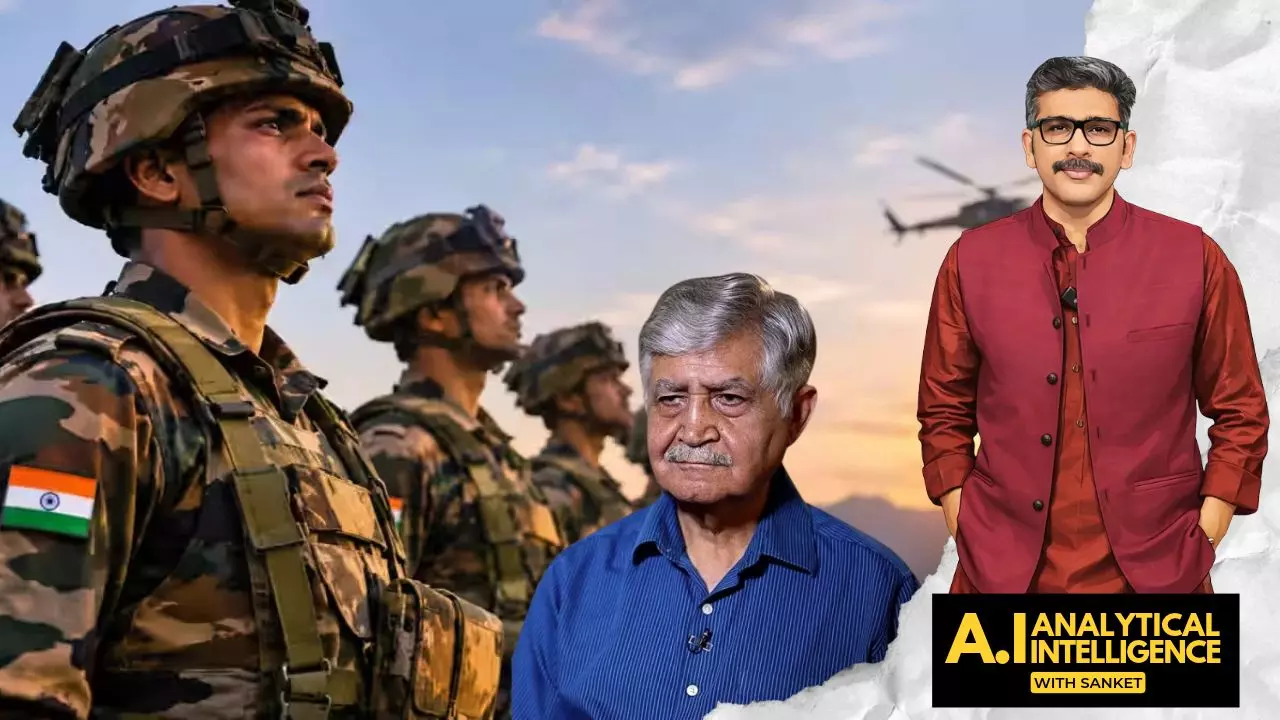
General Malik says the armed forces must continue giving personnel the importance they deserve and review the system periodically, though not too frequently.
‘Forces need young, tech-savvy soldiers’: Gen VP Malik backs Agnipath revision
General Malik says longer service will help build regimental spirit, retain experienced soldiers, and meet the armed forces' changing technological requirements

The Agnipath scheme has undergone a significant revision, with recruits now being offered an additional two years of service after their initial four-year tenure.
In this episode of AI With Sanket, The Federal spoke to former army chief General VP Malik about the changes, the concerns surrounding the scheme, and the evolving requirements of the armed forces.
Edited excerpts:
Four years after the Agnipath scheme was introduced, how do you assess its implementation? Has the scheme worked?
I welcome this revision. When the scheme was first introduced, it raised doubts and apprehensions both within the establishment and outside, particularly among veterans and retired personnel. Many people were unsure why this change had been brought in and whether it would serve the primary purpose of the armed forces, which is to produce effective fighting soldiers.
Four years later, the armed forces have gained considerable experience, not only with the Agniveers who have served during this period but also with the changing nature of warfare and battlefield requirements.
Today’s battlefield is completely different from what it was during the Kargil war, when I was the Army chief. While human resource capabilities and requirements may remain largely the same, technological requirements have changed significantly.
Also Read: After 4 years of defending it, Modi govt fixes Agnipath flaws; now it must improve it
Artificial intelligence is now part of military systems, while networking, drones and missiles have transformed warfare. A new form of warfare has emerged, combining advanced technology with information warfare.
Overall, the Army and the other services need young, technologically savvy, mature and dedicated personnel. At the same time, we must ensure that the regimental and service requirements of the armed forces are fully met. Therefore, this revision is a positive development.
Was a revision necessary to make Agniveer service six years instead of four? Why was this not done when the scheme was introduced in the first place?
Many people within the services, including veterans, felt that four years was not enough to develop the dedication, regimental spirit and value system expected of soldiers.
Training a person itself takes three to four years. By the time that process is completed, the individual would have to leave the service. As a result, the armed forces were not making the best use of personnel during their four-year tenure.
Also Read: Centre extends Agniveer service tenure from 4 to 6 years
Several people had suggested that the service period should be extended to seven years instead of four. I believe financial considerations, particularly the government's reluctance to take on pension and other long-term financial commitments, may have influenced the decision to introduce the Agnipath scheme in its original form.
The government put pressure on the armed forces before the scheme was adopted. From the beginning, the scheme was experimental in nature, and everyone was observing its advantages and disadvantages.
The Chief of Defence Staff said Agniveers would no longer need to depend on central and state govt job provisions, including opportunities in paramilitary forces, because the extension would be treated as a second tour of duty. Does this suggest that a concern identified in 2022 has now been revisited, although not entirely addressed?
This concern has remained relevant from 2022 to 2026. Many people, particularly in rural areas, are increasingly interested in joining the paramilitary forces because they can serve until the age of 60 and receive a pension at the end of their service.
This is not a favourable development for the armed forces, and I believe that is probably what the Chief of Defence Staff was referring to.
Also Watch: Watch | 4 key changes to Agnipath scheme that Army is recommending
Under the revised arrangement, Agniveers who are retained after six years will become eligible for pension benefits and other facilities available to armed forces personnel.
There is a political argument that the rules have been changed because elections in Punjab and Uttar Pradesh are approaching, given that these regions account for significant Army recruitment. Without getting into the political argument, do you think extending the tenure to six years is an attempt to address the anxiety created by the original four-year service period, particularly in rural areas?
The recruitment situation in North India certainly needs attention. The armed forces were not receiving adequate numbers of recruits. Even among those who joined, the paramilitary forces have become the preferred choice in recent years.
Veterans like me believe that the armed forces offer better service in terms of training, ethos and the qualities that personnel develop during their careers. I feel this latest revision may make the armed forces more attractive to prospective recruits.
Also Read: Agnipath needs urgent correction to protect India and her armed forces
Should the Agnipath scheme undergo further revisions from time to time to keep pace with changing realities? Is there any harm in introducing changes based on ground-level feedback and evolving circumstances?
It is not only technology that is evolving; human resource requirements are also changing alongside it. Therefore, periodic reviews and revisions are necessary. However, a system that is working well should not be dismantled or replaced with something whose effectiveness is still unknown.
The armed forces must be careful while introducing changes. Regardless of the technological environment in which they operate, human resources will always remain crucial.
We must continue to give personnel the importance they deserve and review the system periodically, though not too frequently.
Such reviews are necessary to ensure that the right kind of soldiers continue to join the armed forces.