



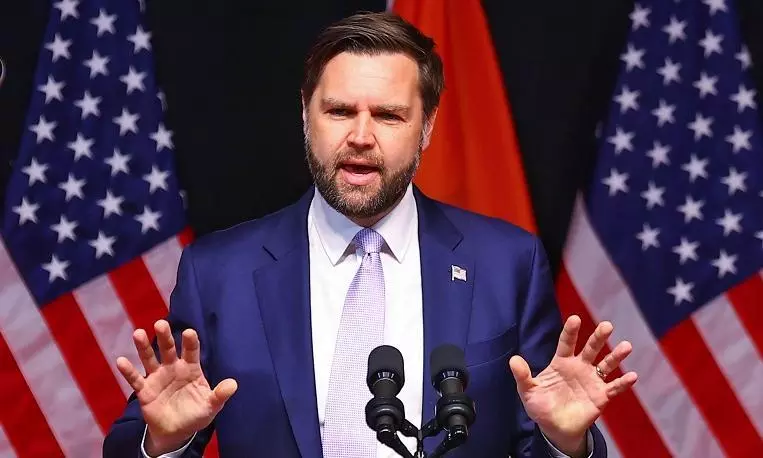
US-Iran peace talks: JD Vance seen as acceptable face by Tehran, says report
Iran views JD Vance as a more acceptable US negotiator, valuing his anti-war stance and preference for diplomacy over escalation in ongoing peace talks

US Vice President JD Vance landed in Islamabad on Saturday (April 11) for the high-stakes US-Iran peace talks, as the global market is still grappling with volatile energy supply and prices, as the fragile ceasefire teeters with Israel’s deadly strikes on Lebanon.
Iran’s quiet shift on Vance's leadership
Iran, which initially rubbished reports that its delegation for the ceasefire talks had already landed in Islamabad, demanding that there would be no talks unless Israeli attacks on Lebanon stop, had actually quietly sought Vance to lead the US delegation, reported Reuters, quoting sources.
Also Read: US-Iran talks in Islamabad stall as Tehran sets Lebanon ceasefire condition
The report further stated that a section of the Iranian leadership was keen on Vance leading the US delegation as they considered him more acceptable for the peace talks. Vance is seen as one of the prominent anti-war faces in the Trump administration, which has led to him becoming a more acceptable figure to Tehran.
Concerns over other US delegation members
However, the Iranian side does not have the same opinion about Vance’s two delegation co-members- special envoy Steve Witkoff and US President Donald Trump's son-in-law, Jared Kushner- as they view the duo as being responsible for the collapse of the earlier negotiations, believing that they favoured military escalation over diplomatic engagement.
Vance is increasingly being viewed as less aligned with military-first strategies and more inclined toward bringing conflicts to a close, a perception that has shaped how Iranian interlocutors approach the talks. According to media reports, officials familiar with the discussions believe his earlier reservations about escalation signal a negotiator more likely to push toward an outcome rather than prolong deadlock.
Vance’s distinct position in Trump administration
At the same time, Vance has carved out an unusual position within his own administration. Despite holding the second-highest office, he has, at times, openly questioned elements of its foreign policy approach, a stance noted in reporting by The New York Times.
The negotiations are unfolding against the backdrop of a tenuous two-week ceasefire, offering a narrow pause in a region that has seen sustained violence in recent months.