



US backs Pak’s ‘right to defend itself’ as Kabul-Islamabad tensions boil over
US President Trump struck a cautious but supportive tone towards Pakistan as he leaves the door open to intervention; UN secretary-general Guterres called for an immediate halt to hostilities

The United States has thrown its weight behind Pakistan’s “right to defend itself” after Islamabad declared it was in “open war” with Taliban-led Afghanistan, marking one of the gravest escalations between the nuclear-armed state and its western neighbour in years.
Fighting intensified after Pakistan carried out airstrikes in multiple Afghan cities, including Kabul and Kandahar, targeting what it described as militant hideouts. The strikes triggered retaliatory attacks along the 2,600-km border, with both sides reporting heavy casualties.
Pakistan’s Defence Minister, Khawaja Muhammad Asif, described the situation as an “open war”, while Prime Minister Shehbaz Sharif said the armed forces were fully capable of crushing any aggression.
“The entire nation stands shoulder to shoulder with the Pakistan armed forces,” he said.
Afghanistan’s Taliban government, which returned to power in 2021 after the US withdrawal, signalled it was willing to negotiate even as hostilities continued. Taliban spokesperson Zabihullah Mujahid said Kabul preferred dialogue, but accused Pakistan of escalating tensions.
Trump’s calibrated response
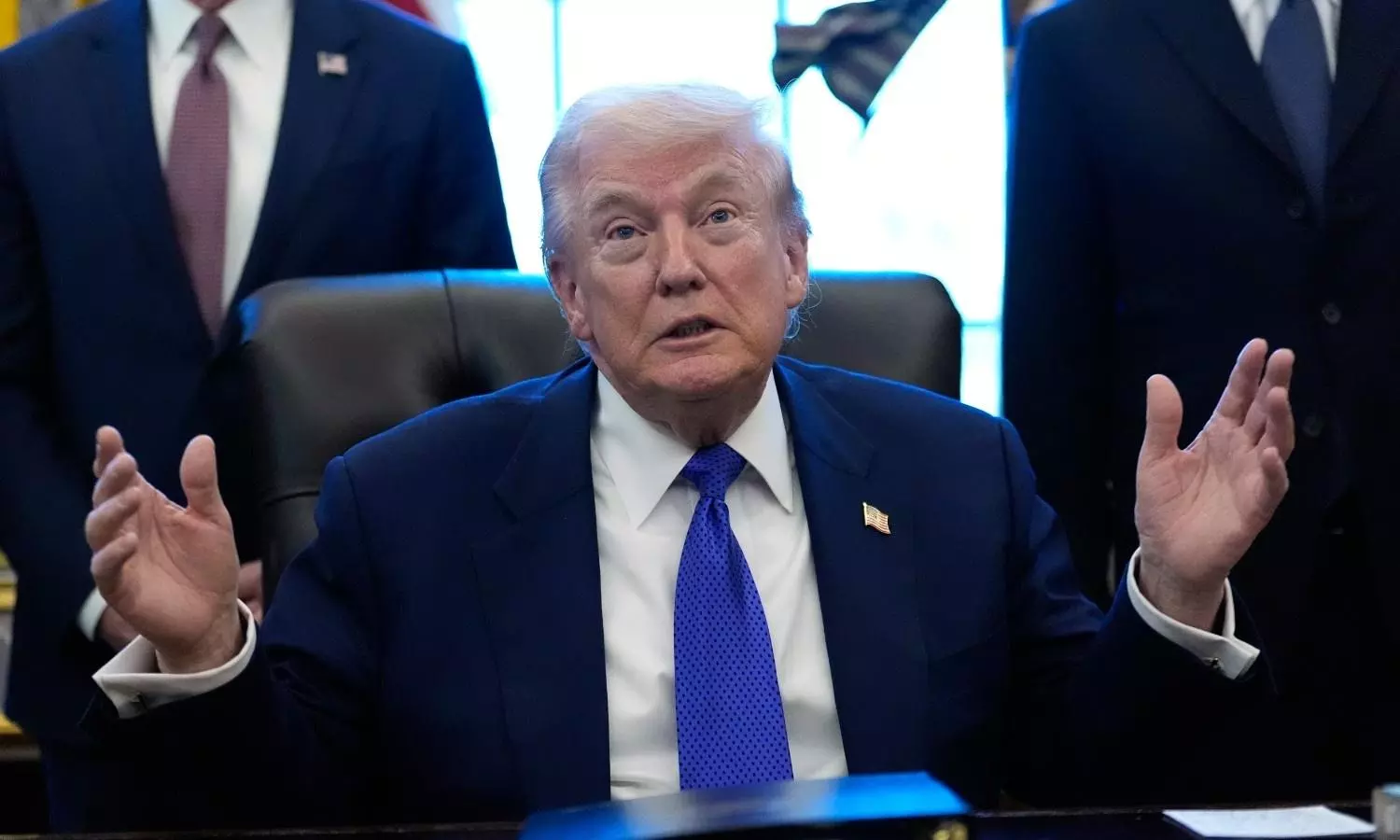
US President Donald Trump, responding to questions about whether Washington would intervene, struck a cautious yet supportive tone towards Islamabad.
“I would (intervene), but I get along with Pakistan very, very well. You have a great Prime Minister, you have a great General there… I think Pakistan is doing terrifically well,” Trump told reporters outside the White House.
Also Read: What triggered the Pakistan-Afghanistan conflict and its geopolitical impact?
While he did not commit to direct involvement, his remarks were widely seen as a diplomatic tilt towards Pakistan, a major non-NATO ally of the United States. Trump openly praised Pakistan’s civilian and military leadership, including Field Marshal Asim Munir, underscoring his administration’s warmer ties with Islamabad compared to previous years.
'US closely monitoring situation'
The US State Department said Washington supports Pakistan’s “right to defend itself against attacks from the Taliban”, which it described as a Specially Designated Global Terrorist group.
“The Taliban have consistently failed to uphold their counterterrorism commitments, allowing violence to destabilise the region while terrorist groups use Afghanistan as a launching pad for their heinous attacks,” a spokesperson said.
Also Read: Why are Pakistan and Afghanistan edging closer to open confrontation?
Under Secretary of State Allison M Hooker said she had spoken with Pakistan’s Foreign Secretary Amna Baloch to express condolences over lives lost in the fighting and reiterated US support for Pakistan’s security concerns.
At the same time, Washington said it was “saddened by the loss of life” and was closely monitoring the situation.
Global concern, regional risk
The flare-up has drawn international attention, with Britain calling for de-escalation, China urging a ceasefire, and Iran offering to mediate. In New York, UN Secretary-General António Guterres expressed deep concern over civilian casualties and called for an immediate halt to hostilities.
The violence stems from long-running tensions over Pakistan’s claim that Afghanistan shelters Tehrik-i-Taliban Pakistan (TTP) militants responsible for attacks inside Pakistani territory — an allegation Kabul denies.
Despite Pakistan’s superior conventional military power, analysts note that the Taliban are battle-hardened from decades of insurgency, raising fears of a protracted conflict if diplomacy fails.
Also Read: Why Pakistan-Afghanistan tension has escalated into ‘open war’
The US Embassy in Pakistan has issued security advisories warning American citizens to exercise caution, particularly near military installations and crowded areas.
As cross-border strikes and retaliations continue, the risk of further escalation looms large, testing fragile regional stability and Washington’s evolving relationship with both sides.