







ICJ genocide verdict rekindles Rohingya hopes; India, Bangladesh back repatriation
UN court’s genocide ruling against Myanmar raises hopes among Rohingya refugees, while India and Bangladesh call for safe, sustainable repatriation

A landmark ruling by the International Court of Justice (ICJ) has breathed new hope into the plight of Rohingyas, with the UN top court declaring that Myanmar committed genocide against the minority community during the military’s 2017 operations in Rakhine state.
India, Bangladesh welcome judgment
A day after the verdict, the MEA said it had “taken note” of the ruling and reiterated its longstanding position in support of the Rohingya’s return to Myanmar.
Responding to questions at a media briefing, Ministry of External Affairs spokesperson Randhir Jaiswal said India had consistently advocated the “safe, speedy and sustainable return” of displaced Rohingyas from Rakhine state.
Also read: A genocide verdict, 9 years on: what ICJ’s Rohingya ruling means for India
He pointed to India’s humanitarian assistance through Operation Insaniyat, under which relief supplies were sent to Rohingya refugee camps in Bangladesh in five tranches, as well as New Delhi’s support for the Rakhine State Development Programme in Myanmar.
Bangladesh, which hosts more than a million Rohingya refugees, also welcomed the judgment, describing it as an important step toward justice and a possible resolution of one of the world’s largest and longest-running refugee crises.
Refugees celebrate a ‘small victory’
The verdict resonated strongly in the sprawling refugee settlements of Cox’s Bazar, where hundreds of Rohingyas gathered around large screens to watch reports from The Hague.
For many refugees, the ruling represented a rare moment of recognition after years of statelessness, displacement and uncertainty.
Mohammad Rofik, a Rohingya community leader, called the judgment “a victory” because it formally acknowledged the genocide and the suffering endured by the community. Yet, he cautioned that the struggle for justice was far from over.
“Justice has started,” he said, stressing that the Rohingya still faced a long journey before their rights were restored.
Another community leader, Sayed Ullah, described the ruling as historic because it recognised the Rohingya as a distinct ethnic group, challenging Myanmar’s longstanding refusal to acknowledge their identity.
Justice demands meet ground realities
Despite the celebration, many refugees and observers remain cautious about what comes next.
The ICJ’s judgments are final and legally binding, but the court lacks direct enforcement powers. Compliance ultimately depends on international pressure and, where necessary, action by the UN Security Council. Myanmar’s government has already dismissed the ruling as “unfair”.
Also read: From genocide to grime, the fading story of Hyderabad’s Rohingyas | Ground Report
Bangladesh Foreign Minister Khalilur Rahman, who also serves as president of the UN General Assembly, travelled to Cox’s Bazar after the judgment and urged concrete follow-up action. He said those responsible for genocide must be prosecuted, Rohingya refugees must be able to return voluntarily and safely, and guarantees must be put in place to ensure such atrocities never recur.
Many Rohingyas echoed that sentiment. Refugee Mohammad Osman urged the international community to go beyond symbolic statements and hold Myanmar accountable through stronger measures.
Long road to repatriation
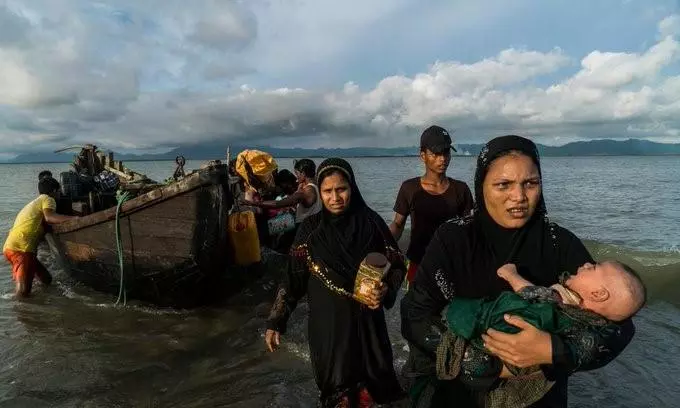
The roots of the crisis lie in August 2017, when Myanmar’s military launched what it described as a “clearance operation” against Rohingya insurgents in Rakhine state. The campaign triggered widespread allegations of mass killings, rape and village burnings.
According to findings cited by the court, Myanmar's security forces killed around 10,000 Rohingya during the violence. Hundreds of thousands fled across the border into Bangladesh, creating one of the world’s largest refugee movements.
Today, about 1.2 million Rohingya live in overcrowded camps in Cox’s Bazar, facing chronic challenges ranging from poor sanitation and disease outbreaks to fire risks, landslides and restrictions on employment.
A first by ICJ
The Hague-based court, in a 9-6 decision delivered on Thursday (November 19), found that Myanmar violated its obligations under the Genocide Convention by carrying out genocidal acts against Rohingyas. It also directed the Southeast Asian nation to facilitate the safe return of tens of thousands of displaced Rohingyas and pursue accountability for those responsible.
The case was brought before the court by The Gambia in November 2019 and marks the first time the ICJ has ruled that a state committed genocide. The court further ordered Myanmar to allow Rohingya refugees to return home safely, provide reparations and prosecute those suspected of involvement in the atrocities.
While the ICJ ruling has strengthened international recognition of the Rohingya’s suffering, refugees say true justice will only come when they can return to their homeland in safety, dignity and with full rights guaranteed. For now, the judgment offers both vindication and hope, but also underscores the daunting task of turning legal victory into reality.
(With agency inputs)