What Indian mountaineers feel about Nepal’s likely move to make permission for Everest climb tougher
According to reports, under a proposal included in Nepal's new draft Tourism Bill, anyone seeking an Everest permit would first have to successfully climb a peak above 7,000 metres and that qualifying ascent would have to be completed in Nepal itself. While most Indian mountaineers support the move to prioritise experience, debate begins only when geography enters the discussion.

For generations of mountaineers, Everest represented the culmination of a lifelong ambition. It was the prize after years of preparation and countless hours spent on smaller peaks. Today, it is also a booming tourism industry, a social media milestone and, for some, a goal that money can fast-track.Now, Nepal is reportedly considering a significant change to who gets the opportunity to scale...
For generations of mountaineers, Everest represented the culmination of a lifelong ambition. It was the prize after years of preparation and countless hours spent on smaller peaks. Today, it is also a booming tourism industry, a social media milestone and, for some, a goal that money can fast-track.
Now, Nepal is reportedly considering a significant change to who gets the opportunity to scale it. According to news reports, under a proposal included in its new draft Tourism Bill, anyone seeking an Everest permit would first have to successfully climb a peak above 7,000 metres and that qualifying ascent would have to be completed in Nepal itself.
The proposal has found broad support among Indian mountaineers who believe climbing Everest should demand prior experience.
"For Indian mountaineers, I feel they should attempt at least four or five peaks between 6,500 and 7,500 metres before Everest," says Colonel Vijay Singh, president of the Indian Mountaineering Foundation. "India has thousands of technically difficult peaks."
While the Colonel did not comment on the purported proposal to make the qualifying ascent mandatory in Nepal, other Indian mountaineers question why experience gained on equally demanding mountains outside Nepal should not count.
“Everest is still the pinnacle of mountaineering. The mountain demands respect and preparation,” says Dr Anshu Jamsenpa, the Padma Shri awardee from Arunachal Pradesh who has summited Everest five times, including a world-record double ascent within five days in 2017.
Jamsenpa supports the principle behind the proposal. Everest, she says, should never be treated as a commercial tourist destination. “Experience teaches lessons that cannot be learnt on Everest itself,” she says.
The proposed qualification rule is one of several changes Nepal is considering as it attempts to address concerns surrounding safety, medical fitness, insurance, expedition management and environmental damage on the world’s highest mountain.
Last year, Nepal rolled out a five-year ‘Everest Cleaning Action Plan’ to keep the world’s highest peak from turning into a “dumping ground”. As per reports, a cleaning campaign in 2019 had seen the collection of 10,800 kgs of biodegradable and non-biodegradable waste from Everest.
Now, the purported proposal to tighten permission norms follows a record spring climbing season (late March to early May). Nepal reportedly issued 492 Everest permits during this period, while 1,008 successful ascents were recorded from its side of the mountain, including guides and repeat summits. However, the season also saw the death of five climbers, including two Indians.
For Jamsenpa, better preparation would make Everest safer for everyone involved. But she does not believe Nepal should be the only place where that preparation can take place. If the proposed rule becomes law, she believes the Indian Mountaineering Foundation should take up the issue with Nepal and seek recognition for qualifying climbs completed in India. “Indian climbers should be able to train on our own mountains and have that experience recognised,” she says.
That combination, support for compulsory experience, but opposition to the Nepal-only condition, was echoed by several Indian mountaineers.
Also read: Why online trolling of Gen Z women dissenters is yet another proof of growing digital misogyny
Captain Ram Bahadur Mall has climbed Everest from both sides. The Army officer reached the summit through Tibet in 2007 and scaled the peak again via Nepal’s South Col route in 2013. He has climbed nearly 30 Himalayan peaks, including Makalu, and has served as an instructor at the National Institute of Mountaineering and Adventure Sports in Arunachal Pradesh.
“Technically, Everest is not the hardest mountain,” Mall says. “The altitude, the duration and the environment make it formidable.” Modern expeditions may have reduced some of the logistical challenges through fixed ropes and organised support, he says, but none of that can replace a climber’s understanding of their own body.
“Climbing another high mountain first teaches you to become self-reliant,” he says. “You learn how to manage yourself and your body before attempting Everest.” Mall therefore agrees that previous high-altitude experience should be mandatory. What he disputes is the attempt to define valid experience through a national boundary.
“Experience should be mandatory, but why only Nepal?” he asks. India has peaks capable of exposing climbers to comparable altitude, weather, isolation and expedition conditions, he says. A documented ascent in the Indian Himalayas should not become irrelevant simply because it was made on the other side of Nepal’s border, he believes.
Nepal reportedly issued 492 Everest permits during this spring, while 1,008 successful ascents were recorded from its side of the mountain. However, the season also saw the death of five climbers, including two Indians. Photo: iStock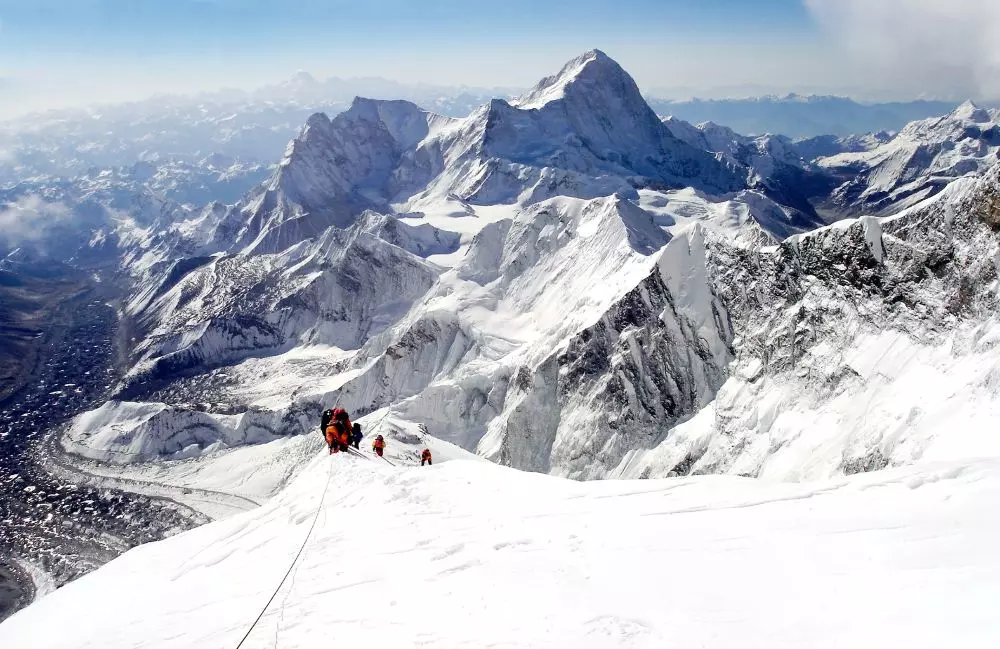
For Chandrakant “Ricky”, a Himachal Pradesh-based mountaineer who has worked alongside State Disaster Response Force teams during rescue and recovery operations, judgement is the real value of previous experience.
“People think Everest is mainly about physical fitness. At that altitude, it becomes more mental than physical,” he says. Ricky says climbers learn to understand fatigue and the importance of turning back only through longer expeditions, not during a brief training programme. “Experience is the biggest safety net.”
He supports a gradual progression towards Everest. As the others, however, he too feels the debate should remain focused on preparedness rather than geography. That concern becomes sharper when the problem is viewed through the changing culture around Everest.
Prakriti Varshney, who summited Everest in 2022, is an adventure athlete and one of India’s most visible mountaineering voices on social media. She has seen how online attention has altered the way Everest is imagined.
“Many people have a bucket-list dream but no blueprint,” she says. Varshney is firmly in favour of a prior 7,000-metre ascent. Fewer people on the route, she believes, would make the mountain safer for climbers who have spent years preparing for it and would also reduce the burden on an already strained environment.
When she climbed Everest, she recalls around 390 to 400 permit-holding climbers being on the mountain during the season. The latest figures are significantly higher. “Less crowd would make Everest safer for serious climbers,” she says. “The human waste is also becoming a major issue,” she adds, highlighting the other concern about increasing Everest footfall.
Varshney believes social media has fundamentally changed Everest’s image.
High-profile mountaineering projects, including those of Nirmal Purja (the Nepali-British mountaineer who was killed last month when an avalanche struck Broad Peak in the Karakoram range while he was attempting to summit it), gave Himalayan climbing unprecedented visibility and inspired many more people to dream of the mountain. But they also fuelled an obsession with records and online attention.
“Everest has become about records,” she says. Varshney is herself a storyteller with a large online following, but says there are moments when recording has to stop. “I wouldn’t put my life and others at risk to create content,” she says.
She has seen others continue filming in situations where their attention should have been entirely on the mountain. More seriously, she has encountered climbers who appeared physically or mentally unprepared for the conditions.
She recalls one young Indian climber who, she believed, had been pushed towards the attempt by her family despite not being ready, struggling to breathe and requiring help from others. “Everyone around comes at risk because of them,” she says. “If something goes wrong, it is often the Sherpas (members of a Himalayan clan known for their mountaineering skills who often accompany expeditions) who pay the price.”
That is one reason she supports a filtering mechanism before Everest.
Commercial agencies have already built a large business around the mountain, she says. Some operators in India also market the climb aggressively because the financial rewards are considerable. “It has become a big money affair,” she adds.
If a 7,000-metre summit in Nepal becomes compulsory, the qualifying expedition itself could soon become part of that same commercial pipeline. That possibility gives the proposal an economic dimension for India.
Tsering Wange, founder of Himalayan Holidays and president of the North East India Tourism Confederation, supports stronger safety rules. But he believes the Nepal-only condition could divert both climbers and revenue away from the Indian Himalayas.
“India has mountains that prepare climbers just as well,” he says.
One of the concerns in recent years has been the increasing waste dump on the world's highest peak. Photo: iStock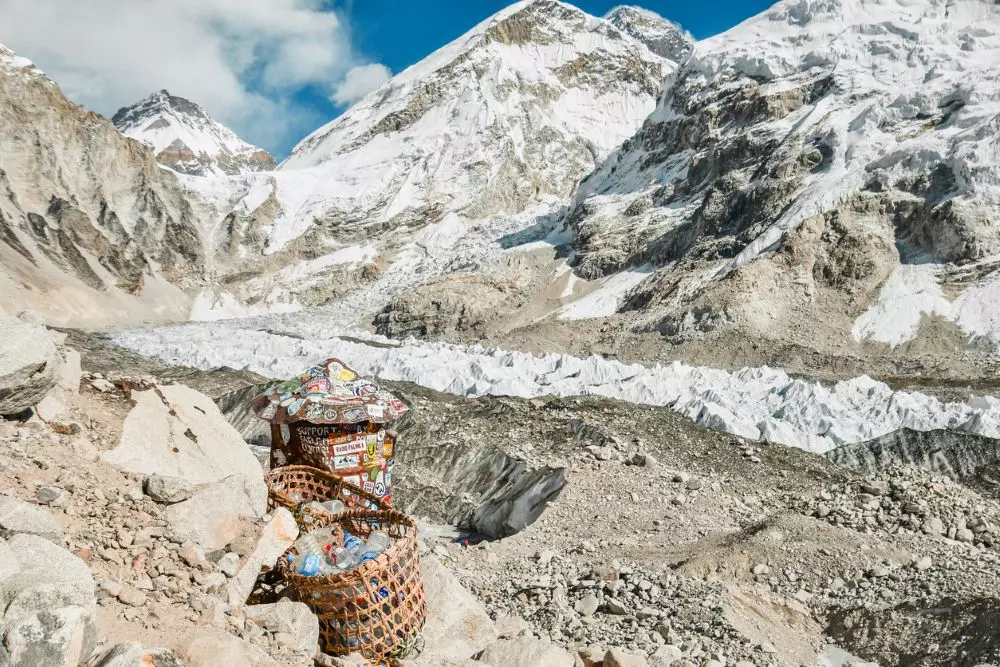
An aspiring Everest climber may already spend years training on Indian peaks, employing Indian guides and using local expedition services. Under the [purported] proposed rule, that experience would not be enough.
“If qualifying climbs are restricted to Nepal, naturally the tourism benefits stay there,” Wange says. The rule could therefore strengthen Nepal’s already well-developed mountaineering economy while weakening incentives to organise preparatory expeditions in India. Climbers who might otherwise train on Indian Himalayan peaks could decide that it makes more financial and practical sense to complete the entire progression in Nepal.
While Wange said it was difficult to put an exact value on India's Himalayan mountaineering economy, he described it as a multi-billion-dollar industry that supports hundreds of trekking and mountaineering clubs across the country. He estimates that 15–20 per cent of that business could shift to Nepal if the reported qualifier is put in place.
A compulsory 7000-metre preparatory summit in Nepal is also likely to pinch aspiring climbers. While mountaineers The Federal spoke to did not bring up the subject, reports suggest such a criterion for permission to climb Everest is like to up expedition costs of Indian mountaineers by a few lakhs.
For Wange, the answer is for India to make a stronger case for the recognition of comparable Indian climbs. He believes the Government of India and the Indian Mountaineering Foundation should engage with Nepal, particularly on behalf of Indian climbers.
At the same time, he says, the debate should force India to look at its own shortcomings. “This should encourage India to invest more seriously in mountaineering,” Wange says.
A negotiated arrangement recognising approved Indian peaks could protect the safety principle behind Nepal’s proposal without making geography the sole measure of valid experience.
Veteran mountaineer Kamal Sharma, who has been active in the Himalayas since the 1990s, believes the debate also reflects how rapidly the culture of climbing has changed. “Earlier, climbing was the reward for years of preparation,” he says. “Today, there is much more pressure to reach the summit and show it.”
Sharma supports a prerequisite before Everest but, like the others, does not believe that experience should count only when it is gained in Nepal. “If someone has climbed a comparable peak elsewhere and can prove it, that should also count,” he says.
Across conversations with Indian mountaineers, there was broad agreement on one point: Everest should demand genuine high-altitude experience. The disagreement begins only when geography enters the discussion.