



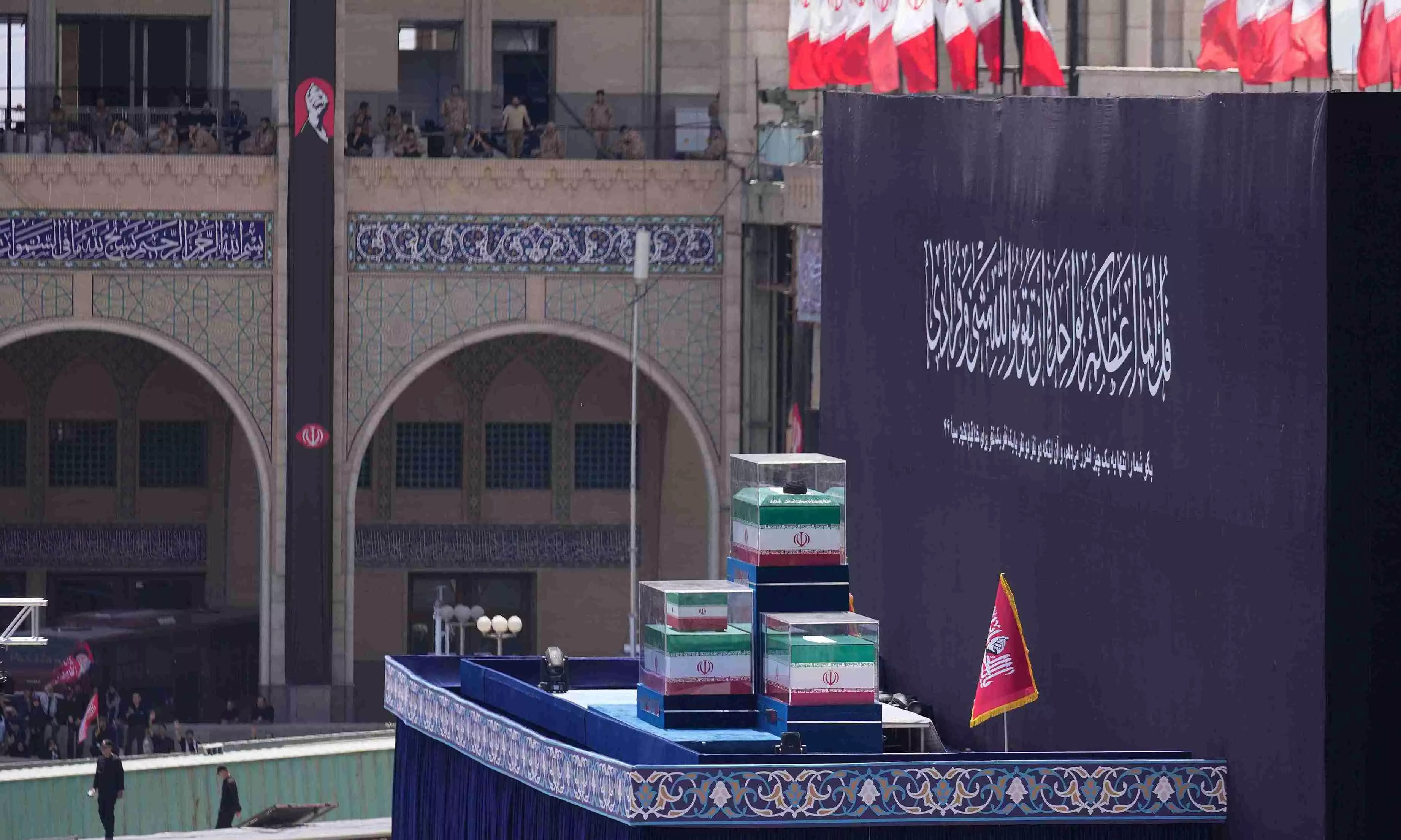
Anti-US chants mark Khamenei funeral day 2; sons make rare public appearance, Mojtaba absent
Rare public appearances by Khamenei's sons Mostafa, Masoud and Meysam mark ceremonies, while new Supreme Leader Mojtaba Khamenei absent amid security concerns

Iran's six-day state funeral for late Supreme Leader Ayatollah Ali Khamenei entered its second day on Sunday (July 5), with massive crowds gathering in Tehran as authorities tightened security and diplomatic efforts to resume talks with the United States remained temporarily on hold. The funeral, delayed for more than four months due to the war with Israel and the US, has become the first major national event since the conflict ended.
The ceremonies began on July 4 with a 24-hour public farewell at Tehran's Imam Khomeini Grand Mosalla and will continue with processions in Tehran, Qom, Iraq and conclude with Khamenei's burial in his hometown of Mashhad on July 9. Iranian authorities expect between 15 and 20 million mourners over the six days, making it one of the largest state funerals in the country's history.
Where is Mojtaba?
One of the biggest developments on Sunday was the rare public appearance of three of Khamenei's sons - Mostafa, Masoud and Meysam. However, there was still no sign of Iran's new Supreme Leader Mojtaba Khamenei, who is believed to have remained away because of security threats. According to reports, Mojtaba has been in hiding after reportedly being wounded in the strike that killed his father, while Ayatollah Hakim Elahi, his representative in India, said attending the funeral would be "dangerous" because of continuing Israeli threats.
Also read: Iran expects 3,000 deaths during Khamenei’s funeral, keeps graves ready: Report
The funeral has also drawn attention because several members of Khamenei's family, who were killed in the February 28 US-Israeli strikes, are being honoured alongside him. A tiny coffin carrying the body of his 14-month-old granddaughter was placed next to Khamenei's coffin, along with the bodies of other relatives killed in the attacks.
Anti-US remarks
The funeral has unfolded amid heightened anti-US and anti-Israel sentiment. During Sunday's ceremony, poet Mohammad Rasouli publicly called for the death of US President Donald Trump while addressing mourners gathered at the Grand Mosalla complex.
Rasouli’s remarks drew loud chants of "Death to America!" and "Death to Israel!" from the crowd. Posters and banners calling for the deaths of Trump and Israeli Prime Minister Benjamin Netanyahu were also displayed across the venue.
Senior Shiite cleric Ayatollah Jafar Sobhani later led funeral prayers attended by President Masoud Pezeshkian, Parliament Speaker Mohammad Bagher Qalibaf and senior Revolutionary Guard commanders.
Also read: Trump says ‘one shot’ could eliminate Iran’s leadership during Khamenei funeral
Meanwhile, Trump also referred to the funeral during a speech near Mount Rushmore, saying the US had effectively given Iran "a week off for a funeral because we're nice." He also claimed Washington had "wiped out" Iran's military during the recent conflict.
Iran-US talks
The funeral comes as Washington and Tehran prepare to resume indirect negotiations. According to a Dawn report citing diplomatic sources, Islamabad has emerged as the leading venue for the next round of US-Iran technical talks expected on July 11, with Switzerland's Burgenstock resort also under consideration. Pakistan and Qatar are continuing to mediate the negotiations.
Also read: US and Iran pause strikes but disagree over next steps on talks
The talks, which were briefly delayed because of the funeral, are expected to focus on Iran's nuclear programme, sanctions relief, frozen Iranian assets, security in the Strait of Hormuz and preserving the regional ceasefire. Officials said the technical discussions will pave the way for another round of high-level negotiations, likely to be held in Doha later this month, although diplomats cautioned that the peace process remains fragile despite recent progress.