



Iran expects 3,000 deaths during Khamenei’s funeral, keeps graves ready: Report
With thousands of mourners attending funeral ceremonies, Iran forms special unit to deal with deaths and missing persons

As Iran prepares to bury its late Supreme Leader Ayatollah Ali Khamenei in a grand funeral event lasting six days, and one that will have international leaders as guests, it is also reportedly anticipating 1,500-3,000 deaths due to the large crowds expected at the event in Tehran.
Special unit on standby, mass graves ready
German newspaper Die Welt, quoting a classified document and municipal sources, said that the Iranian Red Crescent, an NGO, and the National Crisis Management Organisation have warned Vice President Mohammad-Reza Aref that thousands may die during the funeral processions due to overcrowding and summer heat.
The Federal has not independently verified these claims.
Also read: Trump says ‘one shot’ could eliminate Iran’s leadership during Khamenei funeral
Not just that. In anticipation of the large number of casualties, Iranian authorities have already formed a special unit to deal with deaths and missing persons and prepared thousands of graves at the Behesht-e-Zahra cemetery in Tehran.
“The prepared graves really exist. Those responsible were told that 3,000 deaths would be manageable,” the daily quoted a municipal employee privy to the plans as saying.
“With such large crowds and extreme heat, no one knows what will happen,” the employee reportedly said.
Hospitals, medical teams ready
With authorities expecting a whopping 20 million people to attend the funeral in Tehran alone, contingency plans are in place to handle untoward incidents.
According to reports, temporary hospitals have been set up near the Imam Khomeini Grand Mosalla in Tehran, which is close to where the coffins of Khomeini and his slain family members are kept.
Also read: Iran begins state funeral for Ayatollah Khamenei amid calls for revenge
Tasnim news agency, quoting the government, said that medical teams are on standby for any eventualities.
Travel, including in buses and other public transport mediums, has been made free, with metro and bus services running round the clock to avoid overcrowding and any stampede-like situations.
While temporary kitchens have been set up across the city, schools and mosques have been opened to accommodate mourners.
Security beefed up
The event, which will see the participation of representatives from across the globe, is being closely watched as Iran tries to seal a peace deal with the US while staying determined to have its hold over the Strait of Hormuz.
Strict security arrangements have been imposed for the funeral, preparations for which began a month ago. According to reports, while roads are barricaded, Iran has imposed restrictions on airspace. Mourners are being made to pass multiple security checks to enter the Grand Mosalla where Khamenei’s body has been kept.
Also read: Trump says US gave Iran a 'week off' for Khamenei's funeral
With millions expected to crowd the city and participate in processions before the burial in Mashhad on July 9, armed police, intelligence personnel and volunteers have been deployed across the city.
Mourners weep near Khamenei’s coffin, cry revenge
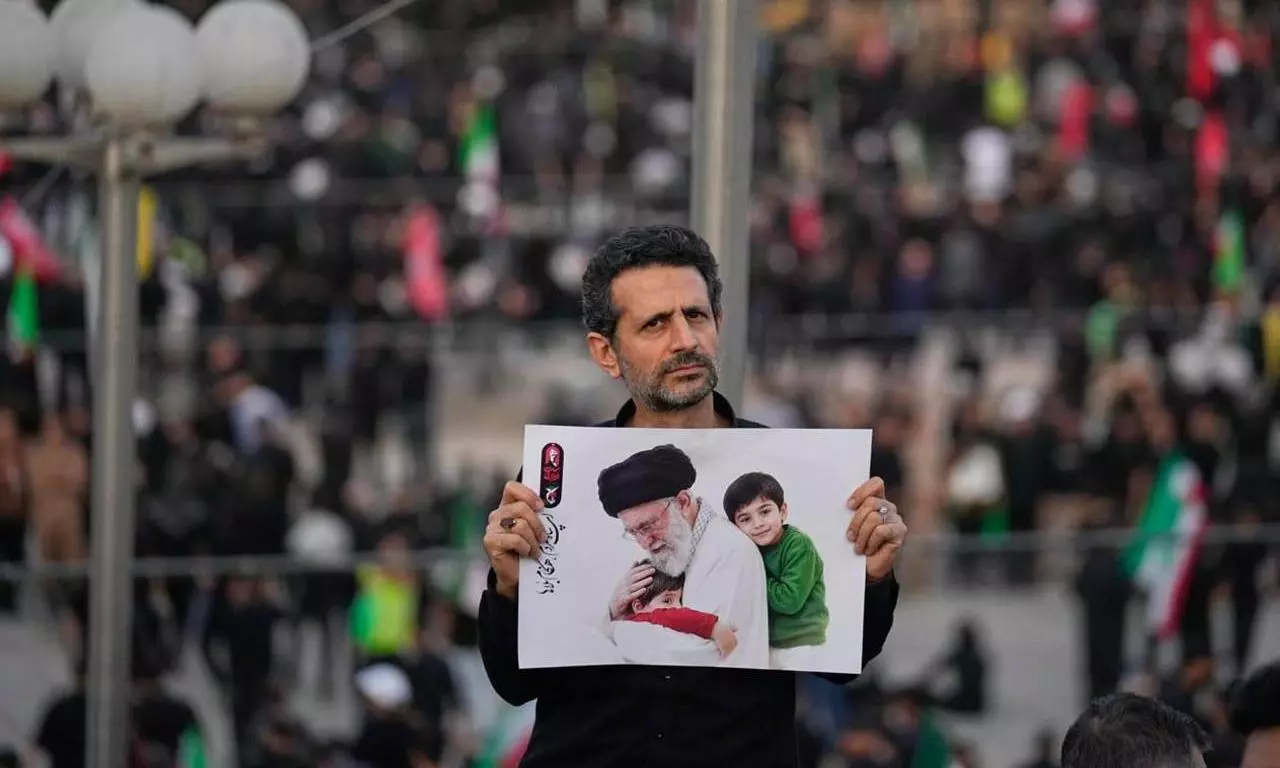
As the funeral ceremonies began on Saturday (July 4), thousands of mourners were seen beating their chests in sorrow before the glass case containing Khamenei’s flag-draped coffin in Tehran and calling for revenge against Israel and the United States.
The funeral of Khamenei, who ruled Iran for decades before he was killed at age 86 in a February 28 airstrike in the opening moments of the Iran war, could provide a boost for the country's theocracy and its new supreme leader, his son Ayatollah Mojtaba Khamenei.
Mourners wept at the sight of Khamenei's coffin alongside those of his family members also killed in the airstrike, with some chanting: “Our word is one! Revenge! Revenge!” Some carried banners and flags, while billboards across the city bore Khamenei's image. Crowds of men rhythmically beat their chests in mourning, a common practice at Shiite funerals.
Also read: Khamenei's funeral: Iran invites Nabin, Kharge; India to send delegates
On Saturday, volunteers sprayed cooling water on crowds in the summer heat. Men and women congregated separately inside the Grand Mosque after being checked by metal detectors and body searches. Police with assault rifles stood guard on surrounding streets. Many people stayed outside in the street, lounging under the shade of trees, because the city had shut down.
The caskets of his dead family members sat beneath Khamenei's, which had his black turban atop it, identifying him as a direct descendant of the Prophet Muhammad. The dead included the wife of Mojtaba Khamenei, whose possible appearance at the funeral remained unclear. He reportedly was wounded in the attack that killed his father and has not been seen publicly since the war began.