Riyadh under fire: How the Houthi attack is reshaping Gulf security | Interview
Nagma Sahar says the Houthi attack on Riyadh exposes the limits of the US security umbrella and makes mediation involving Iran crucial to ending the conflict

The September 19 attack on Riyadh, in which Saudi authorities said a Houthi ballistic missile was intercepted, has added a new dimension to the West Asia conflict.
In this context, The Federal spoke to senior journalist and media consultant Nagma Sahar about the growing regional conflict, the possible role of Iran in mediation, the Mecca defence pact involving Saudi Arabia, Pakistan and Turkiye, and the implications for India and its large population in the Gulf.
Edited excerpts:
What do we know about the Houthi attack on Riyadh?
We know for sure that Riyadh was targeted by the Houthis. The Saudi authorities themselves have accepted this and said a ballistic missile was fired on Riyadh on September 19. However, it was intercepted and destroyed.
They also said some civilian areas were targeted. Apparently, six cities in Saudi Arabia, including the port city of Yanbu, which is close to the Red Sea and is a main centre for their oil exports, were on high alert.
Also read: Why linking of two unrelated conflicts in the Gulf spells compounded trouble
Visuals showed large plumes of smoke near an oil facility around Riyadh’s international airport. Riyadh is the biggest city there and the most important economic centre as well as a tourist spot. Anyone who comes into Saudi Arabia, even if they go to Jeddah and then to Mecca or Medina, or comes to Riyadh and then goes elsewhere, would pass through these major centres. Riyadh is more liberal than the rest of Saudi cities. A lot of foreigners and expatriates live there.
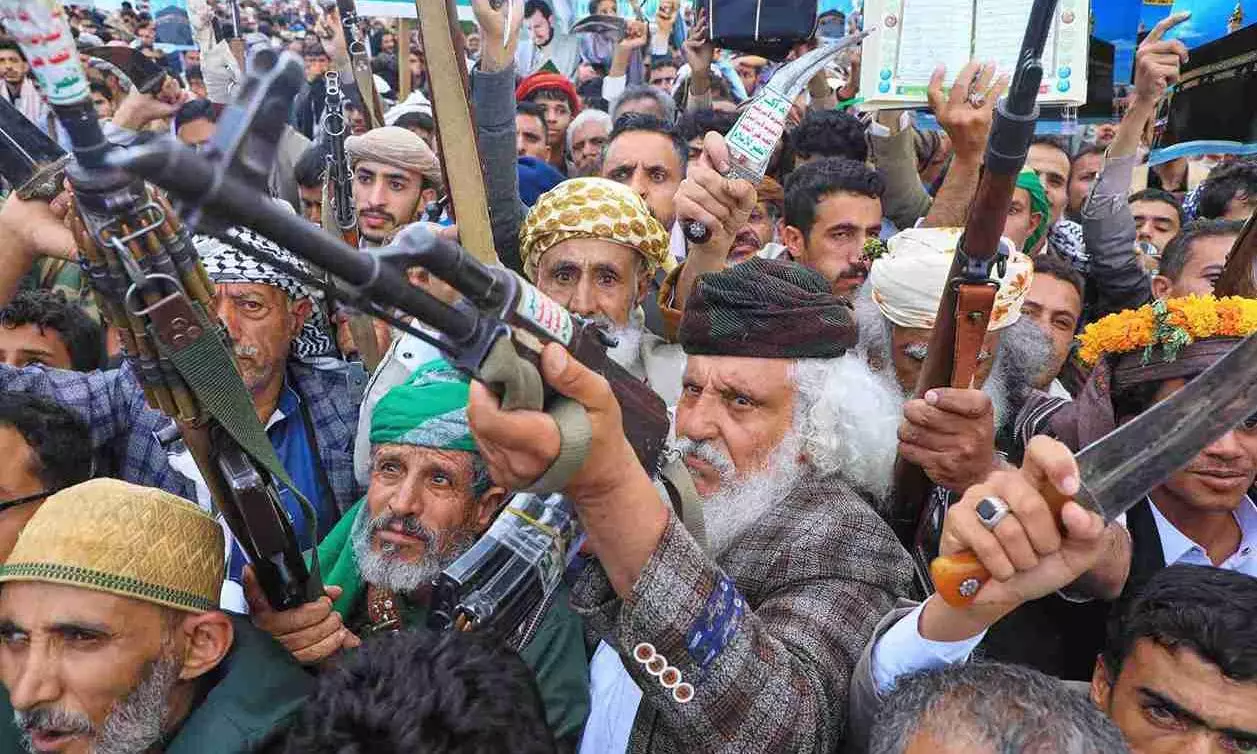
The Houthi spokesperson, Yahya Saree, has claimed on social media that they fired ballistic missiles, cruise missiles as well as drones. They also say that they are doing this only because Saudi Arabia or Riyadh has been targeting them and targeting Yemen, including the capital city of Sanaa.
The context is really important. Yemen’s government is supported by Saudi Arabia, and, in a way, the West. But a large area is controlled by the Houthis. They also control some of the most important economic centres closer to the Red Sea.
Also read: US threatens to ground all Iranian airlines globally on September 23
We also remember that Saudi Arabia claimed that the holy city of Mecca was targeted and called it a terror attack, but the Houthis denied that. There were, of course, conspiracy theories that probably (Saudi Crown Prince) Mohammed bin Salman himself got it done, but those were just speculations. The Houthis have clearly denied targeting the holy city.
What efforts are being made to reduce or stop the conflict?
Many reports are talking about Turkiye probably reconsidering helping Saudi Arabia and probably including Pakistan too. But nothing is confirmed.
There are also reports of intelligence sharing and Israel providing intelligence to Saudi Arabia.
America, of course, has initiated a sale of F-35 fighters, but they will definitely not put boots on the ground.
Also read: Saudi-Houthi clash opens new front in Gulf conflict, further imperils energy routes
But we do know that Donald Trump cut short his weekend plans at Camp David and came back to the White House. The US has warned that this war is escalating and that the war in West Asia can escalate at a very fast pace because we have seen the lightning speed at which the Houthis have controlled a large area in Yemen and along the Red Sea, as well as the attacks they have carried out.
Iran has reportedly offered mediation and said that the Houthis are also interested in talking to the Saudis. The way forward definitely will be mediation. The big question is: Who is capable of initiating that mediation?
We know that the Houthi militia is supported by Iran. But the Houthis never started as a big Iran-backed military organisation.
It started as a small group organising religious camps and summer camps. The escalation started during the American invasion of Iraq, which was very unpopular even in Yemen, and that is when the Houthis gained popularity. The rest of the timeline we know: They have been engaged in a war with Saudi Arabia.
America, Saudi Arabia and Israel look like they are in one camp. But if this is backed by Iran and if there is a possibility of any mediation, then probably Iran would have to be engaged. But the critical question is: Who engages Iran?
Also read: ‘US has abandoned us’: Why Gulf is rethinking Western ties
Saudi Arabia has been launching multiple attacks on the Houthis for many months now and has spent billions, but it has not really been able to control the Houthis. In fact, their popularity and strength have only grown further.
All of this was on the back of support from the West and the US. But Trump has made it very clear that he is not going to fight the Saudi battle. So the big hope that Saudi Arabia had is not really coming to its help.
Could the wider Iran-US conflict affect efforts to resolve the Saudi-Houthi war?
The Israeli and American offensive against Iran is continuing, and Iran has said that it can only look at ending this conflict if the US releases some $100 billion in frozen funds. Is Trump ready for it?
Trump claims that Iran has no option. But what has happened till now? This war has been raging for seven months and we have seen the world suffer. Now we have the Red Sea blockade by the Houthis. The global oil crisis is escalating.
Fighting between the Houthis and the Saudis has opened up a new theatre in this conflict which is engulfing so many countries. There is now Yemen. Saudi Arabia was actually a casualty. Saudi Arabia was hopeful that nothing would happen and that it had the American security umbrella. But the American security umbrella is unable to protect Saudi Arabia right now.
The entire way this war has expanded and engulfed the Gulf region is rewriting the political equations there. A negotiation probably can take place if Iran is involved because Iran has said that it is ready for some kind of mediation. The Houthis are also probably willing or looking forward to talking to the Saudis.
But the big question is: Are the Saudis ready for it? The American sale of F-35s has taken place. Money is being pumped into Saudi Arabia, but is that enough?
Also read: Iran offers to reopen Strait of Hormuz within 7 days if US 'eases pressure': Report
The Iran war is far from ending. But public attention has now shifted from Iran to Saudi Arabia, where the Houthis are targeting infrastructure and cities. A lot of cities have already been on alert, but Saudi Arabia claims that everything is alright right now.
The threat is increasing every single day. Even if Turkiye and Pakistan come along with Saudi Arabia, I do not see how that would necessarily reduce the wider conflict.
The Mecca pact states that if there is an armed attack against one member, it will be considered an armed attack against all three. The agreement was signed by Saudi Arabia, Turkiye and Pakistan in August 2026.
If Turkiye now says that it will come in support of Saudi Arabia, and Pakistan also comes in with some kind of support, we could have another full-blown war in that area.
What this American-Israeli attack on Iran has done is open a Pandora’s box. It has disturbed the entire Gulf region. The various countries there had pre-existing fault lines. There was always a problem between the Shia and Sunni communities. There was always this conflict about controlling the area. We know there is, of course, the politics of oil.
But what has happened now is that the war has come out in the open. The war between the Saudis and the Houthis restarted around July. Now we are seeing a further escalation.
I do not know if Trump would probably have a rethink just before his midterm elections take place. He does not have popular support for the war that he has launched.
Also read: Iran warns of ‘painful’ attacks if US launches fresh strikes; America issues travel advisory
Otherwise, the current war can only end, or probably pause, with some kind of negotiation and mediation by another party. And, yes, it is ironic that probably Iran can play that part.
How closely should India be watching the conflict, given its population in the Gulf?
There are two aspects to this.
First, a pressure is being created on the global economy by seven months of war. India is affected as well, as far as the supply of oil and energy is concerned.
Second, look at the people angle. We have a huge Indian population in these countries, in the entire UAE as well as in Saudi Arabia.
Interestingly, when the Americans attacked Iran, there was a lot of sympathy for the Iranians here in India, even though Iran was attacking American bases in the UAE and Dubai and other places where Indian expatriates reside.
But a lot of people living there, particularly the richer section, were probably very upset by what Iran was doing because their lives were disturbed in Dubai.
Look at the entire state of Kerala and the kind of remittances that come in from the Gulf countries.
So definitely, it is not a good situation for us and the Indian government will be watching it very closely to see how things turn out.