







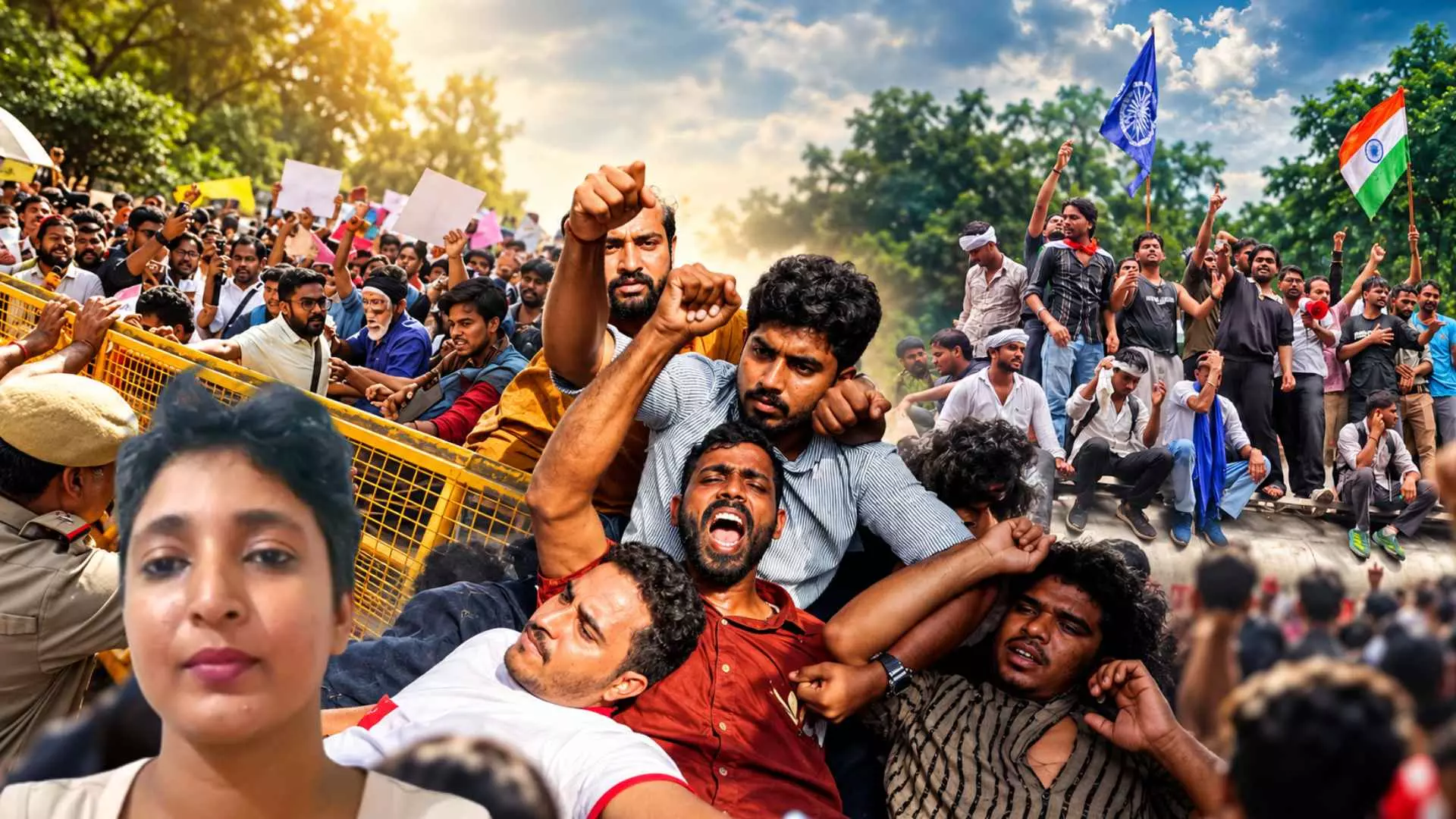
From digital campaigns to street demonstrations, young people are challenging electoral-roll revisions and asserting their constitutional rights.
'More than a Gen Z uprising': Why the SIR protests matter beyond age and politics
Writer Arya AT argues that the protests go beyond the demand for the CEC’s resignation, reflecting wider concerns over citizens’ rights and democratic participation

From social media campaigns and street protests to mass detentions and a special Sunday hearing in the Supreme Court, the agitation against the Special Intensive Revision (SIR) of electoral rolls has grown into a wider debate over voting rights, freedom of protest and democratic accountability.
The Cockroach Janta Party (CJP), which called for a demonstration at Jantar Mantar demanding Chief Election Commissioner Gyanesh Kumar’s resignation, vowed to take the movement nationwide after its leaders were released from detention on Sunday (October 11). At a press conference, they alleged that the police had detained them without formal notice, seized their phones and denied them access to lawyers. The Supreme Court, meanwhile, stressed that peaceful protesters could not be illegally detained and that lawyers and journalists must be allowed to perform their duties.
Also read: Meet the faces of India’s Gen Z protest movement
The developments have brought renewed attention to the role of young people in political movements. While the CJP has described the agitation as a Gen Z uprising, its reach raises broader questions about what motivates young people to take to the streets, how social media shapes mobilisation, and whether online visibility translates into sustained political engagement.
Speaking to The Federal, writer Arya AT discusses the significance of social media in organising protests, the distinction between being aware of an issue and understanding its wider political context, and why the right to vote matters beyond party politics.
The CJP calls this a Gen Z uprising rather than a movement led by a political party or organisation. Do you agree? Who is this movement really for?
The protest have been called a Gen Z protest because it started on social media and social media helped mobilise people, but people from the millennial generation and other age groups have also made their solidarity clear. They have participated in protests, expressed their support online and used whatever other means were available to them. Therefore, I would not agree with calling it exclusively a Gen Z protest, even if the CJP describes it that way.
The medium through which a protest is communicated has considerable significance. Visibility matters, as does the way a protest is presented and the medium through which it reaches people. Memes, for instance, are a very effective way of communicating with people.
I don’t think everyone participating in these protests is necessarily politically well-informed or politically literate. People standing up for a cause are aware of what they are fighting for. However, their awareness may be more emotional than political.
These are two different things: understanding the broader political context and being aware of a particular cause.
Democratic issues have persisted for years, and protests have taken place under different governments. Why do you think young people are participating so actively this time?
When we look at history, we have witnessed several protests, for FTA, CAA and for agrarian causes. All these movements took place and had a significant impact on our country.
Protest is not something we are witnessing for the first time. What makes this particular protest stand out is the visibility it is receiving. Visibility matters because it helps people mobilise and come together.
If we imagine these protests taking place a long time ago, people would not have had the same means to communicate with one another or document everything that was happening. They would not have had an equally accessible medium to counter the existing print media or more conservative media platforms. There would have been fewer ways to communicate their message and showcase what they were doing.
Also read: ‘Jantar Mantar 2.0 is on’: CJP, student activists vow to continue protests
Today, social media helps young people, and everyone working behind these movements, show the world what is happening. This creates a different way of dealing with such situations and makes things more transparent. It also encourages other people to join. When they see others participating, they begin to think that they can do it too.
Some people describe these protests as disruptive or politically motivated. What is your take on that?
Politics operates in the background and influences these outcomes. The only way we can engage with this reality is by defending our rights, resisting injustice and standing in solidarity with others.
Otherwise, things will continue to happen around you, and you may not participate in the process. Yet, the consequences will affect you. You will end up suffering because of decisions and developments taking place around you.
If you participate, however, you are at least trying to bring about change. It may not happen immediately, but you are making an effort to change things.
People often say that one vote will not make much of a difference. Why do you think this generation is particularly concerned about voting rights and elections now?
There is a difference between choosing not to vote and being denied the right to vote.
If I decide not to vote, that is my choice. But if someone tells me that I do not have the right to vote, that is an entirely different matter. It is a violation of my rights.
This is not simply about young people suddenly realising that they have the right to vote. It is about their growing awareness of their rights and of what it means when those rights are violated.
I am very proud of Gen Z because young people are increasingly aware of their rights, what they are entitled to and what they are capable of achieving. They are clear about what they want and what they need to demand.
What they are asserting now is their right to vote.
Also read: How the Gen Z protest may have impacted campus politics in the country
I believe citizens, including students, are realising that they have this right. When someone attempts to interfere with it, they are protesting because they understand what they want, what they are capable of and what rights the Constitution guarantees them.
They do not expect someone to arbitrarily decide that only certain people should be allowed to participate in an election while everyone else must remain silent.
Young people are therefore protesting to protect their rights, and they understand why those rights matter.
What would a victory look like for you and the young protesters? Would it be the resignation of the Chief Election Commissioner, the suspension of SIR, or something bigger that is not yet receiving enough attention?
The resignation of the Chief Election Commissioner would certainly give us a sense of satisfaction. It would be a kind of immediate reward for the movement. But it would not resolve the entire issue we are raising.
Stopping SIR is another important demand, and that effort must continue even after any resignation. SIR is not the only political concern we are facing right now. There are many other issues that need to be addressed.
Also read: 79 years after Independence, what a ‘free’ India looks like to Gen Z
The protest that has gained momentum and mobilised so many people must continue. I believe it will continue.
For me, this is not simply about achieving one demand, declaring victory and going back home. The movement is about something bigger, and I believe it will carry on.
