Why debate surrounding Kerala’s planned menstrual leave for school students reflects age-old bias
The issue of menstrual leave continues to be often written off by some as a special treatment for women or something not really needed. Some even treat it as a joke or an exaggeration. One oft-repeated view is that menstruation is a matter of privacy and dignity and therefore should not be discussed through policies.

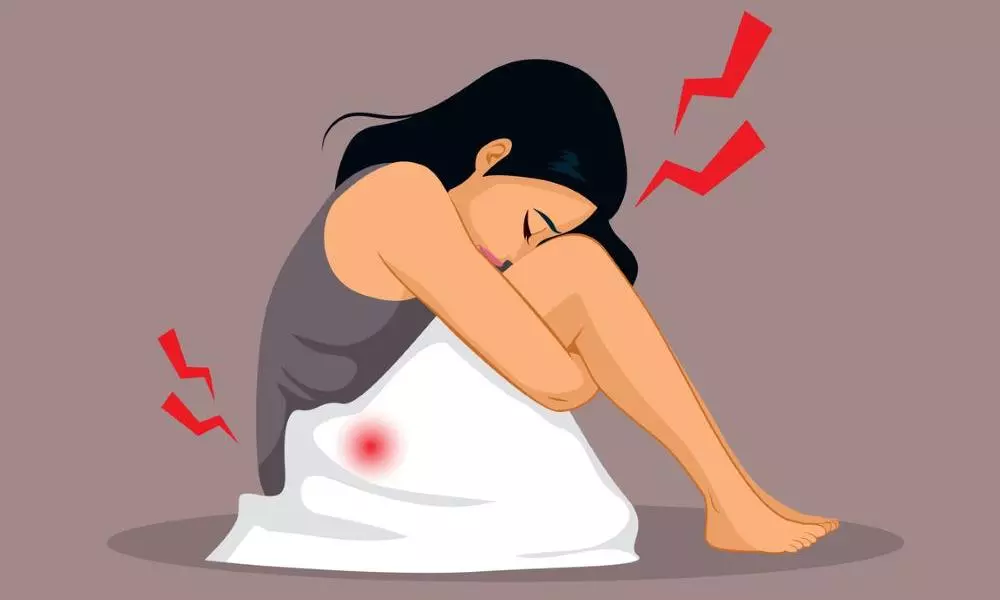
For those who grew up in the ‘90s and early 2000s, periods were not something you talked about. You just handled it quietly. Over time, that silence became normal. Photo: iStock
The ongoing discussions in Kerala surrounding menstrual leave for school children have brought up something deeper than policy; it has reopened how we perceive menstruation itself.
It all started when Governor Rajendra Vishwanath Arlekar read out a clutch of women-and child-friendly initiatives planned by the Kerala government, one of which was a monthly three-day menstrual leave for school students. The news has reportedly already drawn some opposition, with some claiming that leave for what was a “natural biological process” might “send out the wrong message”.
Also read: How the all-women team of Khabar Lahariya journalists survived risks, jibes and misogyny
For many women of my generation — those who grew up in the ‘90s and early 2000s — periods were not something you talked about. You just handled it quietly, tried not to show any discomfort felt and moved on with the day. Over time, that silence became normal. Many girls grow up hearing words like “impure” or “unclean”, associated with menstruation and without anyone saying it directly, the message settles in that this is something to hide rather than understand.
Proof of periods
I still remember our school days. One of the biggest worries while menstruating was whether there was any telltale stain on the back of our uniforms. Many of us would pin our dupattas in a way, often using extra safety pins, to make sure everything stayed covered. The fear of someone noticing a stain was sometimes worse than the pain of menstrual cramps.
There was very little understanding of what girls went through during those days. If the pain became unbearable, there was nowhere to rest in school. We would simply put our heads down on our desks during lunch breaks or free periods, and wait for the pain to ease. Also, talking about periods was awkward. If a male teacher asked why we looked tired or uncomfortable, we would often blame it on a headache — it was easier than explaining the real reason. Menstruation was treated as something too private to mention, even when it was affecting us physically.
The use of painkillers to relieve cramps was not common. We were often told not to get used to medication at a young age, so most girls just endured the pain. We attended classes, wrote exams, played our part in school activities and carried on as though nothing was draining us physically and mentally.
Also read: How the saree, the star of Indian weddings and Cannes red carpets, survived the centuries
While in recent years the discourse surrounding menstrual health and hygiene has improved, with women’s groups encouraging normalising conversation on periods, the subject of menstrual leave continues to be often written off as a special treatment for women or something not really needed. Some even treat it as a joke or an exaggeration, rather than attempting to understand it as a response to real physical discomfort and lived experience. One criticism often raised is that menstruation is a matter of privacy and dignity and therefore, should not be discussed through policies.
While in recent years the discourse surrounding menstrual health and hygiene has improved, the subject of menstrual leave continues to be often written off as a special treatment for women. Photo: iStock
The playing down of women’s needs is not new.
Maternity leave was once criticised for giving women special treatment. Separate toilets for women were considered unnecessary in many workplaces. Creches at workplaces, breastfeeding rooms, girls' access to education and even women's entry into certain professions were all opposed at different points in time. On the contrary, they made participation in public life more practical and equitable.
Privacy should mean that a woman has the choice to disclose or not disclose her condition. It should not mean that society refuses to acknowledge a reality that affects half the population.
Suffering in silence
The real issue is often not whether a policy exists, but whether women can actually access it without being stigmatised or attracting penalties or embarrassment.
In recent years, several educational institutions and workplaces across India and around the world have introduced measures related to menstrual health. A menstrual leave policy means little if women hesitate to use it for fear of being judged, questioned, or seen as less capable. Similarly, restrooms, flexible work arrangements, or sanitary products are useful only when they are supported by a culture of understanding. Meaningful change happens when institutions recognise menstrual health as a normal part of life and create environments where women can access support without shame or hesitation.
The hesitation in vocalising discomfort, in many cases, results in delayed diagnosis of health conditions. Many women spend years believing severe pain is simply something they must live with. Just the reason conditions such as PMOS (Polyendocrine metabolic ovarian syndrome, earlier known as polycystic ovary syndrome or PCOS) and endometriosis often go undiagnosed for years.
Also read: Meetings in PJs and hunched over laptops in bed? What not to do in WFH mode
A qualitative study of women’s experience of endometriosis diagnosis, by researchers Karen Ballard, Karen Lowton and Jeremy Wright, published in the journal Science Direct in 2006, found that many women delayed seeking medical help because they believed their symptoms were "normal" and considered themselves "unlucky rather than ill". The study also highlighted how painful periods are often normalised within families and communities, contributing to delayed diagnosis.
The discourse on menstruation should also include access to proper sanitation facilities, comprehensive sex education, affordable sanitary products, and better healthcare support. Photo: iStock
According to the American College of Obstetricians and Gynecologists (ACOG), severe menstrual pain that disrupts daily life should not be normalised and may indicate underlying conditions such as endometriosis. In a similar way, conditions like PCOS /PMOS are also often missed or diagnosed late because menstrual irregularities, fatigue, hormonal changes, and discomfort are frequently dismissed as “normal variation” rather than signs that need medical attention. Over time, this normalisation delays diagnosis and prevents timely treatment, allowing symptoms to continue unchecked for years.
The discourse on menstruation should also include access to proper sanitation facilities, comprehensive sex education, affordable sanitary products, and better healthcare support. If the current debate on menstrual leave helps bring attention to these wider issues, it would be a meaningful step forward. The leave itself is not the destination. It can be the doorway to a broader discussion on menstrual health, dignity, access; a dignified life, biology, and humanity.