Skinny to oversized, why India's denim wardrobe is seeing a happy coexistence of fits and styles
There was a time when Indian denim fashion moved like a procession. Drainpipes gave way to bell-bottoms; bell-bottoms widened into disco-era elephant bottoms; baggy jeans arrived with liberalisation, boot-cuts followed and then came the long reign of the skinny jeans. What is striking today is not that flares are back. It is that nothing else has left.

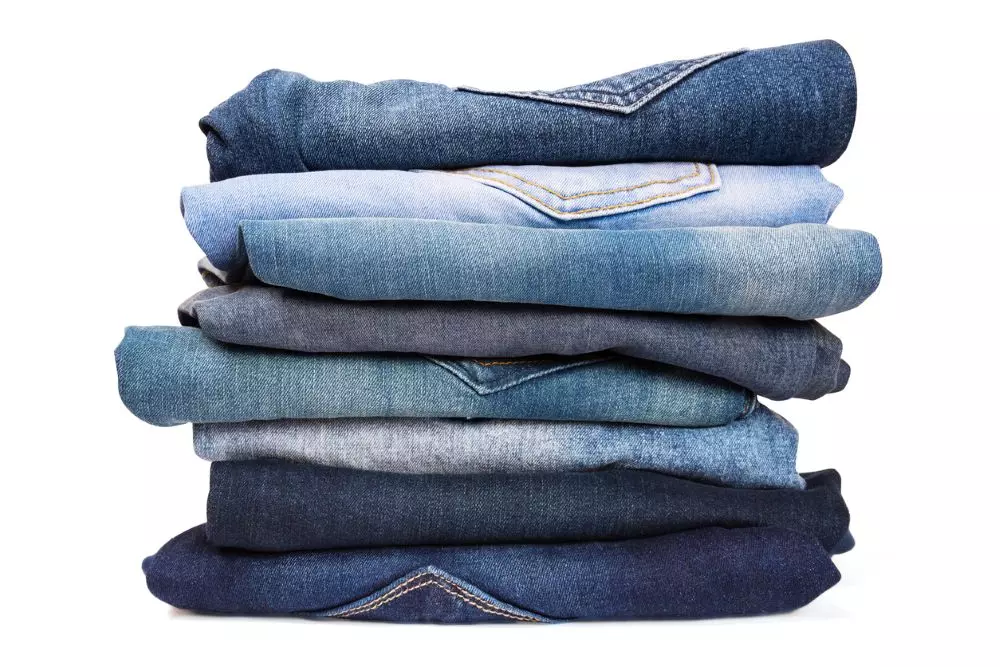
Denim has ceased to be merely fabric or fashion; it has become a democratic uniform carrying students, young professionals, aspiring civil servants and restless dreamers in all their different cuts, washes and convictions. Photo: iStock
As the evening rush thickens around Mumbai’s Churchgate neighbourhood, a short escalator ride into the city’s underground Aqua Line metro feels like crossing between two cities. Above ground is the familiar cacophony of honking traffic and impatient pedestrians; below, the cool, air-conditioned hush that is broken only by the chime of the public address system and stray conversations…
By 5 pm, the coaches are crowded with collegians, office-goers, traders and service workers. In a single compartment, six decades of denim history seem to be travelling together. A giggly young couple in oversized ripped jeans stands beside a finance professional in dark, impeccably tailored straight fits. An elderly professional, jacket folded in his lap, wears high-waisted black baggy denims. A commuter in dramatic flares that could have walked out of a 1977 Bollywood costume department scrolls through Instagram reels. The striking thing is that none of them looks remotely out of place.
The same visual democracy has been visible over 1,300 km from Mumbai too. Since mid-July, when student gatherings at Delhi’s Jantar Mantar swelled into a full-blown kumbh mela of youth power, the protest site has resembled a moving exhibition of India’s denim imagination. Amid slogans, dhol beats, TV crews, police barricades and shared packets of samosas, every few metres offered another chapter in the story of jeans: faded relaxed fits, oversized cargo denims stuffed with markers and charging cables, Korean-style wide-leg jeans paired with a kurta, and a protester sitting cross-legged in heavily distressed skinnies held together by as much attitude as stitching. As dusk fell and phone flashlights twinkled above the crowd, bell-bottoms brushed against minimalist selvedge denims, acid-washed retro pairs stood beside black biker jeans and thrift-store patchwork.
Over the decades, denim has ceased to be merely fabric or fashion; it has become a democratic uniform carrying students, young professionals, aspiring civil servants and restless dreamers in all their different cuts, washes and convictions. Once a garment governed by one dominant trend at a time — think the drainpipe trousers and narrow-cut jeans of the late 1960s and early 1970s and the dramatic bell-bottoms that followed, to the slim and skinny fits of the mid-2000s — jeans today have become something far more democratic and expressive. That coexistence of silhouettes, waistlines and eras is perhaps the clearest sign of how denim has changed in contemporary India.
Jeans that survive
Yet the apparent freedom of choice may also conceal a carefully engineered cycle of desire. Neerusha Nikhat, Bollywood and television stylist, designer and textile historian, argues that fashion trends have always been less about clothing than aspiration. “Trends are created by tapping into the herd mentality and our upwardly mobile urges,” she says. “Fair skin was once aspirational as royalty stayed indoors. When the wealthy began travelling and sunbathing, tanning suddenly became fashionable. That’s exactly how fashion operates, especially denim.”
Her point is that a good pair of jeans survives years of wear, giving consumers little practical reason to replace them. “But brands need people to keep buying,” she says. “So, a dramatically different cut is presented as the new height of cool. Everyone switches, you feel left out, and perfectly good jeans from the previous season are pushed aside.”
The cycle then feeds on itself: more pairs for different occasions, overflowing wardrobes, barely worn jeans discarded because the trend has already moved on.
Also read: Spider-Man to Gemini, how Haryanvi is having its moment in the spotlight
So how did India move from the age of uniform jeans trends to an era where virtually every cut can exist at once?
Nikhat believes it is not merely generational. “You go to any college today and you’ll find elephant-bottom flares, boot-cuts, straight comfort fits and painted-on skinnies worn with equal elan,” she says, “allowing multiple generations to occupy the same visual space without anyone seeming unfashionable”.
Denim as personal style signature
There was a time when Indian denim fashion moved like a procession. Drainpipes gave way to bell-bottoms; bell-bottoms widened into disco-era elephant bottoms; baggy jeans arrived with liberalisation and MTV; boot-cuts followed; then came the long reign of the skinny jeans.
India’s financial capital (home to Bollywood too) remembers these not as abstract cycles but as lived street theatre: Amitabh Bachchan’s flares on single-screen hoardings, Shah Rukh Khan or Salman’s relaxed denim (carefully curated to hide their height-enhancing heels!) shaping 1990s aspirations, and the skinny-jeans decade squeezing itself into suburban trains and Lower Parel offices alike.
What is striking today is not that flares are back. It is that nothing else has left.
Earlier, to be fashionable was to be recognisably part of the moment. Today, the opposite is often true. Photo: iStock
Walk through Mumbai’s posh Bandra on a Saturday evening and the evidence is everywhere. Outside a thrift store on the city’s Linking Road, a student in oversized ripped jeans bargains over a vintage jacket. A few metres away, an executive in dark straight-cut jeans waits for an oat-milk coffee. Nearby, someone in floor-grazing flares looks as if they have stepped out of a Zeenat Aman film, while another diner in sharply fitted skinnies appears untouched by fashion’s supposed change of direction.
Barve captures the shift neatly: “For a long time Bollywood dictated silhouettes. Today it is in conversation with the street. A flare in Bandra may owe as much to Pinterest and a Korean pop video as it does to any Hindi film memory.”
He takes the argument further, adding: “Gen Z doesn’t treat fashion history as a timeline. They treat it as a playlist. A pair of flares, a baby tee and a chunky sneaker can belong to completely different decades, but together they create a personal signature.”
The many silhouettes of a jeans wearer
That idea of fashion as a playlist rather than a uniform explains why the current denim moment feels fundamentally different. Earlier, to be fashionable was to be recognisably part of the moment. Today, the opposite is often true.
Jaipur sociologist Dr Maya Kshirsagar sees denim as “a remarkably flexible social language capable of signalling comfort, nostalgia, rebellion, professionalism or irony depending on how it is styled.”
The business implications are equally, if not more significant. A Mumbai-based denim entrepreneur notes that a decade ago a brand could build an entire season around one ‘hero fit’. “Now the same customer may buy relaxed jeans for weekends, straight fits for work and flares for going out. The consumer has become multi-silhouette,” he says. “E-commerce has amplified this by allowing niche preferences to survive beyond the limited shelf space of neighbourhood stores.”
A senior merchandising executive at a major online fashion platform popular with youth describes the phenomenon as “trend layering rather than trend replacement”. He underlines how straight fits remain the volume driver, but baggy, boot-cut and flare silhouettes all generate meaningful demand across different age groups and cities. “With India’s denim jeans market expected to reach a 3.76 USD Billion by 2032 [according to estimates by the Denim Manufacturers Association of India] and projected to grow at a compound annual growth rate of 9.83 per cent from 2025 to 2032, it is obvious there’s scope for everyone to grow with a very distinct first-mover’s advantage.”
Veteran adman KV Sridhar aka ‘Pops’ believes the real transformation is in how aspiration is manufactured. “The old dream was to make millions of people want the same pair of jeans,” he says. “The new dream is to make each consumer feel that a particular pair understands who they are.”
That is why the new flares are rarely faithful reproductions of their 1970s ancestors. They are softer, more wearable, often paired with sneakers, minimalist tops or structured jackets. Their appeal lies not in historical accuracy but in the pleasure of standing slightly apart from the crowd.
Denim as self-expression
Nikhat captures the tension between comfort and self-expression: “People still want ease, especially after the pandemic years — long months of lockdowns and social distancing spent at home, often in pyjamas. But they also want one element in an outfit that feels expressive. A flare gives movement and personality without requiring a complete costume change.”
Perhaps that is why the current coexistence of denim styles feels less like confusion and more like democracy. In a single Indian household today, a mother may still wear the boot-cuts she bought in the early 2000s, her son may prefer oversized carpenter jeans and her daughter may alternate between vintage-inspired flares and clean straight fits depending on her mood. None of them is necessarily more fashionable than the other.
Sarojini Market in Delhi offers thrifted Y2K baggies; Bangalore’s Commercial Street still sells aggressively distressed tourist denim; Hyderabad’s corporate crowd goes hunting for dark straight cuts at Abids Road; and Mumbai’s Bandra and Versova continue experimenting with flares, patchwork denim and gender-fluid silhouettes that would have puzzled earlier generations.
Also read: Why Jyotiba Phule’s 171-year-old Marathi play, Trutiya Ratna, continues to hold a mirror to society
Nikhat laughs at the contrast: “In a country struggling with social intolerance, denim may be one of the few places where contradictions coexist happily — vintage nostalgia and algorithmic trend-chasing, comfort dressing and flamboyant self-invention.”
Outside the Mumbai coffee shop where she is speaking, a flare brushes against a skinny, a ripped baggy jean passes a crisp straight fit and a relic of disco shares pavement space with the logic of digital-age self-curation.
“For the first time in decades,” Nikhat says, “Indian fashion is no longer asking, ‘What is everyone wearing this season?’ It is asking something far more contemporary: ‘Which version of yourself do you want your jeans to reveal today’.”