Why Ayushmann Khurrana is the perfect fit for Sooraj Barjatya’s new ‘woke’ Prem
Synonymous with Salman Khan since Barjatya’s debut directorial Maine Pyaar Kiya, Prem has for decades been the ‘perfect’ man; sensitive, upright, devoted to the family. In Barjatya’s latest, Yeh Prem Mol Liya, releasing on November 27, Khurrana, long known for playing relatable characters on screen, brings a touch of new-age thinking to the character.

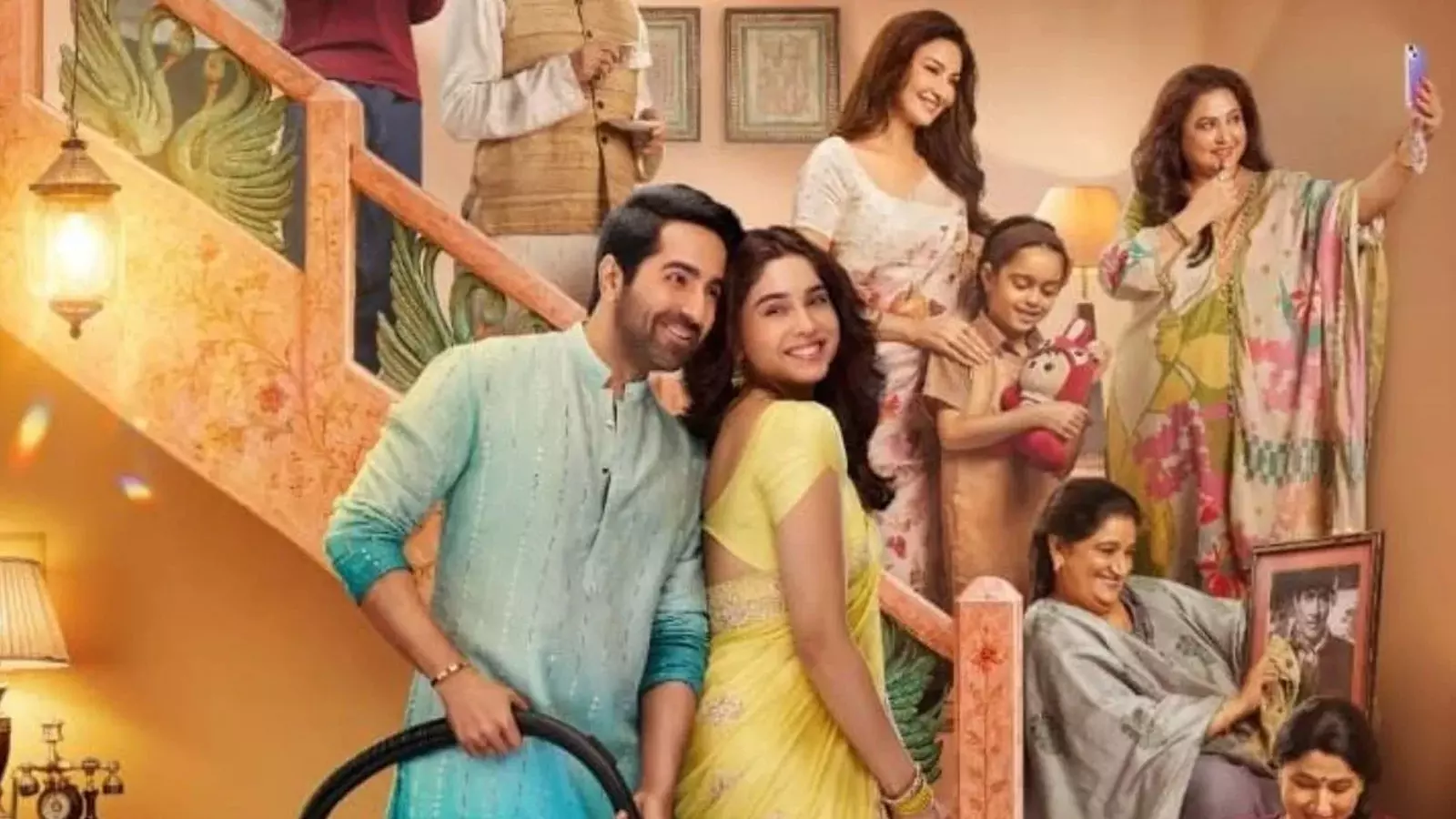
Ayushmann Khurrana and Sharvari in Yeh Prem Mol Liya. Photo: Wikipedia
The year was 1989. Maine Pyaar Kiya catapulted actor Salman Khan to superstardom (the actor had his debut a year before with a supporting role in Biwi Ho Toh Aisi, but this was his first film as the lead) and established the film’s debutante director Sooraj Barjatya as the storyteller who would, for years to come bring to the Indian audience a world filled with romance and family values, wrapped in feel-good cinema. The film also gave the Indian audience a character whose enduring charm continues to draw moviegoers to theatres — Prem.
Played again by Khan in the next two Barjatya directorials, Hum Aapke Hain Koun…! And Hum Saath Saath Hain, Prem became a household name, his cult status further elevated by his being the perfect man in every way, sensitive, upright, devoted to the family. The plots changed, the actors around him changed, but the basic qualities of Prem remained the same. He was a green flag even before the term became part of popular cultural discourse. Oh, the irony of Prem becoming synonymous with Khan, who had over the years earned the reputation as Bollywood’s enfant terrible, given his mercurial temperament.
Though a few other actors did play Prem in subsequent Barjatya films — Hrithik Roshan and Abhishek Bachchan in Main Prem Ki Dewani Hoon and Shahid Kapoor in Vivah — Khan’s name remained synonymous with Khan, and he stepped up to play the character again in the 2015 release Prem Ratan Dhan Payo.
Now, 37 years after Prem first wooed the audience on screen, Ayushmann Khurrana steps into Khan’s shoes to play the character in Barjatya’s latest directorial, Yeh Prem Mol Liya, releasing on November 27.
Also read: Why for singer Susha, Grammy-nominated Varuvaaiy, based on Bharatiyar poem, has a personal connect
“There can never be a better Prem than Salman Bhai. We all idolise him as Prem, and that was the character that launched him. And what a remarkable journey,” says Khurrana, an actor known for his rootedness and real, relatable performances, who has won critical acclaim playing flawed, believable characters in films such as Vicky Donor, Dum Laga Ke Haisha, Bala and Andhadhun.
In an industry that has often celebrated toxic masculinity and endorsed the alpha male, Khuranna considers Prem his most ‘perfect’ character to date.
“This man is a green forest [bigger than a green flag]. This is the first time I am playing a character who is the definition of perfection, having played imperfect characters in most of my films. But to play Prem is a responsibility. You have to walk the talk to embody what makes a perfect man. Is he sensitive, kind, emotionally available? He is the representation of the ideal male. There is a lack of Prems in the world today, so I am glad I have got to play him. Also, my decision to do this is self-centric because it is only going to enhance my filmography.”
A new, ‘woke’ Prem
For Barjatya, however, there could have been “no one better” than Khurrana to play the new, ‘woke’ Prem in what is the banner’s 61st film. The film is a departure from his previous outings, which were synonymous with the grand celebration of the big fat Indian wedding, its many festivities and the bonhomie around the warmth and togetherness of an extended family. This time around, he challenges the patriarchal norms set against the backdrop of marriage, questioning conventions and norms through his leading man.
File photo of Ayushmann Khurrana receiving the National Award for his film Andhadhun. Photo: Wikipedia
We see a vocal and headstrong heroine, Purva Solanki, played by Sharvari, who refuses to leave her parental home after marriage and instead has her husband Prem move into the Solanki family with parents.
“Even Salman says he [Khurrana] is the perfect person to play this Prem. In this film, I have to say something through Prem, and I needed someone who could believe in what I am trying to say and convince the audience. It is always about the film,” says Barjatya.
He adds: “What I admire about Ayushmann, apart from the films he has lent his name to, is that he weighs the project as a whole and never thinks about what he can gain out of it. That is the best part of an actor. Also, as a person, he has a very valid point of view on things. The story is very particular, and when it came to me, I only thought of him. I needed him more than he needed me. This is the first time my hero is questioning society, but softly, and that could only have been done by Ayushmann. His simplicity is endearing.”
File photo of Sooraj Barjatya. Photo: Wikipedia
Even though the film has all the trappings of a Rajshri film, bearing in mind its family drama USP, this time it is shaped around the interplay of tradition and modernity.
For both Khurrana and Barjatya, one of the ironies of the present times remains that while communication has become easier, the distance between people has only grown.
“People, irrespective of whether they live in joint or nuclear families, hardly interact with each other the way they used to. I really feel that, somewhere, we need to bring that back, and I hope that through this film we can bring them to the theatres”, says Khuranna.
Making a case for ‘Belonging’
Rajshri Productions, helmed by Barjatya, has never been known to champion excessive promotions, relying solely on strong word of mouth. But at a time when the fate of a film is decided within hours of release, through bulk bookings and endorsements, how does one stay afloat?
“Every film comes with its own ‘kundali’ [horoscope]. Some do well on the first day, some take time, while others take even longer. It is unfair to judge every film through the same lens. Make your film and don’t worry about collections. Make an entertaining film, value your audience... If your film doesn’t work, you will get another chance,” says Barjatya pragmatically.
He adds: “When I was young, yes, I was driven by the ambition that my film should be number one or among the top three. At 61, I don’t have such aspirations. I just want the story to resonate. I have seen people who have been watching my cinema for nearly four decades and they have grown up in front of my eyes and continue to come to watch my films.”
File photo of Sharvari. Photo: Wikipedia
Sharvari, who steps into the universe of the Rajshri heroines, following in the footsteps of Madhuri Dixit (Hum Aapke Hain Koun…!) and Bhagyashree (Maine Pyaar Kiya), among others, is also having her moment at the box office. The actor’s performance in Imtiaz Ali’s Main Vaapas Aaunga has won her considerable appreciation.
Speaking about the love coming her way, she says: “I am grateful for it, as well as for the acceptance by the audiences. Also, for the directors having faith in my ability to carry out these diverse roles, trusting me to bring out their vision on screen. I only did my work, selected the films and the characters that I wanted to play, as well as the genres that I wanted to explore as an actor. I’ve tried to explore new looks, new characters, newer energy.”
While she insists that box-office openings do not determine her choices, she acknowledges that audience reach matters at this stage of her career. “I do feel that when many people watch the film, it does help you in getting next films because that’s the kind of stage that I am in. Not everybody knows you now. They start getting to know you with each film.”
Also read: Why backlash against ‘warrior Sita’ is telling of India’s discomfort with strong, independent women
In a scenario where narratives are increasingly driven by slice-of-life stories with complex, layered and multi-dimensional relationships, Barjatya believes there is room for every kind of cinema. In Yeh Prem Mol Liya, he makes a case for togetherness with a reminder that while traditions may evolve, the need for belonging, companionship and family remains. Bringing his vision to life is a Gen Z ‘heroine’ and a millennial ‘hero’ who brings his own history of playing socially relevant characters to the iconic ‘Prem’.