How Grammy nomination for ‘Varuvaaiy’ recalls Bharatiyar’s desperate desire to be one with Krishna
The poem by Subramania Bharati, set to tune by singer-composer Devan Ekambaram and sung by Susha (Subiksha Rangarajan), has been nominated for the 2027 Grammy Awards, the first Tamil song to receive the recognition.

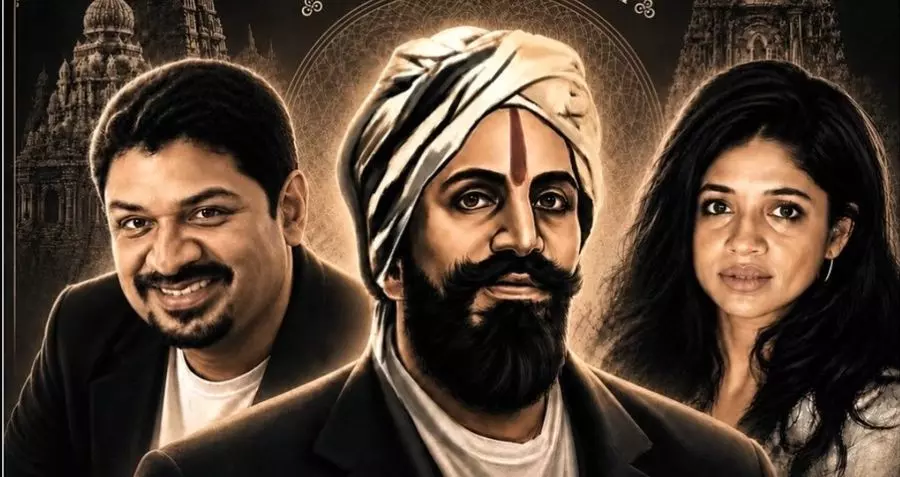
Composed by Devan Ekambaram and sung by Susha (Subiksha Rangarajan), Varuvaaiy has become the first Tamil song to receive a Grammy nomination.
The desire to find union with the Divine has moved many, cutting across faith, colour, language, race, gender and caste. It has also given us a treasure trove of devotional poetry, Bhakti and Sufi music and Bhajans. For ‘Mahakavi’ (renowned poet) Subramania Bharati, popularly known as ‘Bharatiyar’, that desire found expression in an intimate appeal to the Hindu deity Krishna in the song ‘Varuvaaiy Kanna’.
And now, more than a century after his passing, the global audience is rediscovering the poet’s heartfelt plea, with singer-composer Devan Ekambaram’s musical version of ’ Varuvaaiy ’, movingly sung by Susha (Subiksha Rangarajan), to the accompaniment of Anil Srinivasan’s piano rendition. The song received a nomination for the 2027 Grammy Awards this week, the first Tamil song to receive the recognition.
While it is a great moment for Tamil language and literature and Carnatic music, it also gives us a great opportunity to revisit the treasure trove that is Bharatiyar’s writing.
Seeking union with Krishna
In ‘Varuvaaiy’, Bharatiyar makes a desperate appeal to Krishna (Kanna in Tamil), “to be the light of his body, the nectar of his life, an embryo within and his eyes”.
Singer Subiksha Rangarajan, better known as Susha. Photo: Facebook
Bharathiyar believed in the oneness of life. He sang songs of connection. His New Aathichudi (one liners extolling virtues) is an embodiment of ‘oneness’. In another song, ‘Paramporul Vaazhthu’, he writes, “He who wears aathi garland and crescent moon/Whose meditative purity flows like a tune/He who is dusky in hue, serene on the milky sea/To Prophet Mohammad, He gave Truth’s key/Called the Father of Jesus, addressed/By many faiths, in forms diverse/Beyond all shapes, elusive to mortal verse/The Eternal One Who pervades creation/In myriad forms,/Radiant with wisdom’s undying light/Those who see His essence shed sorrow’s night/Our voices rise and praise His grace/To dwell in eternal Bliss.
Like ‘Varuvaaiy’ (will come), Vaaraiy (you come) is one of his favourite words. While addressing the ‘Goddess of poetry’, Bharathiyar prays to her with Vaaraiy.
Albert Einstein once famously said: “There are two ways to live. You can live as if nothing is a miracle; you can live as if everything is a miracle.” Bharathiyar always wondered at the ‘miracle of life’, but for him that wondering always led him to the divine, making him ask, “How many crores of pleasures have you created, my beloved God!”
His lyrical verses on nature are Zen-like. He loved life and death in the same breath. In both his desire to be ‘one with God’ and dismissal of death as a step towards attaining that ideal, Bharatiyar had something in common with the Sufi poet Rumi.
He appreciated the beauty in every being and every object. Varadarajan Ramaswamy, who wrote a biography of Bharathiyar, had been heartbroken that the great poet did not get the recognition due to him.
A millennial singer, Susha, and an independent musician, Devan Ekambaram, have now done their bit to change that in some measure.