How the sandwich is seeing a ‘main-character moment’ in India
For long the safe café choice or the dependable hotel coffee-shop staple that arrived neatly cut into triangles, the sandwich has moved from being a quick-fix to something diners seek out. Gourmet breads, experimental fillings, photo-worthy presentations and people ready to pay for the works — the sandwich is now being associated with the kind of variety, customisation and precision usually associated with fine dining.

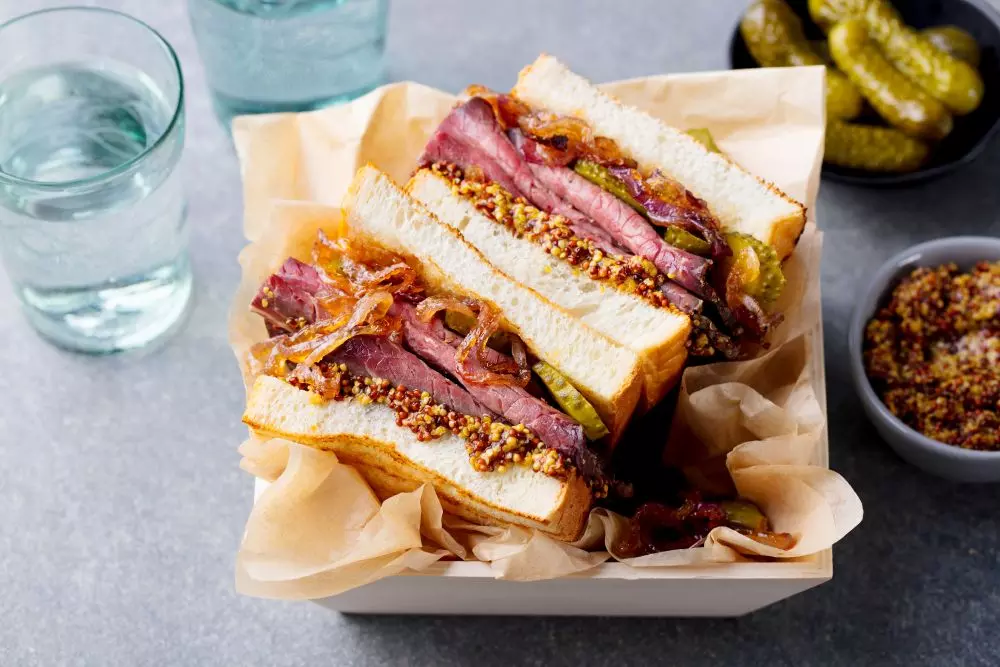
Today, the sandwich bread might be house-made sourdough, sea-salt focaccia, brioche or pillowy shokupan (Japanese milk bread). Inside, you could find crispy chicken katsu, burrata, house-cured pastrami, mortadella, kimchi, a black gram patty, chilli-oil-braised tofu or even a distinctly Indian rajma galouti. Photo: By special arrangement
Time was when a sandwich was what you ordered when you didn't quite know what else to eat. It was the safe café choice, the dependable hotel coffee-shop staple, the thing that arrived neatly cut into triangles and rarely surprised. A club sandwich with its layers of chicken, lettuce, tomato and egg; a grilled cheese; perhaps a Bombay toastie — these were the familiar, comforting and, above all, uncomplicated choices.
Today, the sandwich has become considerably more ambitious. Walk into a new-age café or fine-casual restaurant in Delhi, Mumbai or Bengaluru and the sandwich is likely to demand your attention. The bread might be house-made sourdough, sea-salt focaccia, brioche or pillowy shokupan (Japanese milk bread). Inside, you could find crispy chicken katsu, burrata, house-cured pastrami, mortadella, kimchi, a black gram patty, chilli-oil-braised tofu or even a distinctly Indian rajma galouti. The sandwich has moved from being a quick bite to something diners actively seek out.
And increasingly, they are willing to pay for it.
“The sandwich is finally getting its main-character moment,” says Kedarnath Shetty, founder of Mumbai-based Angry Toast, pointing to a shift in the way diners understand the format.
And they are willing to pay for it. No longer does spending Rs 1,000 on a sandwich seem like an absurdity in India. This is because the diner is no longer paying just for bread and filling. They are paying for the work behind it — as Hussain Shahzad, executive chef at the Mumbai-based Hunger Inc. Hospitality, puts it, premium pricing is justified when ingredients are exceptional, components are made from scratch and the sandwich has been carefully balanced.
Thirty-eight-year-old Abhishek Roy, a marketing professional, finds himself reaching for a sandwich at least three to four times a week. “For me, sandwiches are wholesome, and spending around Rs 500 - 700 on one works perfectly fine because they keep me full for a long time. The best part is that I try not to repeat my fillings every week—I like experimenting with something new.”
It begins with the bread
It is, in many ways, a sandwich renaissance. At its heart, it is about treating a modest, quick-fix food with the same care and precision usually associated with a restaurant dish.
Udai Pinnali, CEO of Aditya Birla Hospitality, believes this shift is also a reflection of a more informed Indian consumer. “Today's consumers are far more conscious about what goes into their food,” he says, noting the growing demand for breads that strike a balance between health and indulgence. Sourdough has become a staple, while alternative grains and flours — from millet-based breads to almond flour — are creating another avenue for experimentation.
Also read: Why current times resonate with the paradox of Dickens’s Tale of Two Cities, Auden's anxious years
At the Delhi-based cafe ‘In Good Co’, Pinnali's brand gives the sandwich bread as much attention as the filling. Turmeric brioche, naturally fermented sourdough, individually baked pesto focaccia and soft milk bread for sandos (a Japanese style sandwich) are each chosen to contribute a different character.
It is a detail that might seem small until you take a bite and the opportunity lies in reinterpreting these flavours in contemporary, accessible ways.
A sandwich at Veronica's in Mumbai. Photo: By special arrangement
The biggest change may be in the role the sandwich plays in the Indian dining landscape.
For years, the sandwich occupied the space between meals. It was something to grab on the run, something packed into a school tiffin or a convenient alternative when there wasn't time for lunch. Now, chefs are designing sandwiches to compete directly with lunch and dinner.
At the Bengaluru-based Sando Club, founder and CEO Jassil Jamaludhin sees this as a fundamental change. “Now it has to be the meal,” he says, describing an approach that combines good protein, fresh ingredients and technique while retaining the convenience of a handheld format.
That means the modern sandwich needs to be satisfying without necessarily being heavy. There has to be protein, texture, freshness, acidity and enough substance to make it feel like a complete meal.
At Angry Toast, that might mean choosing between a crispy chicken katsu, an edamame croquette, spinach and ricotta or pesto with burrata. The idea is less about creating one extravagant signature sandwich and more about designing for different moods.
Shahzad describes the evolution similarly. Diners are no longer seeing sandwiches as snacks; they are expecting them to deliver the variety, texture and substance of a proper meal. The trick, he says, is balance: good bread, quality protein, fresh vegetables, acidity and condiments that add character without overwhelming the whole.
Balance it right, the result is likely to equally satisfy the indulgent eater and the calory counter.
For Bhusan Singh, a gym enthusiast and self-confessed sando lover, the appeal lies in its perfect balance of convenience and versatility. “A sando gives you a wholesome meal of carbs, protein and greens, neatly tucked between two slices of bread and ready to eat on the go. But what really makes it exciting is the endless scope for customisation. From a classic Italian sub to a vegan chickpea salad wrap or an indulgent gourmet grilled cheese, there are virtually no limits to what you can create.”
The sandwich may still be handheld, but the thinking behind it is anything but casual.
Bite for the camera
A good sandwich is an exercise in engineering. The bread has to support the filling without overpowering it. It must absorb sauce without collapsing, offer enough resistance to create contrast and remain pleasant from the first bite to the last.
At Gurugram’s Espresso AnyDay, Tarannum Sehgal's shokupan has become a differentiator. Made in small batches, the soft Japanese-style bread is designed to hold sauces and heat while allowing the fillings to remain the focus. Interestingly, it also taps into something deeply familiar: the nostalgia of the white-bread sandwiches many Indians grew up eating.
So while the bread may look more sophisticated, the emotional connection remains surprisingly old-fashioned.
A sandwich served up at Gurugram's Espresso AnyDay. Photo: By special arrangement
Of course, no conversation about today's sandwich is complete without addressing the mess. The Instagram era has made the sandwich a visual object. Cheese pulls, overflowing fillings, dramatic cross-sections, sauces dripping down the sides and sandwiches that require both hands—and occasionally a stack of napkins—are part of the appeal.
But chefs are quick to point out that visual drama is only half the story.
At Sando Club, the Tiger Sando combines crispy prawn, citrus slaw, chilli oil and a soy-cured egg yolk. The contrasting elements are deliberate: crunch against softness, heat against acidity, richness against freshness. Even the cross-section has been considered.
At Espresso AnyDay, Sehgal describes a similar approach, where crunchy and soft, fatty and acidic, hot and cool, salty and umami are deliberately engineered into the sandwich.
So, yes, the sandwich may be messier. But the mess is often carefully choreographed.
“More” doesn't necessarily mean more ingredients, Khandelwal argues. It means more thought in every bite. A sandwich should be indulgent enough to feel joyful but considered enough for every layer to have a purpose.
That distinction matters. Because nobody really wants to eat a sandwich that is merely engineered for a photograph.
From burrata to rajma galouti
The globalisation of the Indian palate has played a significant role in this transformation.
Today's urban diner is comfortable with burrata, kimchi, shokupan, nduja, pastrami and fermented condiments. Travel and social media have made global food vocabulary increasingly accessible. A diner in Bengaluru can know what a bánh mì or Hokkaido milk bun is without ever having travelled to Vietnam or Japan.
But the more interesting story is what Indian chefs are doing with this global vocabulary.
At the Hunger Inc brand Veronica's, The Very Vero Bombay Toastie takes the familiar Mumbai sandwich and reworks it with roasted beetroot, hash brown, pickled onion and cheddar on sourdough. The Mapo Tofu Sloppy Joe brings Sichuan flavours together with chilli-oil-braised tofu, raw papaya pickle and crispy wonton skin. And The Godfather combines house-made mortadella, stracciatella, arugula and basil crema inside focaccia.
At In Good Co, the idea is described as “Progressive Indianness”: global formats meeting flavours that resonate with Indian diners. Tandoori chicken meets makhani sauce on fermented sourdough; rajma galouti finds itself inside turmeric brioche with mint chutney; and bun tikki sliders arrive with chaat-inspired chutneys.
One of the offerings at Bengaluru's Sando Club. Photo: By special arrangement
This is where India's sandwich story becomes particularly exciting.
The future may not lie in replicating the world's most fashionable sandwiches. It could lie in discovering how India's own culinary vocabulary can transform them.
Khandelwal has already explored ideas inspired by Goan poee, Naga smoked pork and Madurai parotta. For her, the next chapter is about creating sandwiches that could only have come from India—using the country's extraordinary breads, pickles, chutneys, ferments, meats and cheeses.
That is a much more interesting proposition than simply putting an Indian filling into a Western bun and calling it fusion.
Also read: How a Tamil folk performer is taking the art form beyond epics, highlighting climate change, health
Shetty believes the future belongs to better ingredients, stronger execution and sandwiches people genuinely crave rather than photograph once.
The challenge is to make the sandwich feel indulgent without making it excessive. To respect classic formats while giving them new life. To use global techniques without losing a sense of place.
India already has a remarkable sandwich vocabulary hiding in plain sight. There are toasties, chutney sandwiches, Bombay sandwiches, aloo tikki sandwiches, bread pakoras, kathi rolls, poee-based preparations, parotta wraps and countless regional breads designed to hold something delicious.
The gourmet sandwich is not introducing India to the idea of bread and filling. It is simply giving chefs a new canvas on which to express what they already know.