US keen to prise open Indian agri market, in new twist in trade deal
With India steadfast in refusing US agricultural and dairy products, Trump’s threat of fresh tariff on rice may queer the pitch of ongoing negotiations in Delhi

A new twist has been added to the India-US trade negotiation even as it was assumed to have entered the final lap, with a US trade team led by Deputy US Trade Representative (USTR) Rick Switzer landing in New Delhi on Wednesday (December 10) for a two-day engagement.
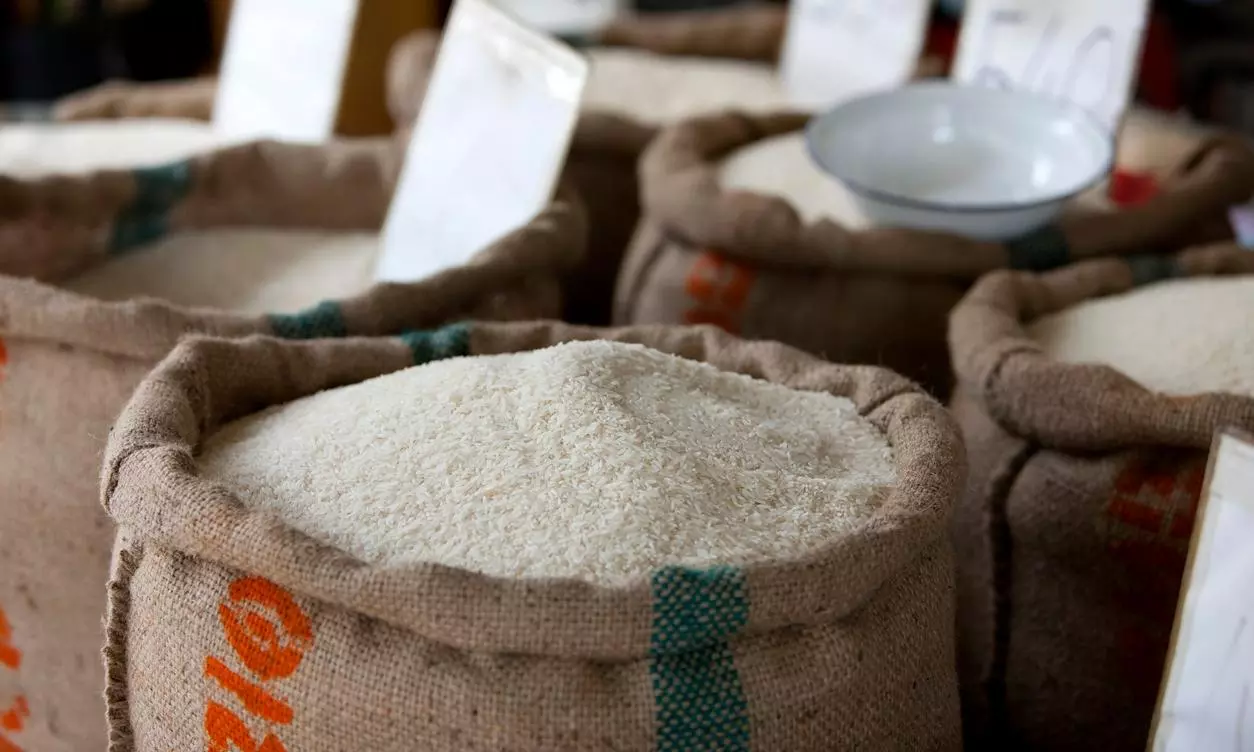
On Monday, US President Donald Trump warned of new tariffs on Indian rice exports, along with that of Thailand. Reacting to the allegation from a representative of the US agriculture sector that India and Thailand were “dumping” rice into the US, Trump reportedly said: “Just give us the names of the countries. Tariffs, again. It solves the problem in two minutes.”
Also read: India, US advancing toward key bilateral trade pact, says Piyush Goyal
On Tuesday, US Trade Representative Jamieson Greer added another twist by telling the Senate that India had made the “best offer” and that both sides were working through the sensitive agricultural barriers.
Why US is desperate for Indian agri market
India has categorically stated that agriculture and dairy were the no-go areas, with the Prime Minister vowing, in August 2025, that he would never compromise with the interest of farmers, dairy and fishermen, knowing well that he would have to pay a heavy price for it.
The US is desperate to prise open the Indian agricultural market because China is no longer an assured buyer. Greer admitted to this in his Senate deposition and said that the US was looking for “a viable alternative market”. Though India was a promising market, the US had found it hard to crack, he went on to add.
India may still not crack and a fresh tariff on Indian rice may not matter very much.
US not a major market for Indian rice exporters
The US is a small market for Indian rice exporters—primarily of premium basmati rice.
According to the Directorate General of Commercial Intelligence & Statistics (DGCIS) data, during the three fiscals of FY22-FY24, the US accounted for an average of 5 per cent of India’s basmati exports and figured at number six. The basmati exports to the US were to the tune of $0.18 billion in FY22, $0.24 billion in FY23 and $0.31 billion in FY24.
Also read: Trump reiterates claim of ending India-Pakistan conflict
As for non-basmati exports, the US does not figure in the DGCIS’s list of major export destinations.
According to the Global Trade Research Initiative (GTRI), in FY25, India’s total rice export to the US was just 3 per cent of the total—at $392 billion. It said, India faced 53 per cent tariff in the US market and 86 per cent of its shipments were of premium basmati, adding “new duties would scarcely dent Indian exporters, who have strong markets elsewhere, but would make rice costlier for American households”.
India’s total basmati rice export constituted just 1.3–1.4 per cent of total exports in FY24 and FY25—at $5.8 billion in FY24 and $5.9 billion in FY25, according to the Commerce & Industry Ministry data.
Why US tariffs won’t matter
A spokesperson of the Indian Rice Exporters Federation (IREF) told The Federal that the impact of a higher US tariff on Indian rice would “not be much”.
Ever since the US imposed a 50 per cent tariff on India (since August 2025), Indian exporters have been exploring new markets in the Middle East and other countries.
Also read: Ceasefire credit, not Russian oil, drove Trump’s tariffs on India, says Raghuram Rajan
According to the DGCIS data, India is the top rice exporter (basmati and non-basmati) in the world with 38.58 per cent share during FY21-FY23. It was followed by Pakistan at 9.17 per cent and Thailand at 9.13 per cent during the same period.
Reason behind Trump’s anger
The new twist—the US expecting India to open its agriculture market—comes after Trump indicated an early breakthrough in the trade talks by claiming that India had heeded his demand to stop buying Russian crude.
Meanwhile, former RBI Governor Raghuram Rajan added another twist to the tariff saga. He reportedly said at an event in Zurich that it wasn’t really India’s import of Russian crude that irked Trump, it was India’s refusal to play along and give him credit for brokering a ceasefire in the Indo-Pak conflict in May 2025 (Operation Sindoor). He said Pakistan “played along” and got 19 per cent tariff; India didn’t and got 50 per cent tariff.