







India must hold satcom 'kill switch': Sunil Mittal warns against foreign monopoly
The Bharti Airtel founder urges local data routing and warns against relying on a single foreign operator for space connectivity

As the Indian government finalises security rules for satellite broadband, Bharti Airtel chairman Sunil Bharti Mittal has warned against relying on a single foreign provider, urging India to retain the network's "kill switch."
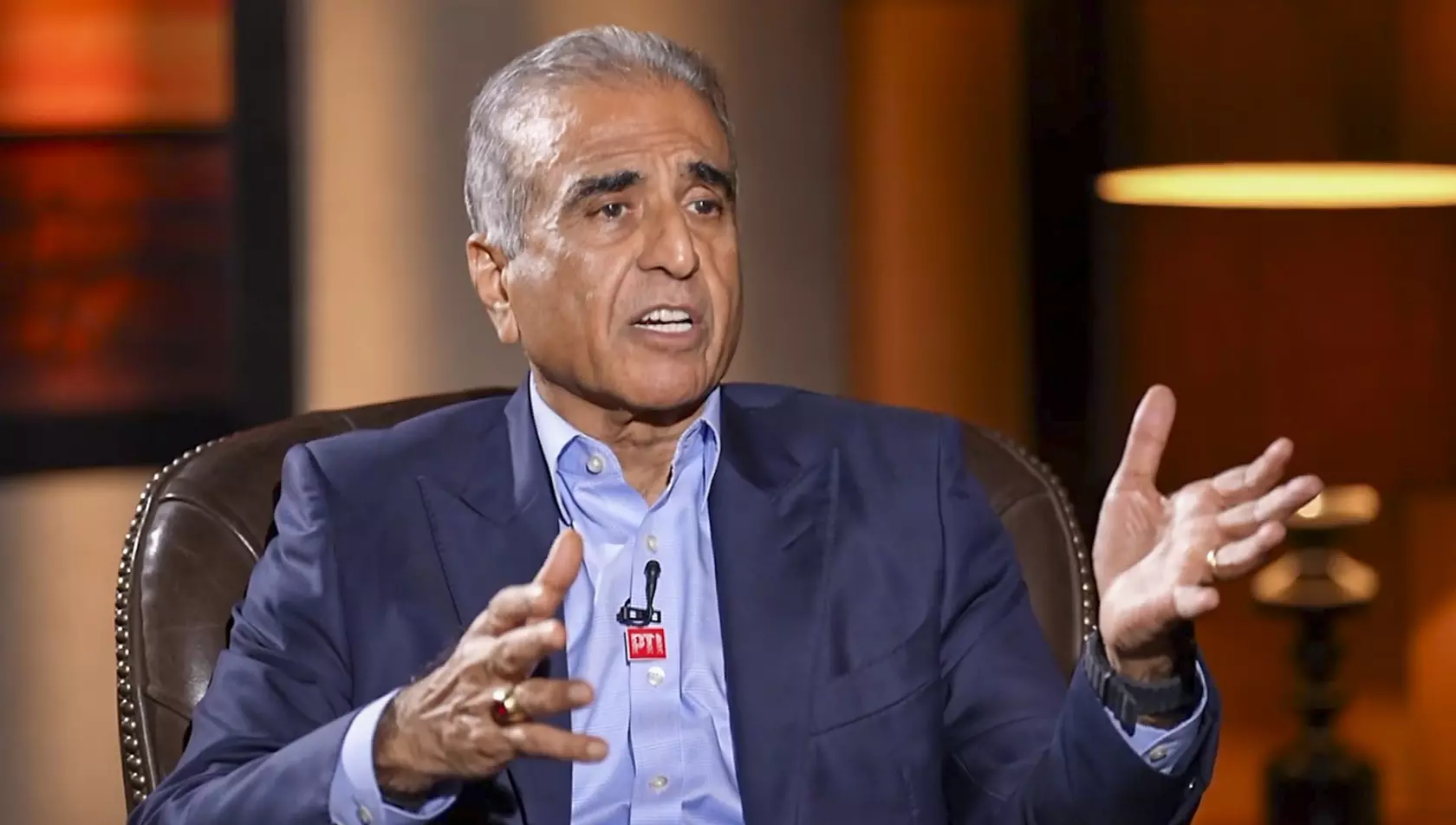
Speaking in an interview with PTI marking the 50th anniversary of Bharti Enterprises, founder and chairman Sunil Bharti Mittal warned that New Delhi must retain absolute operational control — what he termed the "kill switch" — over satellite communications operating within Indian borders.
"The kill switch, as we call it, should not be sitting somewhere else. India must have control over its own space destiny," Mittal said, cautioning against relying on a single foreign company or country for critical communications infrastructure.
Why the 'kill switch' matters now
In satellite communications, a kill switch refers to the technical capability to monitor, throttle, or shut down connectivity — whether for an individual user terminal, a specific border region, or an entire network — during a security emergency.
For that control to rest with India, Mittal argued, every piece of ground equipment must be monitored locally and "everything should be routed through India" via domestic ground gateways, rather than bypassing local oversight.
His remarks come as three major players — Bharti-backed Eutelsat OneWeb, Reliance’s Jio Satellite Communications, and Elon Musk’s Starlink — await final government sign-off to begin commercial services. While all three have secured basic licences, none can launch until spectrum is assigned and strict security compliance rules are met.
Also read: ‘Space could become unusable in 5 years’: Ex-ISRO engineer racing to clean Earth’s orbit
Lessons from Ukraine
For Mittal, satellite broadband is no longer just about connecting remote villages; it is frontline military infrastructure.
Pointing to modern warfare, he noted that drones, cyber operations, and guided missiles are increasingly managed from space. He cited the ongoing war in Ukraine — where both Starlink and OneWeb terminals have been deployed — as proof of how commercial networks become vital battlefield assets, and how risky it is when private foreign operators hold unilateral control over connectivity during geopolitical crises.
"You can't just depend on one country or one company," Mittal said, noting that geopolitical anxieties have also spurred the European Union to pour 14–15 billion euros into building sovereign, secure communications through Eutelsat OneWeb.
Also read: Student teams compete to power India’s space ambitions
The Musk-Ambani friction
The regulatory logjam has unfolded alongside a public war of words between Elon Musk and Reliance Industries chairman Mukesh Ambani.
Musk recently accused entrenched Indian business interests of attempting to block Starlink and maintain a "monopolistic chokehold" on consumers, even sarcastically dubbing Ambani "Prime Minister Ambani" on social media platform X. The Ministry of Communications swiftly dismissed allegations of regulatory bias as "baseless and misconceived."
Ironically, Reliance and SpaceX signed an agreement last year to explore distributing Starlink hardware through Jio’s massive retail footprint — even as Jio develops its own 1,600-satellite constellation aimed at connecting 600,000 Indian villages.
Also read: Reliance responds to Musk’s Starlink allegations: ‘We welcome competition’
Will satellites replace 5G or Wi-Fi?
Despite the hype surrounding space-based internet, Mittal offered a reality check for urban consumers: satellite broadband will not replace terrestrial mobile networks or home fibre.
"Where there is fibre, radio cannot compete with it. Where there is radio, satellite cannot compete with it. But together all of them — just like radio and fibre coexist today — all three will coexist," he said.
Because satellites are capital-intensive and must be replaced every five to six years, space broadband remains too expensive for dense cities. Instead, Mittal said, its real value lies in bridging India’s toughest connectivity blind spots: remote forests, high mountains, oceans, and commercial flights.
(With agency inputs)