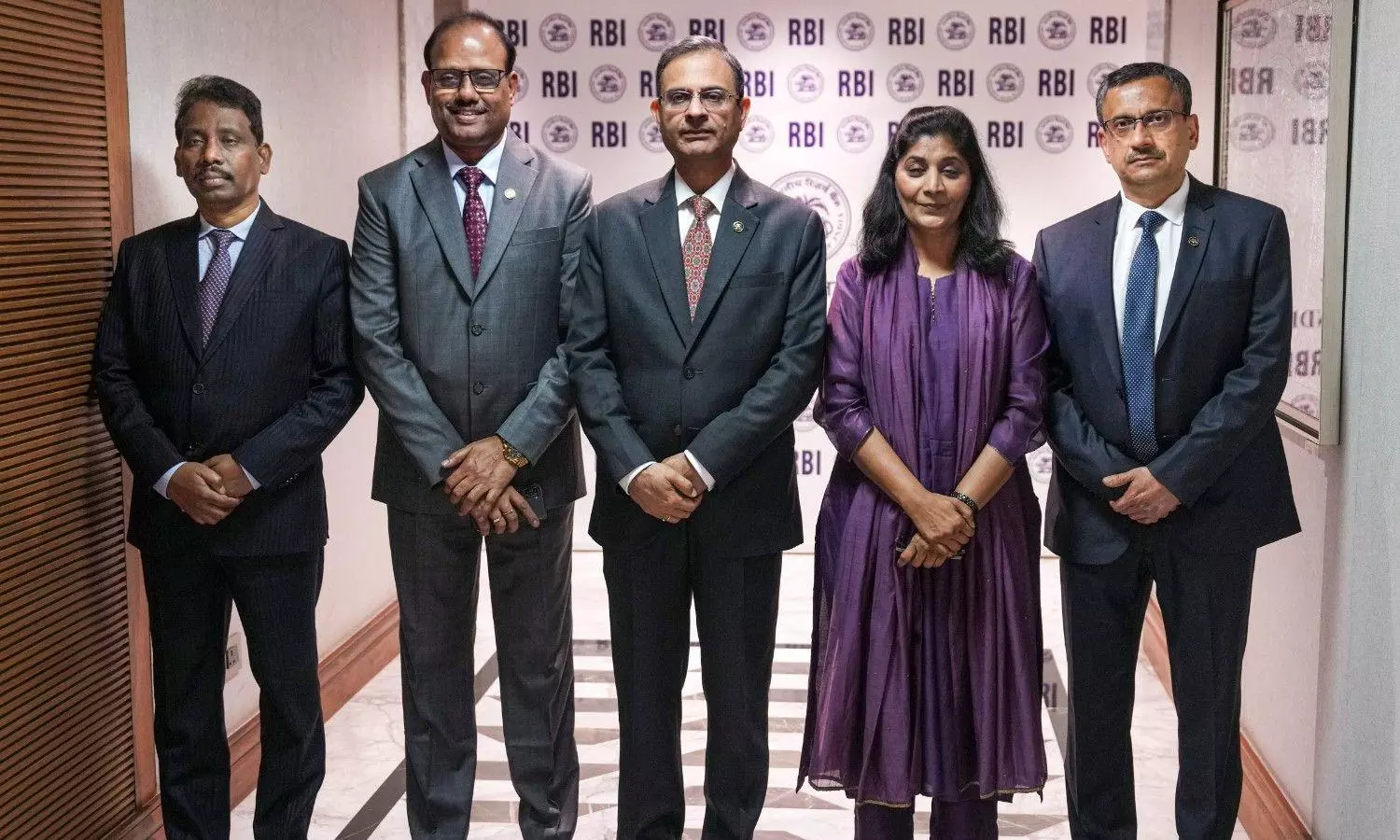
As RBI tightens screws, what it means for your loan, home and food bill
From home loan EMIs and FDs to housing demand, food costs, industry and the rupee, the repo rate hike impact will be felt across the economy, but unevenly

The Reserve Bank of India’s Monetary Policy Committee (MPC) on Wednesday (October 7) changed the direction of the monetary policy, raising the repo rate by 25 basis points to 5.5%. The decision was unanimous.
More significantly, the MPC shifted its stance from “neutral” to “calibrated tightening”, with the stance decision backed by a 4:2 majority.
RBI Governor Sanjay Malhotra said rate cuts are off the table in the near term, indicating that the next move could be either another hike or a pause, depending on inflation and growth.
Also read | RBI raises repo rate by 25 basis points to 5.5 pc; first hike since 2023
The RBI has simultaneously raised its FY27 GDP growth forecast to 7.1% from 6.7%, while increasing its CPI inflation forecast to 5.2% from 5%. The message is clear: the central bank remains confident about growth but is becoming increasingly concerned about inflation.
Why has RBI raised rates?
The RBI sees renewed inflation risks from volatile crude prices, deficient monsoon conditions, El Niño and broader global uncertainty. CPI inflation is projected at 4.9% in Q2 FY27, 6% in Q3 and 5.7% in Q4.
Deloitte India economist Rumki Majumdar said firmer domestic activity, broadening price pressures and elevated oil prices strengthened the case for a pre-emptive 25-basis-point hike.
EY India's DK Srivastava identified three key factors: inflation becoming more generalised and persistent, continuing supply-side risks from crude and commodities and El Niño, and strong growth giving the RBI room to tighten.
For India, expensive oil matters well beyond petrol prices. It can raise transportation, logistics, manufacturing and other input costs, eventually affecting household prices.
What does it mean for your home loan?
Floating-rate home loan borrowers are likely to feel the impact first. When banks transmit the repo-rate increase, borrowers may face a higher EMI, a longer tenure or both.
On a ₹50 lakh, 25-year home loan, an increase in the interest rate from 7.5% to 7.75% would take the indicative EMI from about ₹36,950 to ₹37,766—roughly ₹817 more each month.
Also read | PE investment in Indian real estate jumps 23% to $2.7 billion
The actual impact depends on the lender, benchmark, outstanding principal and reset mechanism.
The practical message for borrowers is simple: do not plan your finances assuming that interest rates will fall soon. Check your reset terms and maintain an EMI buffer.
What does it mean for housing demand?
It is expected that housing demand may moderate, but not collapse. Higher borrowing costs can make buyers more cautious, particularly in affordable and mid-income housing. Buyers may reduce their budgets, increase down payments or postpone purchases.
Pradeep Aggarwal, Founder and Chairman, Signature Global (India) Ltd, said: “While housing demand has been supported by rising incomes, urbanisation and a growing aspiration for homeownership, and has stayed resilient even through global uncertainty, volatile crude prices, currency pressures and persistent inflation risks have made the central bank's task a delicate one.”
He expects higher borrowing costs to temporarily moderate buyer sentiment, particularly in the mid-income segment, although strong fundamentals and the festive season could support resilience.
Anshuman Magazine, Chairman & CEO – India, South-East Asia, Middle East & Africa, CBRE, said the impact of the rate hike on housing demand is likely to stay measured, particularly in the mid and premium segments, “where the underlying demand is still healthy”. “While the 25 basis point increase will push borrowing costs up a little, we expect the sector to hold up,” he added.
Also read | 57th GST Council meet: Arrest powers, input-tax-credit reforms on Oct 7 agenda
He further said robust growth fundamentals and strong buyer intent continue to support the sector.
Santosh Agarwal, Executive Director & CFO, Alpha Corp Development Ltd, shared the sentiment. “While the move could marginally impact borrowing costs and financing sentiment, we do not expect it to significantly disrupt the underlying momentum in the real estate sector,” said Agarwal.
“Housing demand, especially in the premium and mid-to-high-end segments, continues to be supported by improving incomes, urbanisation and strong end-user confidence,” he added.
The broad implication is that higher rates could slow decisions rather than eliminate demand. Premium buyers are likely to be less sensitive than households operating on tight budgets.
How will this impact commercial real estate?
The impact may be more limited in commercial real estate, where demand is supported by technology, Global Capability Centres (GCCs), the Banking, Financial Services and Insurance (BFSI) sector, and corporate expansion.
Pratik Tibrewala, SVP & Head Corporate Finance, M3M India, said: “While borrowing costs may inch up marginally, long-term stability of the rupee helps in attracting global capital and will benefit the real estate sector. The demand for premium housing and commercial assets continues to be strong and is driven by wealth creation.”
Retail real estate could be more sensitive if higher financing costs coincide with weaker discretionary consumption.
How will it impact the food bill?
An important but less obvious transmission channel is the agri-food economy. Divya Kumar Gulati, Chairman, CLFMA of India, said the RBI’s assessment of inflation rising to 5.2%, alongside a widening trade deficit and heightened volatility in global crude prices, “underscores the cost pressures that continue to affect India’s agri-food ecosystem.”
He warned that sustained increases in energy, transportation and input costs could directly affect feed costs for livestock and poultry producers.
“With maize, soybean meal and other feed ingredients already facing price and availability pressures, sustained energy inflation could further raise the cost of poultry, dairy and aquaculture production,” Gulati further noted.
This matters to consumers because higher feed, logistics, processing and energy costs can eventually feed into prices of milk, eggs, poultry and other animal-protein products. Gulati thus stressed the need to strengthen feed security and supply chains so that global commodity volatility does not disproportionately affect farmers or food affordability.
Any relief for savers?
Higher rates can eventually benefit depositors as banks compete for funds.
Rumki Majumdar, Director and Chief Economist at Deloitte India, expects deposit rates to adjust depending on liquidity, credit demand and competition among banks. Fresh and renewed fixed deposits could therefore become more attractive.
However, the real benefit depends on inflation. Higher FD returns do not necessarily mean higher purchasing power if prices are rising quickly.
What happens to the rupee and businesses?
Higher domestic rates can improve the relative attractiveness of rupee assets and potentially support the currency, although crude prices, US rates, the dollar and foreign capital flows remain important.
For businesses, meanwhile, higher interest rates mean a higher cost of borrowing. Highly leveraged companies and rate-sensitive sectors such as automobiles, NBFCs, housing finance and real estate could feel the pressure sooner.
Yet the RBI's 7.1% FY27 growth forecast provides an important cushion. The central bank believes India's underlying economic momentum remains strong enough to absorb moderate tightening.
What should the common man do?
Home-loan borrowers: Check your reset date and prepare for a possible EMI or tenure increase.
Prospective homebuyers: Calculate affordability at current rates rather than assuming an imminent rate cut.
FD investors: Compare rates when deposits mature instead of automatically renewing them.
Households: Maintain an EMI buffer because borrowing costs and food or fuel expenses can rise simultaneously.
Businesses: Factor higher financing and input costs into expansion and working-capital decisions.
The October policy is ultimately a balancing act. The RBI is not signalling a growth crisis; it is trying to prevent rising oil, food and commodity pressures from becoming entrenched inflation.
For households, the clearest takeaway is this: cheaper loans are unlikely in the near term. Borrowers should plan conservatively, while savers may gradually benefit from higher deposit rates.
For housing, the impact is likely to be uneven—with affordability-sensitive segments facing greater pressure, while premium housing and commercial assets retain stronger structural support.
And for the wider economy, the next few months will determine whether this remains a single 25-basis-point adjustment or the beginning of a longer tightening cycle. If inflation stays elevated, another hike cannot be ruled out; if pressures ease, the RBI can pause.
For now, the central bank has made its priority clear: growth remains resilient, but inflation is back at the centre of monetary policy.