


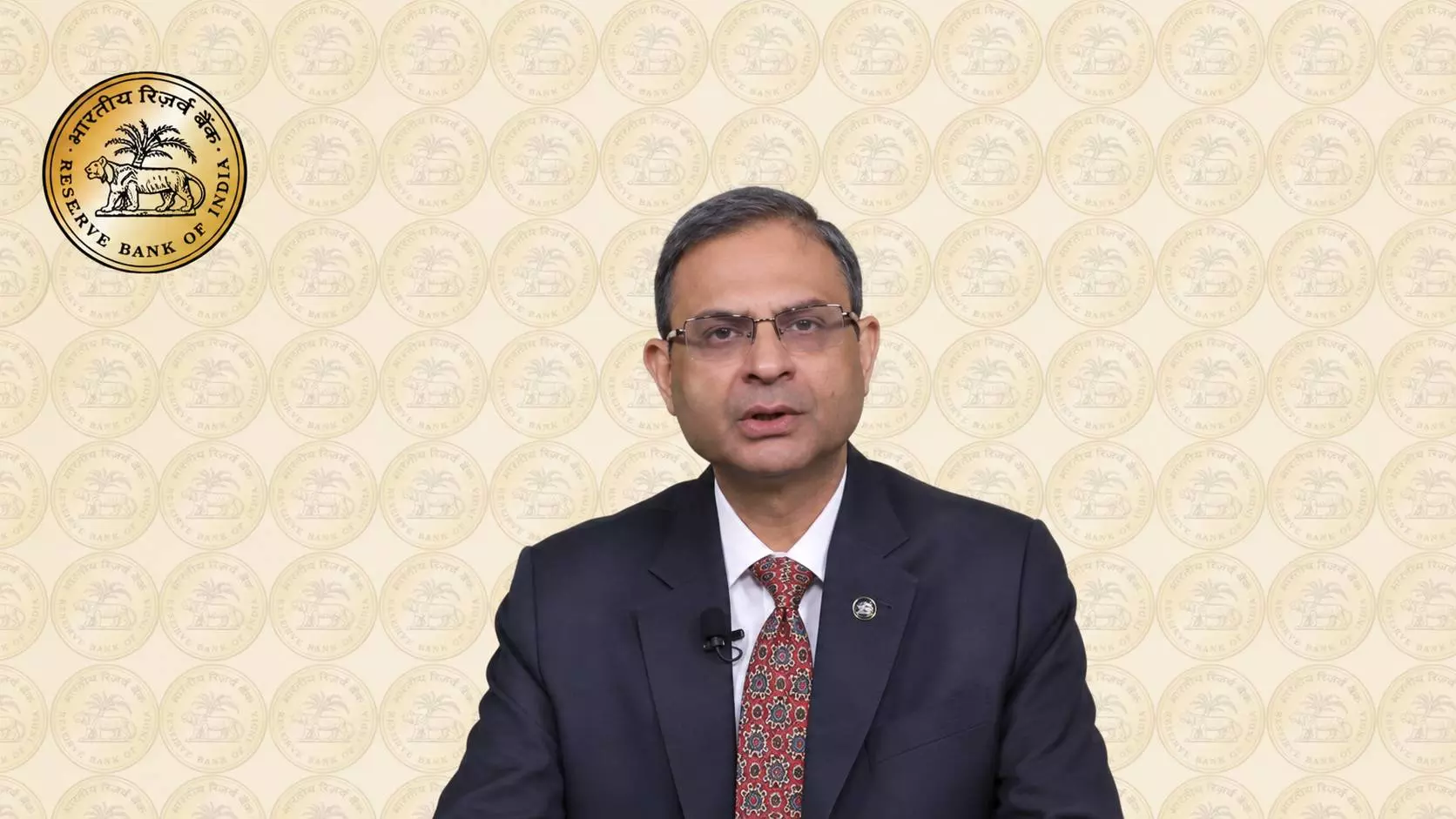
The hike comes against the backdrop of rising inflation, higher oil prices and a weaker rupee. Screengrab: ANI
RBI raises repo rate by 25 basis points to 5.5 pc; first hike since 2023
RBI Governor Sanjay Malhotra-led MPC unanimously raises the repo rate as inflation, oil prices and rupee weakness weigh on the economy

The Reserve Bank of India (RBI) raised the repo rate by 25 basis points, or 0.25 per cent, on Wednesday (October 7), taking it to 5.5 per cent from 5.25 per cent. It is the first repo rate hike since February 2023 and was in line with market expectations.
What RBI Governor said
“After a detailed assessment of the evolving macroeconomic and financial conditions, developments and the outlook, the MPC voted unanimously to increase the policy repo rate by 25 basis points,” RBI Governor Sanjay Malhotra said in a statement.
Also Read: RBI Governor Sanjay Malhotra warns against complacency over financial risks
With the repo rate now at 5.5 per cent, the standing deposit facility (SDF) rate stands at 5.25 per cent, reported ANI. The marginal standing facility (MSF) rate and Bank Rate are at 5.75 per cent.
Meanwhile, retail inflation rose to 4.82 per cent in August as compared to 4.45 per cent in the previous month.
MPC shifts stance to calibrated tightening
MPC changed its stance to 'calibrated tightening' from 'neutral' and also underscored that rate cut is unlikely in the near term given the current conditions.
Also Read: No surprise visits, threat calls: RBI lays down strict rules for loan recovery
Besides, the MPC must have taken into account the recent actions by central banks of developed nations, especially the US Federal Reserve and the European Central Bank.
Last month, the US Fed effected a 25 basis points rate hike to rein in inflation brought on by spiralling oil prices and other factors.
Prior to the Fed, the European Central Bank too raised its key interest rate by 25 basis points.
RBI weighs banking system liquidity
The report further stated that the amount of money available in the banking system was another factor before the RBI. Its special forex swap facility had mobilised USD 132.98 billion through FCNR(B) deposits as of August 31. This added a large amount of liquidity to the banking system and increased the need to absorb some of it.
Also Read: Amid jump in UPI payments, RBI grappling with paradox of growing cash usage: DG
India's domestic economy, meanwhile, has continued to grow. GDP rose 7.8 per cent in the first quarter of FY27.
Economists had earlier expected room for cumulative rate increases of up to 75 basis points, with the repo rate possibly reaching around 6 per cent by the end of FY27.
(With agency inputs)