



RBI holds key interest rate steady as inflation risks persist
RBI holds repo rate at 5.25 per cent as inflation eases to 3.21 per cent. Ceasefire and rupee movement shape outlook amid global recovery expectations

The Reserve Bank of India on Wednesday (April 8) left interest rates unchanged, a decision that had been largely anticipated as expectations build around a global recovery following a ceasefire in the six-week US/Israel-Iran conflict.
West Asia tensions and inflation pressures
The move comes after prolonged West Asia tensions disrupted energy flows, pushed up crude oil prices, and added to fiscal strain and inflation concerns for import-dependent economies like India. Crude oil prices rose above $100 per barrel after the US and Israel attacked Iran on February 28, followed by Tehran’s retaliation, before easing after a ceasefire was announced.
India, which depends on the Middle East for roughly half of its crude oil and the bulk of its cooking gas, was affected by disruptions, including the closure of the Strait of Hormuz, which drove up import costs and strained domestic fuel supplies.
Policy stance and rate decision
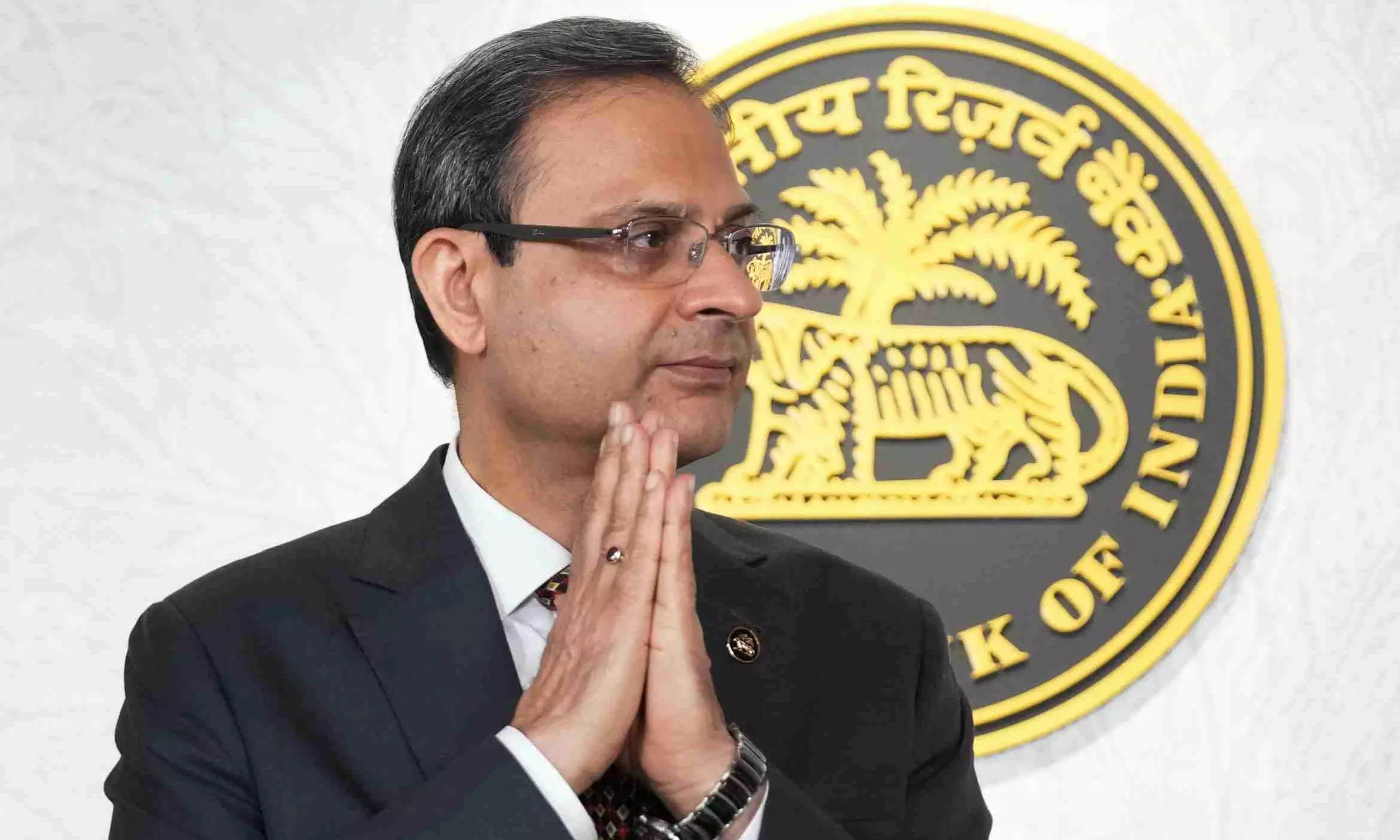
Announcing the first bi-monthly monetary policy of the current financial year, RBI Governor Sanjay Malhotra said the Monetary Policy Committee (MPC) has unanimously decided to retain the repo rate at 5.25 per cent with a neutral stance.
Also Read: RBI’s dual strikes save rupee for time being; will it sustain in long run?
Stating that geopolitical uncertainties had risen since the last policy meeting, he said the rate-setting panel chose to "wait and watch".
"The economy is confronted with a supply shock. It is prudent to wait and watch the changing circumstances and the evolving growth-inflation outlook," he said.
Inflation trends and projections
The rate pause comes on the back of the consumer price index (CPI) based headline retail inflation that moved closer to the RBI's medium-term target of 4 per cent at 3.21 per cent in February.
Also Read: Rupee at 95, Sensex in a spiral: Is India bracing for 2008-kind meltdown?
For the first 11 months of 2025-26, average inflation stood at 1.95 per cent. India's retail inflation had dropped to 0.25 per cent in October 2025, the lowest since the CPI series was introduced.
The central bank projected inflation at 4.6 per cent for 2026-27, within its 2 per cent to 6 per cent target range, and core inflation at 4.4 per cent.
It said risks have risen due to volatile oil markets and the possibility of "second-round effects".
Growth outlook
The RBI projected GDP growth of 6.9 per cent for the current financial year, compared with 7.6 per cent in the year ended March 31, 2026.
"Growth impulses continue to be supported by robust private consumption and investment demand. However, the West Asia conflict is likely to impede growth," Malhotra said.
Also Read: As financial year 2026-27 begins, here are major changes effective April 1
"Higher input costs associated with an increase in energy prices and international freight and insurance costs, along with supply-chain disruptions that would constrain availability of key inputs for downstream sectors, would impair growth,” he said.
The MPC said the intensity and duration of the conflict and damage to energy and other infrastructure add risks to the inflation and growth outlook.
Rupee movement
The rupee has depreciated by over 4 per cent since the war and about 7 per cent over the past year, making imports costlier and adding to inflation concerns. It touched a record low of 95.21 on March 30, 2026.
Following the ceasefire and recent measures, including restrictions on offshore speculative activity, the rupee appreciated by 50 paise to 92.56 against the US dollar.
Also Read: Rs 590 crore IDFC First Bank fraud case: No systemic issue, says RBI Governor
"Let me reiterate that our exchange rate policy remains unchanged. Specifically, intervention in the foreign exchange market is aimed at smoothening excessive and disruptive volatility without targeting any specific level or band for the exchange rate," he said.
"The RBI stands committed to this policy and would judiciously contain excessive or disruptive volatility to ensure that self-fulfilling expectations do not exacerbate currency movements beyond what is warranted by fundamentals,” added Malhotra.
Policy backdrop
This is the first monetary policy review since the government set a new inflation target for the RBI last month, asking it to keep retail inflation at 4 per cent, with a tolerance band of 2 percentage points on either side, for the next five years ending March 2031.
"These have adversely impacted the growth-inflation outlook," Malhotra said. "As reiterated before, we shall remain vigilant of the evolving situation and put in place policies that prioritise the best interest of the economy." (With agency inputs)