



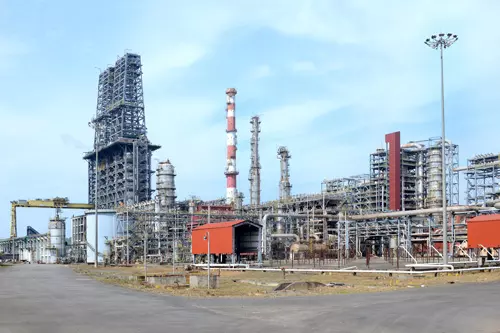
Mangalore Refinery and Petrochemicals Ltd (MRPL), (in pic) along with Chennai Petroleum Corporation Ltd (CPCL) and HPCL-Mittal Energy Ltd (HMEL) - which have negligible retail presence and sell most of the petrol and diesel produced to the three OMCs - would be the most hit by the move
Oil companies weigh refinery price freeze; move may hit MRPL, CPCL most
As global crude prices surge, a proposed shift from traditional trade parity pricing could force private refiners to absorb financial shock of India’s frozen fuel pumps

In a move that could significantly hit standalone refiners like MRPL, CPCL and HMEL, state-owned oil marketing companies are considering paying refineries a price lower than the imported rates of petrol and diesel to limit mounting losses from a retail fuel price freeze.
International oil prices have risen from about USD 70 per barrel before the West Asia conflict to over USD 100, but retail petrol and diesel prices in India have remained unchanged, forcing oil marketing companies (OMCs) to absorb the impact.
With no immediate end to the conflict in sight, OMCs are exploring ways to limit losses on fuel sales, two sources aware of the matter said.
Options to limit losses
One option under consideration is either freezing or fixing a discount on the refinery transfer price (RTP) - the internal price at which refineries sell fuel to marketing arms - to effectively pay refineries less than the import-parity cost of the fuels like petrol and diesel.
The proposed move would prevent refiners from fully passing on higher crude costs through RTP, forcing them to absorb part of the impact if global oil prices remain elevated.
While integrated state-run firms such as Indian Oil Corporation Ltd (IOC), Bharat Petroleum Corporation Ltd (BPCL) and Hindustan Petroleum Corporation Ltd (HPCL) can offset part of the hit between refining and marketing operations, standalone refiners that rely on market-linked RTP for revenue could face a sharper margin squeeze, they said.
Standalone refiners to be hit most
Mangalore Refinery and Petrochemicals Ltd (MRPL), Chennai Petroleum Corporation Ltd (CPCL) and HPCL-Mittal Energy Ltd (HMEL) - which have negligible retail presence and sell most of the petrol and diesel produced to the three OMCs - would be the most hit by the move.
The changes would also impact refiners like Nayara Energy and Reliance Industries Ltd if the freeze or discount on RTP is also implemented for private refiners, sources said.
The two private refiners sell a bulk of their production of petrol and diesel to OMCs, who own and operate 90 per cent of the over 1 lakh petrol pumps in the country.
Traditional pricing
Traditionally, petrol and diesel in India have been priced on an import parity basis, meaning the fuels are valued as if they were imported, even though it is primarily crude oil that is brought into the country and refined locally.
Refinery transfers of these products to oil marketing companies were based on import parity price (IPP) until June 2006, after which the government adopted trade parity pricing (TPP) - a benchmark that assigns 80 per cent weight to import parity price and 20 per cent to export parity price.
Also read: Will the Kharg Island strike impact global energy security? | Capital Beat
This pricing protected refinery margins, particularly of standalone refiners, who did not have the cushion of marketing margins on petrol and diesel, as the pricing was deregulated by the government in 2010 and 2014, respectively.
Despite being freed, petrol and diesel prices have not exactly moved in line with cost and have been frozen since April 2022, with OMCs absorbing losses when crude oil prices rise and making bumper profits when rates fell.
Under consideration
The move on the RTP freeze or discount move is being examined under-recoveries or losses on petrol and diesel have widened, sources said, adding that unlike cooking gas LPG, the government does not compensate OMCs for losses on auto fuels.
Also read: Sensex, Nifty drop nearly 1 pc as West Asia conflict, surging oil prices rattle stock markets
OMCs feel the freezing RTP would effectively distribute the financial burden across the refining ecosystem, but analysts say it could disproportionately affect independent refiners with limited downstream marketing exposure.
Also, it will distort the commitment of market price to standalone and private refiners, sources added.
(With agency inputs)