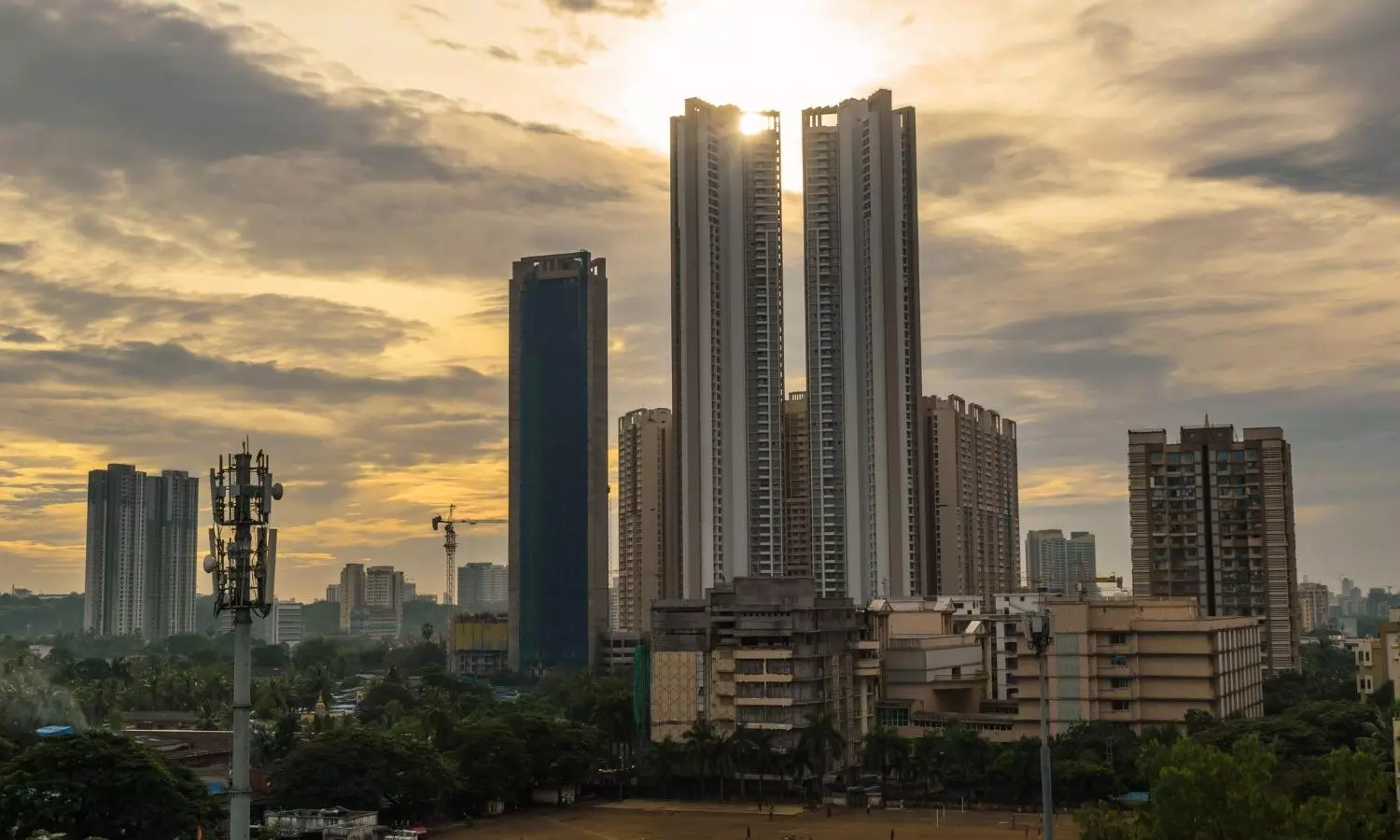
Mumbai enters APAC’s top 10 real estate investment destinations for 2027
With Tokyo, Osaka and Sydney leading investor preferences, Colliers’ latest outlook signals a shift towards value creation, data centres, logistics and alternative assets

India’s real estate sector could see a more diversified investment cycle in 2027, with global investors increasingly looking beyond traditional office assets towards industrial and logistics facilities, data centres, hospitality and residential properties. Mumbai has secured a place among Asia Pacific’s (APAC) top 10 preferred destinations for cross-border real estate investment, reflecting growing international confidence in India’s long-term growth prospects, according to Colliers’ 2027 Global Investor Outlook.
The report, released on November 24, highlights a significant shift in investment priorities as higher financing costs push investors towards strategies that offer greater opportunities for asset enhancement, rental growth and capital appreciation.
Around 60 per cent of potential capital deployment across APAC is expected to be directed towards value-add and opportunistic investment strategies, including development. This marks a departure from conventional investment approaches that prioritise stable, low-risk income-generating assets.
Also read: Real estate market rebounds but cities show uneven trends
Tokyo, Osaka and Sydney emerged as the region’s three most preferred destinations for cross-border real estate investment. Other markets featuring prominently include Melbourne, Singapore, Brisbane, Sapporo, Seoul, Hong Kong, Auckland, Ho Chi Minh City and Mumbai.
Why Mumbai’s ranking matters
As the country’s financial and commercial capital, Mumbai benefits from a diversified occupier base, institutional-grade assets and improving infrastructure connectivity.
Projects such as the Mumbai Trans Harbour Link and Navi Mumbai International Airport are expected to strengthen regional connectivity and unlock new development corridors, further supporting investor interest.
However, the implications extend beyond Mumbai. Bengaluru, Hyderabad, Chennai and other major Indian cities are also positioned to benefit from international capital seeking exposure to India's expanding commercial and consumption markets.
For South India, the growing emphasis on data centres, industrial and logistics facilities and high-quality office assets is particularly relevant. Bengaluru and Hyderabad, with their established technology ecosystems and expanding Global Capability Centre (GCC) operations, are important markets for institutional investors. Chennai's manufacturing base, port connectivity and industrial corridors also offer opportunities in logistics and industrial real estate.
Data centres and alternative assets
While office properties remain a major investment category, investor interest is broadening. At the APAC level, industrial and logistics, multifamily housing and data centres are emerging as preferred alternatives to conventional office investments.
The growing adoption of artificial intelligence, cloud computing and digital services is adding to demand for data centre infrastructure. Around 40 per cent of APAC investors prefer powered land as their acquisition strategy for data centre investments.
Also read: How Delhi-Panipat-Karnal Namo Bharat corridor could reshape NCR property market
India is also witnessing a shift in investment composition. Office assets accounted for 37 per cent of real estate investment during the first nine months of 2026. However, investments in alternative and hospitality assets each increased six to seven times compared with the corresponding period in 2025.
For markets such as Chennai, Hyderabad and Bengaluru, this diversification could translate into greater institutional interest in digital infrastructure, hospitality and industrial assets.
Next office investment cycle
Colliers expects the next office investment cycle to be shaped by a growing gap between premium and secondary properties. Grade A office buildings with strong occupancy, quality tenants and rental growth potential are likely to remain attractive.
In India, Mumbai, Bengaluru, Delhi-NCR, Hyderabad and Pune are expected to remain key destinations for Grade A office investments, supported by demand from GCCs and other occupiers.
Older buildings, meanwhile, may need refurbishment, repositioning or changes in usage to remain competitive.
Flexible capital
Higher borrowing costs are encouraging investors to explore joint ventures, recapitalisations and real estate secondaries. According to Colliers, value-add strategies account for 25 per cent of APAC investment strategy selections, while opportunistic strategies, including development, are contributing to the broader 60 per cent deployment preference.
The outlook also identifies rental growth as a key investment driver, with 66 per cent of respondents expecting it to positively influence real estate markets. Another 53 per cent expect regional economic growth to support investment sentiment.
For India, the message is clear: the next phase of real estate investment will depend less on acquiring assets and more on improving their performance.
With infrastructure expansion, technology-led demand and institutional participation reshaping the market, 2027 could bring wider investment opportunities across India's established property markets. For South India, the emerging focus on technology infrastructure, logistics and high-quality commercial assets could make the region an important beneficiary of this changing investment landscape.