







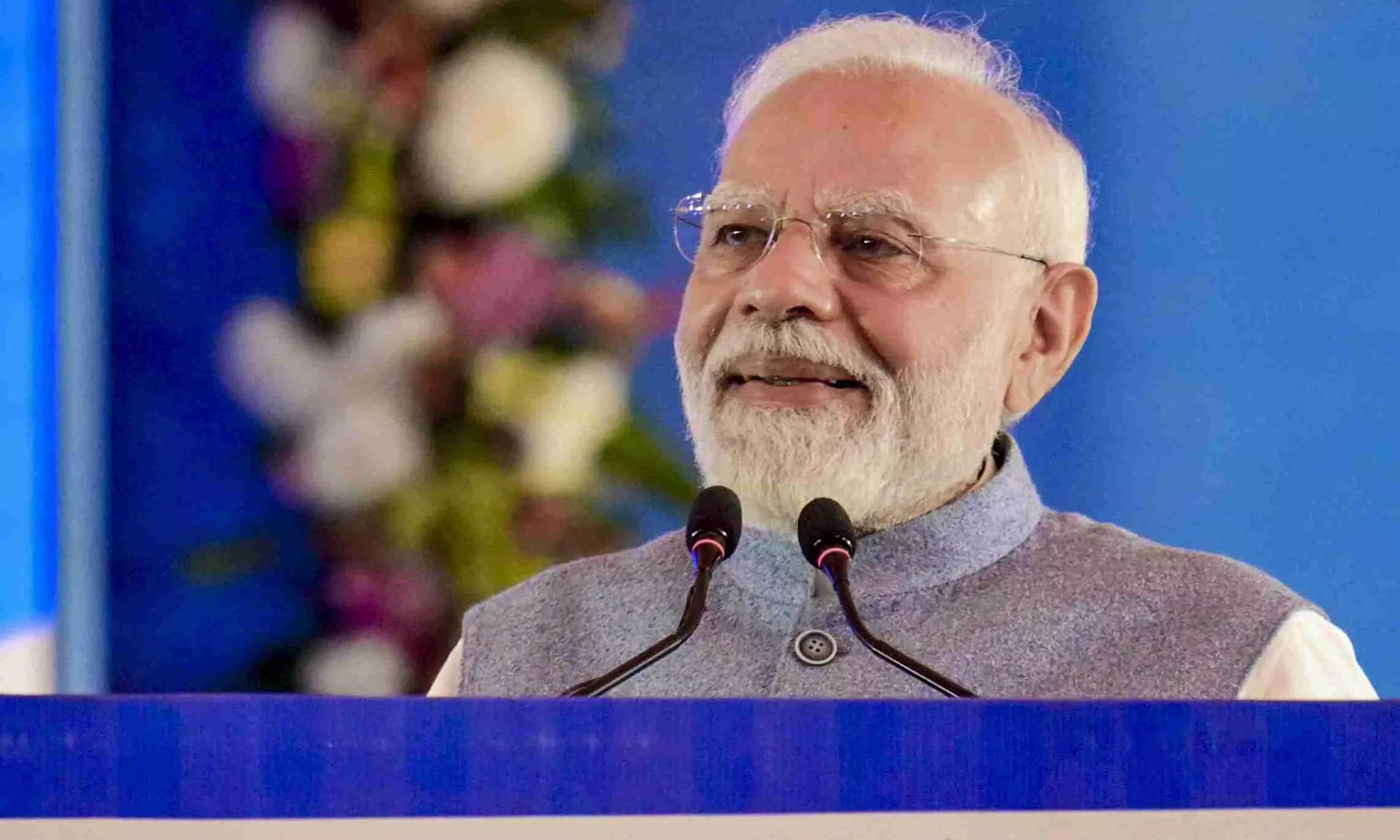
Modi credits his gold appeal for price crash; analysts cite global triggers
PM Modi links gold’s price fall to reduced buying after his appeal; reports point to global interest rates, dollar strength, investor selling as key drivers

Prime Minister Narendra Modi on Saturday (November 21) expressed satisfaction over the recent fall in gold prices, attributing it to an appeal he made in May, urging people to avoid buying the precious metal unless necessary.
Addressing the fifth National Skill Convocation Ceremony in Lucknow, Modi claimed people had responded to his call, leading to lower demand and, consequently, lower prices. Drawing a parallel with former prime minister Lal Bahadur Shastri’s appeal to citizens during a national crisis, Modi praised what he described as the public’s willingness to act in the national interest.
“A year ago, I had urged my fellow citizens that if they don’t need it, please don’t buy gold for a year. I’m happy that people bought less gold, and gold prices fell,” Modi said.
However, market analysts and media reports have largely attributed the sharp correction in gold prices to global macroeconomic developments rather than a decline in retail demand in India.
Gold’s sharp correction
Gold prices in India have reportedly fallen nearly 29-32 per cent from their January 2026 peak of around Rs 1.80 lakh per 10 grams to roughly Rs 1.22 lakh-1.29 lakh in November.
Also read: Gold, silver prices crash ahead of Diwali: Why precious metals are falling
According to reports in leading financial publications, the decline mirrors a broader retreat in global bullion markets that began after a shift in monetary policy in the United States.
The biggest factor behind the correction has been the US Federal Reserve’s return to interest-rate hikes amid persistent inflationary pressures and rising energy costs. Higher interest rates increase returns on government bonds and other fixed-income assets, making non-yielding assets such as gold comparatively less attractive to investors.
As bond yields climbed and expectations grew of further rate hikes, institutional investors reportedly shifted funds away from precious metals, triggering a sell-off in gold.
Dollar strength adds pressure
Another major factor cited by analysts is the strengthening of the US dollar.
Gold is traded globally in dollars, and a stronger greenback typically weighs on bullion prices by making gold more expensive for buyers using other currencies. Reports indicate that the US Dollar Index has risen sharply in recent months, supported by hawkish signals from the Federal Reserve and elevated Treasury yields.
Also read: How can investors cash in on gold, silver price fall? A staggered investment strategy is key
The stronger dollar has coincided with a decline in international gold prices, which has subsequently filtered through to domestic markets, accelerating the correction seen in India.
Analysts have also pointed to a recovery in the Indian rupee as an additional reason for lower domestic prices.
Global investors selling gold
Market reports suggest that forced selling by global investors has further intensified the decline.
A sell-off in technology and AI-linked stocks is believed to have resulted in significant losses for hedge funds and large institutional investors. To raise cash and meet margin requirements, many reportedly liquidated profitable gold holdings, adding supply pressure to the market.
Also read: Expect gold prices to rise over the next couple of months: Economist
The correction has also been accompanied by domestic profit-booking after gold’s strong rally earlier in the year. Despite the wedding season, high prices, inflation concerns and expectations of higher interest rates have reportedly curbed retail buying enthusiasm.
Taken together, analysts say the combination of tighter US monetary policy, a stronger dollar, a firmer rupee and large-scale investor liquidation offers a more comprehensive explanation for gold’s decline than changes in Indian consumer demand alone.