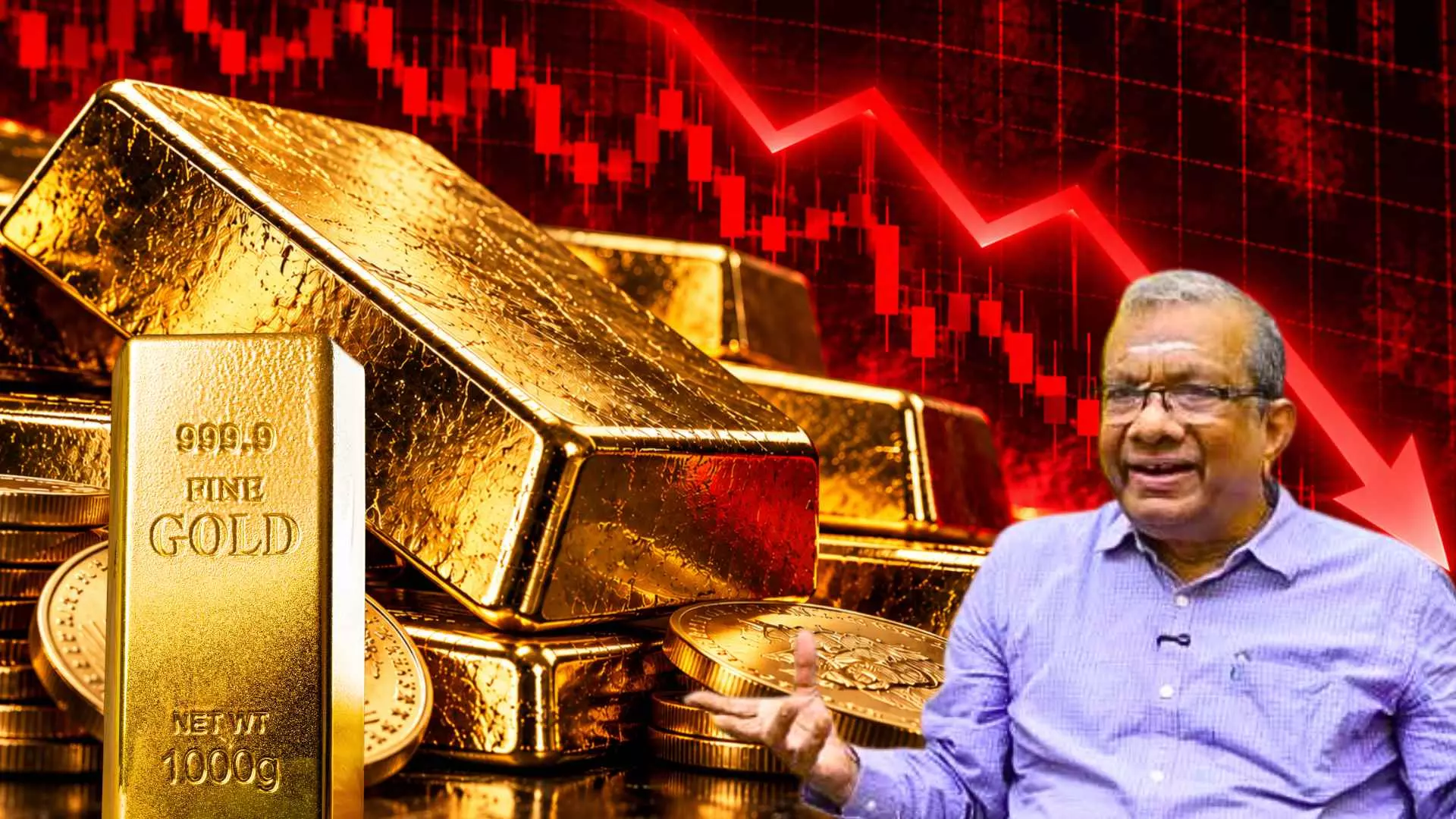
Good time to buy gold, but not jewellery, says economist | Interview
Economist Prabhakar explains, among other things, why he favours gold ETFs and expects prices to rise in the coming years.

Gold prices have witnessed sharp fluctuations in 2026, leaving investors weighing whether to buy, sell or hold the precious metal.
The Federal spoke to economist Prabhakar, who discussed the factors driving gold prices, the case for gold exchange-traded funds (ETFs), the outlook for the coming years and why he believes gold deserves a significant place in an investment portfolio.
Edited excerpts from the interview.
Gold prices have fluctuated sharply in recent months. What are the major reasons behind these fluctuations?
There are four major reasons behind these fluctuations. The first is the strengthening of the US dollar. Whenever the dollar becomes stronger, there is an outflow from gold. Investors sell gold and move their money into dollars.
The second factor is an increase in interest rates in the US. Whenever US interest rates rise, investors tend to move their money from gold into bonds. The recent increase in interest rates by the Federal Reserve has contributed to this trend.
The third factor is profit booking. Once gold reaches its peak or its highest price, large investors sell their holdings to book profits.
The fourth factor is margin calls. In the US, when margin calls occur, investors may have to sell their gold holdings to meet their obligations.
Also Read: As gold prices stay elevated, should digital gold be your smarter Dhanteras buy?
The geopolitical situation also matters. If there is peace, gold prices can come down because investors may start investing in other assets that offer higher interest or returns.
We must also look at the Indian government's position and the rupee's performance. India trades with 40 countries, and the value of the rupee is assessed against a basket of currencies. The Indian rupee is among the poorly performing currencies in Asia.
Whenever the rupee depreciates significantly, gold prices in India rise. These are the key factors investors need to track.
As an investor, is this the right time to buy gold, or should people consider selling it?
This is a good time to buy because prices have come down considerably.
However, what should you buy? I would not recommend jewellery. Instead, you can consider physical gold of 99.99 per cent purity, such as gold bars and coins.
Jewellery loses value over time, and there are concerns about physical wear and tear. There is also the risk of theft.
On the other hand, if you invest in gold exchange-traded funds (ETFs), the average expense ratio over three years is around 0.50 per cent.
With ETFs, you do not have to worry about physical wear and tear or theft. Your investment remains accessible, and you can sell it whenever you need liquidity.
Also Read: Gold or silver: What should you buy now? How do you decide?
How long do you expect the current fall in gold prices to continue?
In my opinion, the fall will not continue for more than a month. We can expect gold prices to rise over the next couple of months. I do not anticipate a very sharp rise immediately, but I expect a gradual increase.
Over three years, gold prices may double. The US dollar's position as the global reserve currency is weakening. It has already served as the global reserve currency for about 110 years.
As the US's influence declines, central banks in several countries have started replacing dollars with gold because they are concerned about the decisions US President Donald Trump might take.
Also Read: Gold ETFs vs gold FoFs: What investors can do amid investment restrictions
Could the current fall continue for longer, or is it only a temporary phase?
I believe this fall is temporary. I have conducted research on this, and my research paper will be available through the link provided to you.
Based on my research, the decline may not continue even for a month. Therefore, there is no need to panic and sell the gold you already own.
Gold is a very important asset. I would advise people not to sell their gold because I estimate that its price could reach Rs 1,86,000 within two years.
Also Read: Gold paradox: Indians sell more but buy more too; a big question is lost in between
That is my estimate, based on econometric analysis in which I considered various factors.
According to my calculations, gold could almost double in value compared with the price at which an investor purchased it. Therefore, particularly in India, investors should not be anxious about holding gold.
So, is this the right time to buy gold rather than sell it?
Yes. Prices have come down, so this could be an opportunity to buy. However, the right way to invest is not through jewellery. Jewellery attracts taxes and making charges. If you later sell the same jewellery, you could lose around 15 per cent of its value. That is not advisable from an investment perspective.
Instead, consider exchange-traded funds. You can approach a bank and open a demat account.
A demat account is a dematerialised account in which your investments are held electronically. If someone asks what assets you own, you can show your holdings on a computer screen.
Also Read: How Electronic Gold Receipts let you invest in pure gold
You need a demat account to invest in ETFs. If you have purchased 100 or 200 grams' worth of gold through an ETF and suddenly want to sell your holdings, you can do so relatively easily. With large ETFs such as Nippon's, you may be able to sell your entire portfolio within about 15 minutes, depending on market conditions and liquidity.
Keep this in mind when investing in ETFs.
You may also consider gold-linked mutual funds. However, my recommendation here is specifically for gold ETFs.
Gold ETFs have grown significantly in India. What is driving this growth, particularly among younger investors?
You are right that the gold investment market has expanded significantly in recent years.
According to the figures discussed, the gold ETF market's assets under management increased from Rs 1.78 lakh crore to Rs 1.83 lakh crore in the period under consideration in 2026. The market has also grown substantially over the past five years.
Younger people who want to invest are increasingly considering these options. Earlier, many people primarily viewed gold as jewellery. Now, they are looking at it as an investment option.
Most financial advisers suggest that gold should account for around 15% of a portfolio. My suggestion is that investors can consider allocating up to 20 per cent of their portfolio to gold.
Also Read: Gold demand drops 70 pc; here’s how buyers are adapting to record prices
You may own a house, hold gold, invest in equity shares and debentures, and keep money in fixed deposits. All these assets need to be considered while planning your portfolio.
Fixed deposits and debentures can provide relatively predictable income. Debentures may offer higher returns because they are debt instruments. In the event of a company's bankruptcy, debenture holders generally rank ahead of shareholders for repayment, subject to the applicable legal and insolvency process.
Therefore, you should consider your debentures, equity shares, fixed assets and house together. Write down your investments and calculate the proportion represented by each asset. Then consider keeping up to 20% in gold.
Why do you recommend a 20 per cent allocation to gold when many people argue that it is not a productive investment? Equities, for instance, offer dividends and yields.
That is a very good question.
As I mentioned earlier, gold is not a yielding asset. You do not receive interest or any other regular income from holding it. However, it offers stability.
Equities, on the other hand, are volatile. Markets can rise sharply, but they can also fall. Over the past month, we have seen how much the equity market can decline.
A majority of people are risk-averse. They do not want to take risks even if doing so could help them earn higher returns. Even investors with a greater appetite for risk can suffer losses when the stock market falls. You cannot assume that investing in the stock market will always generate profits.
That is why I consider a 20 per cent allocation to gold a cushion, particularly for middle-income households and people who are just beginning to invest.
ETFs can be a suitable option for new investors. You can build a diversified portfolio while including gold as an important component because of its stability.
Liquidity is another advantage. My estimate is that gold could almost double in value within three years.
The gold investment market has diversified, with options such as sovereign gold bonds and ETFs. What should investors know about these different options?
You are absolutely right. In recent years, investors have had different ways to invest in gold, including sovereign gold bonds and ETFs. These options need to be considered while making investment decisions.
We must also track the rupee's performance because India imports almost all the gold it consumes, while domestic gold production is insignificant.
Whenever the rupee depreciates, gold prices in India can rise. The Reserve Bank of India uses two measures to assess the rupee's value against a basket of currencies: the nominal effective exchange rate (NEER) and the real effective exchange rate (REER).
The NEER is a measure of the rupee's value against a basket of currencies, adjusted using trade weights. The REER also accounts for differences in price levels.
How can an ordinary investor track gold prices and decide whether to invest immediately or wait for prices to fall further?
You are right that prices fluctuate from one day to another. Investors can track gold prices regularly, but the more important question is when to invest.
My advice is to invest when prices are low. I believe prices are likely to rise, and investors who buy at lower prices could benefit from that increase.
Gold prices have come down now. Ahead of Deepavali, people may receive a bonus or additional income. If you receive a bonus, you can approach a bank and start investing through a gold ETF.
The Union government has stopped issuing new sovereign gold bonds. Why did this happen, and do you expect the scheme to return?
No, I do not think the scheme will be revived. Sovereign gold bonds have created a substantial financial liability for the Government of India. If people purchased these bonds a long time ago, the government would have to pay out a significant amount when redeeming them. I estimate that the government may have to pay nearly Rs 2.1 lakh crore.
Sovereign gold bonds were sold through post offices and other channels, offered an annual interest rate of 2.5 per cent and had a lock-in period of eight years under the standard scheme terms. They were an excellent investment for people who purchased them.
However, they are no longer being issued through new subscription tranches. I think the Reserve Bank of India—or, more precisely, the government—has burnt its fingers by offering this investment option to the public.
What should investors know about the tax implications of selling gold or gold-linked investments?
Whenever you sell an investment at a profit, there may be a tax liability. Short-term capital gains can be taxable, depending on the nature of the investment and the applicable tax rules.
You should not become overly worried about tax. The profit you earn will be considered under the relevant tax provisions, and the amount of tax you pay will depend on the rules applicable to your investment.
Watch the full interview here.