



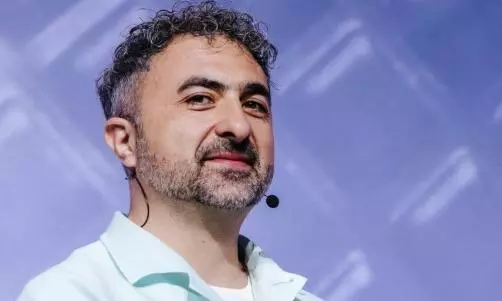
Looking past his 18-month timeline, Suleyman revealed that his ultimate mission at Microsoft AI is achieving "superintelligence". Photo: Instagram
AI set to take over desk jobs in 18 months, warns Microsoft AI CEO amid scepticism
As Microsoft AI's CEO sounds alarm over death of desk jobs, real-world data and "SaaSpocalypse" paint a chaotic picture of marginal gains with AI

In a sweeping forecast on the future of work, Microsoft AI CEO Mustafa Suleyman has said that artificial intelligence will achieve 'human-level performance' on nearly all professional tasks within 18 months.
In an interview to Financial Times, Suleyman's prediction targets "desk-bound" roles—including lawyers, accountants, marketers, and project managers—as the most vulnerable to immediate automation. Suleyman attributed this accelerated timeline to exponential advancements in computational power, which he claims will soon allow AI to write and review code better than human engineers.
Sharpest timelines
Suleyman’s remarks represent one of the sharpest timelines for office-work automation delivered by a major tech leader to date. It also intensifies a debate over workplace displacement that has been building since early 2025, when CEOs first began warning about the staggering speed of AI integration.
According to Suleyman, any professional role that primarily involves "sitting down at a computer" is highly vulnerable to full automation in the near future.
The driving force behind this shift, according to the Microsoft AI chief, is the exponential surge in computational power. As processing capabilities leap forward, he argues that AI will outclass most human programmers in writing and reviewing code, triggering a massive domino effect across the broader knowledge economy.
Also read: AI Impact Summit: AI will create more jobs than it replaces, says MeitY secretary
Suleyman, however, also offered a surprisingly democratic vision for the technology's future. "Creating a new model is going to be like creating a podcast or writing a blog," he noted, predicting a world where custom AI tools can be effortlessly tailored to fit the exact needs of every individual, business, and institution on earth.
Familiar rhetoric
Suleyman’s warning carries a familiar ring, echoing the early 2025 rhetoric when a chorus of chief executives issued similarly dire forecasts. Anthropic CEO Dario Amodei warned last May AI could wipe out half of all entry-level white-collar jobs (though recently changed his tune). Ford CEO Jim Farley said AI would cut in half the number of white-collar jobs in the US
In The Atlantic, Josh Tyrangiel argued the US wasn’t prepared for the coming AI disruption, comparing CEOs’ recent silence on the subject to seeing “a shark fin break the water.”
Suleyman’s warning echoes a widely-circulated essay by AI researcher Matt Shumer, published in Fortune, which compared the current moment to February 2020—the calm before the COVID-19 pandemic struck the United States. Shumer argued that the impending AI disruption will ultimately trigger an economic shock far more dramatic than the pandemic.
This sense of urgency is shared even by the creators of the technology; both Shumer and OpenAI Chief Executive Sam Altman have expressed a sense of alarm, and even personal sadness, as they watch their own innovations rapidly render prior human work obsolete.
Other prominent figures have offered similarly aggressive timelines. Speaking at Davos in January, SpaceX Chief Executive Elon Musk predicted that Artificial General Intelligence (AGI)—AI that matches or exceeds human intelligence—could arrive as early as this year. Meanwhile, writing in The Atlantic, journalist Josh Tyrangiel warned that the U.S. remains dangerously unprepared for the fallout, comparing the recent, uneasy silence of corporate leaders on the matter to seeing "a shark fin break the water."
Different picture on the ground
Despite these sweeping forecasts, the actual data on the ground paints a much more complex picture. A Thomson Reuters report revealed that while lawyers, accountants, and auditors are utilising AI for routine tasks like document review, the resulting productivity gains have been marginal—falling far short of a white-collar displacement crisis.
In fact, some research suggests AI can actually hinder efficiency. A study by the non-profit Model Evaluation and Threat Research found that using AI caused software developers to take 20 per cent longer to complete certain tasks.
Also read: Satya Nadella addresses Microsoft layoffs, defends job cuts amid AI push
Furthermore, the economic windfall of AI remains heavily concentrated. Research by Torsten Slok, chief economist at Apollo Global Management, showed that while mega-cap tech profit margins surged by over 20 per cent in late 2025, the broader Bloomberg 500 Index saw almost no change.
Slok noted that Wall Street consensus expectations indicate investors simply do not believe AI will boost earnings outside of the technology sector.
Slashing jobs and 'SaaSpocalypse'
Still, targeted AI-related layoffs are becoming a reality. Employment consultancy Challenger, Gray & Christmas tracked roughly 49,135 job cuts directly attributed to AI so far this year.
Even Microsoft cut 15,000 workers last year; while AI wasn't explicitly blamed, CEO Satya Nadella noted in an internal memo that the company had to "reimagine our mission for a new era."
Wall Street is also pricing in this anxiety. In February, software stocks suffered a massive sell-off, called the "SaaSpocalypse", after OpenAI and Anthropic unveiled enterprise-grade "agentic" AI systems capable of automating core functions traditionally handled by Software-as-a-Service (SaaS) vendors.
Pivot towards independence
Looking past his 18-month timeline, Suleyman revealed that his ultimate mission at Microsoft AI is achieving "superintelligence."
Critically, he signalled that Microsoft intends to aggressively reduce its reliance on partner OpenAI by building its own independent proprietary systems. "We have to develop our own foundation models which are at the absolute frontier," Suleyman asserted.
Three months later, that aggressive forecast is already showing its age. A mounting pile of real-world evidence suggests that the AI boom is stumbling, even as Anthropic’s Claude continues to dethrone OpenAI as the industry’s top model and capture the lion's share of enterprise revenue.
Despite the growing scepticism, Suleyman doubled down in an MIT Technology Review feature in April, insisting that AI development is nowhere near hitting a performance ceiling.