‘Made in India’ semiconductor chips will be commercially launched this year: MeitY secretary
Currently, almost 90 of the semiconductor chips used in India are imported. More than 60 per cent of the chips imported to India come from China, and another one-fifth comes from Japan

Finally turning a long-delayed dream into reality, semiconductor chips made in India will be rolled out on a commercial scale this year, according to S Krishnan, Secretary, Ministry of Electronics and Information Technology (MeitY).
This will be a major milestone for this high-tech industry that got bogged down due to various reasons despite several attempts made during the UPA regime headed by Manmohan Singh.
Imported semiconductor chips
The massive paucity of semiconductor chips witnessed across the globe in the post-Covid years has eased, the scare created during those years has emphasised the importance of having an indigenous source of uninterrupted supply.
Currently, almost 90 of the semiconductor chips used in India are imported. More than 60 per cent of the chips imported to India come from China, and another one-fifth comes from Japan. The US, Taiwan, South Korea, Malaysia, Vietnam, Singapore and Thailand are other sources of supply for semiconductor chips and their components.
Also read: PM Modi holds AI startup roundtable, nine bilaterals with global leaders
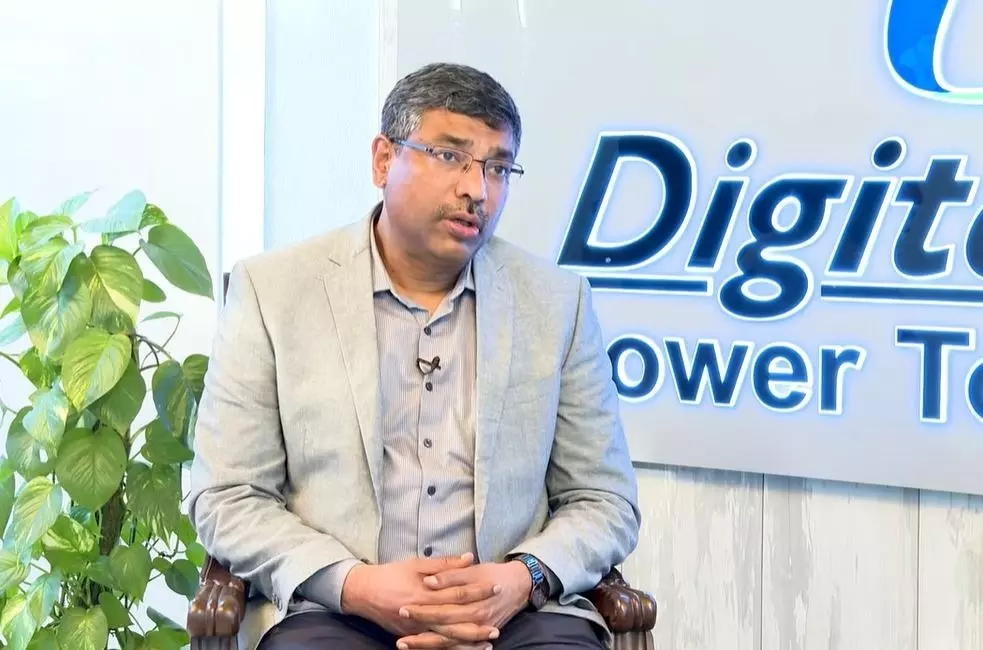
As the boom in the artificial intelligence (AI) sector is expected to result in another spike in demand for semiconductor chips, indigenous production is considered to be a key requirement for India. "We will see deployment of semiconductor chips made in India during 2026 and this is an important development," Krishnan told The Federal in an exclusive interview.
Rs 3,700-cr semiconductor unit
The foundation stone ceremony for a Rs 3,700-crore semiconductor unit is expected to be announced on Saturday (February 21), the extended closing day of the much-discussed India AI Impact Summit that saw global leaders and industry bigwigs landing in New Delhi.
Named "India Chip Private Ltd", the joint venture between Taiwan’s Foxconn and the HCL Group, is expected to come up in Jewar in Uttar Pradesh that is located close of New Delhi. Foxconn has a 40 per cent stake in the project that will have the capacity to churn out 20,000 wafers per month or nearly 430 million chips per annum. The HCL joint venture is the sixth unit approved under the India Semiconductor Mission and is essentially a Outsourced Semiconductor Assembly and Test (OSAT) project that is expected to be ready in 2027.
Also read: PM Modi meets AI, deeptech CEOs on use of AI in agriculture, education
Prime Minister Narendra Modi is expected to address the event through video conferencing with Uttar Pradesh Chief Minister Yogi Adityanath and Union Electronics and IT Minister Ashwini Vaishnav participating.
The participation of the Prime Minister shows the importance attached to semiconductor projects, according to industry experts. Strategic autonomy in semiconductors and AI has been an important aspect underscored by experts after the supply chain shock that followed Covid exposed the fragility of putting all eggs in a few baskets. The US is investing more than USD 50 billion in semiconductor production, while European nations are pouring in another 40 billion Euros.
Hardware bricks for AI
Large investments in the production of semiconductor chips have become critical for scaling up AI technologies that require massive data centres. Data centres cannot function without semiconductor chips that are required for processing huge amounts of data while energy and memory are other basic critical components. The Google data centre, announced at Visakhapatnam in partnership with the Adani Group, is an example of the scale of data centres required for AI – investment of nearly USD 15 billion and a project spread across 600 acres of land.
As of now, multiple semiconductor units are coming up in Gujarat, along with one located in Assam. The Tata Group-PSMC unit in Dholera is among the first semiconductor production units in the country going into production this year. Micron, CG Power and Kaynes are located in Sanand, Gujarat. The Tata Electronics unit in Assam is also expected to go on stream this year.
Krishnan said India already has a strong presence in the semiconductor design space with 20 per cent of the global human resources in this sector located in India, primarily in south Indian states like Tamil Nadu.
Semiconductor production picking up pace in India is critical now, since there have been complaints about shortages and price pressures from various industries like electronic gadgets and automobiles. Global giants in semiconductor manufacturing like Samsung are tightening their supplies and there are apprehensions that prices of items like mobile phones may go up if the current trends persist.