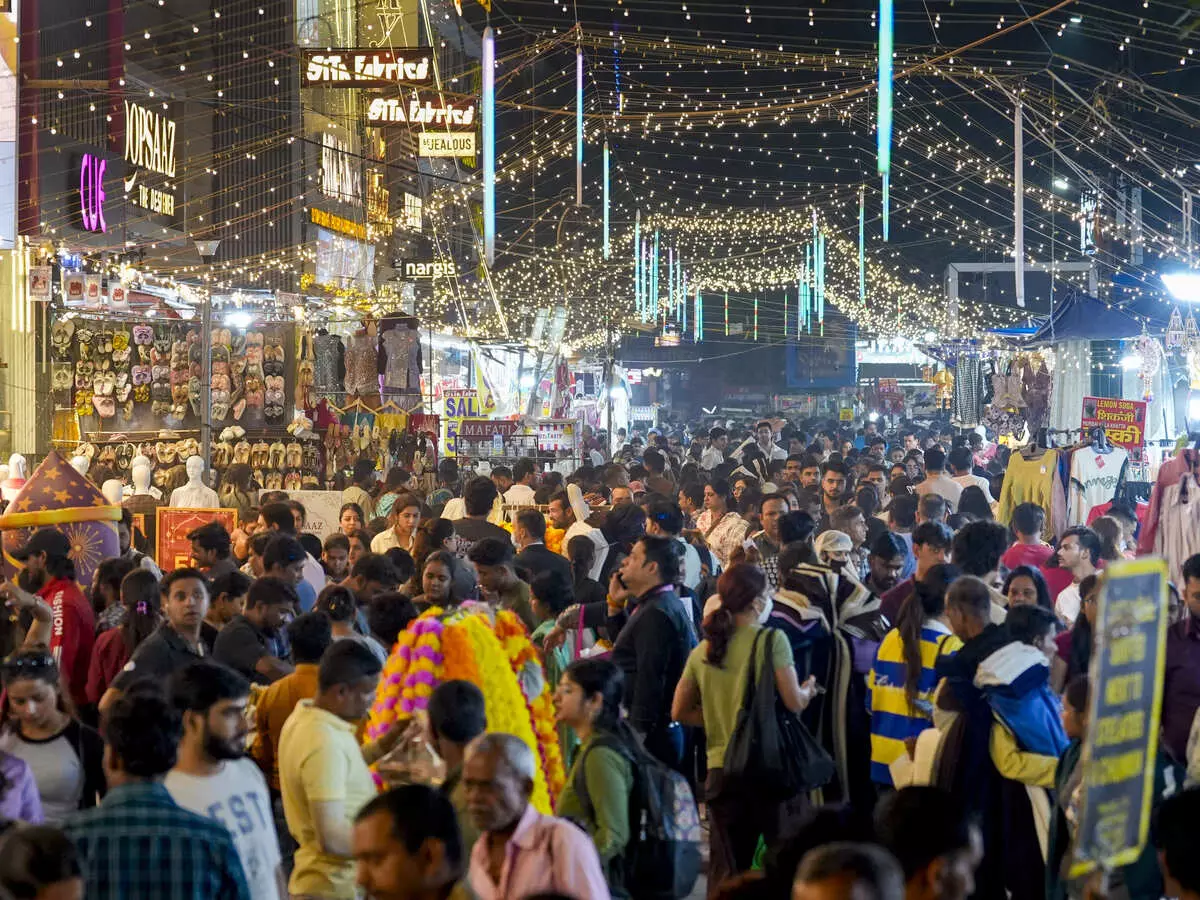
Apparel, footwear and accessories remain the biggest beneficiaries of planned festive spending. Photo: PTI
India's Diwali shopping spend set to fall 6 pc as inflation squeezes household budgets
India's urban festive spending may fall 6% to ₹1.97 lakh crore in 2026 as inflation, high borrowing costs and household budget pressures curb demand

India's festive season is traditionally a powerful engine of consumption, bringing a surge in purchases ranging from gold and electronics to clothing, automobiles and home furnishings. This year, however, the shopping enthusiasm appears to be meeting a more cautious household balance sheet.
Urban India's festive spending is projected to decline 6% to approximately ₹1.97 lakh crore in 2026, from ₹2.10 lakh crore last year, according to LocalCircles' Mood of the Consumer survey. The estimate suggests that households are preparing to spend an average of around ₹20,000 on discretionary festive purchases, signalling a pullback in a season that retailers typically depend on for a substantial share of annual sales.
The survey, which received more than 67,000 responses from urban households across 307 districts, found that 57% of respondents planned discretionary festive purchases, while 31% intended to avoid them altogether. The findings point less to an abandonment of Diwali shopping than to a more selective approach to consumption.
Clothing leads, while jewellery loses ground
Apparel, footwear and accessories remain the biggest beneficiaries of planned festive spending. Around 72% of households intending to make purchases identified these categories, making them the most popular shopping choice.
Home appliances and furniture, alongside travel and holidays, were each cited by 45% of respondents. Gourmet food and gifting accounted for 39%, while mobile phones and consumer electronics attracted 22% of planned purchases. Jewellery, traditionally associated with Dhanteras and Diwali, featured in just 6% of responses.
Also Read: India's festive auto demand holds up; what is industry's biggest challenge?
The spending pattern suggests consumers are prioritising purchases that combine immediate utility with festive appeal. Clothing offers a relatively accessible way to participate in celebrations, while appliances and furniture represent considered household upgrades. Travel, meanwhile, reflects the growing importance of experiences alongside conventional goods.
The weak appetite for jewellery highlights the affordability challenge facing buyers. Elevated precious-metal prices have increased the amount households must commit to acquire the same quantity of gold, potentially encouraging smaller purchases or postponement.
Inflation takes a bite out of festive budgets
The projected decline comes against a difficult macroeconomic backdrop. Retail inflation rose to 5.54% in September 2026, while food inflation climbed to 7.74%, according to figures cited in the survey coverage. Higher food and household expenses leave families with less room for discretionary purchases, even when nominal incomes remain unchanged or increase.
Also Read: India’s smartphone slowdown opens door for refurbished premium devices
Borrowing costs add another constraint. The Reserve Bank of India raised its policy repo rate by 25 basis points to 5.50% in October, increasing the cost of credit at a time when consumers are weighing purchases of cars, electronics and other expensive goods.
There is also a significant base effect. Last year's festive season benefited from GST rate reductions introduced in September 2025, which supported demand by lowering prices across several consumption categories. Without a comparable tax-led stimulus this year, retailers are facing a tougher comparison.
The result is a consumer who is still shopping, but increasingly calculating the value of each purchase.
Savings are financing the celebrations
One of the more revealing findings is how households intend to pay. Around 83% of urban households planning festive purchases expect to draw on savings to finance at least part of their expenditure. Some 34% expect savings to cover at least a quarter of their festive budget, while 16% intend to fund their purchases entirely through accumulated savings.
Also Read: India's Gen Z prefers office work over millennials, Savills survey finds
This reliance on savings suggests that festive demand is not necessarily being supported by stronger disposable income. Instead, households are reallocating money already set aside, potentially leaving less financial flexibility for subsequent months.
For consumer-facing companies, this distinction matters. A purchase financed through savings may sustain sales today, but it does not necessarily indicate a durable improvement in consumption momentum.
Retailers face a more selective consumer
The broader retail picture is not uniformly weak. The Retailers Association of India reported an 8% year-on-year increase in retail sales in September 2026, with quick-service restaurants, food and grocery, and apparel among the stronger-performing categories. However, September's performance preceded the main Diwali shopping period, making October and November more important indicators of festive demand.
For businesses, the challenge is increasingly about winning a smaller share of the consumer's discretionary wallet. Discounts, affordable product ranges, financing options and targeted promotions could become more important in converting hesitant shoppers.
Also Read: India’s warehousing market grows 16 pc in nine months; NCR rent rises 44 pc since 2023
The projected ₹1.97 lakh crore expenditure remains above the ₹1.85 lakh crore estimated for 2024. India's festive consumption story, therefore, is not one of collapsing demand, but of moderation after an unusually favourable year.
This Diwali, the lights may be just as bright, but the shopping basket is becoming more deliberate. For India's retailers and consumer companies, the message is clear: households have not stopped spending. They have become considerably more selective about what deserves their money.