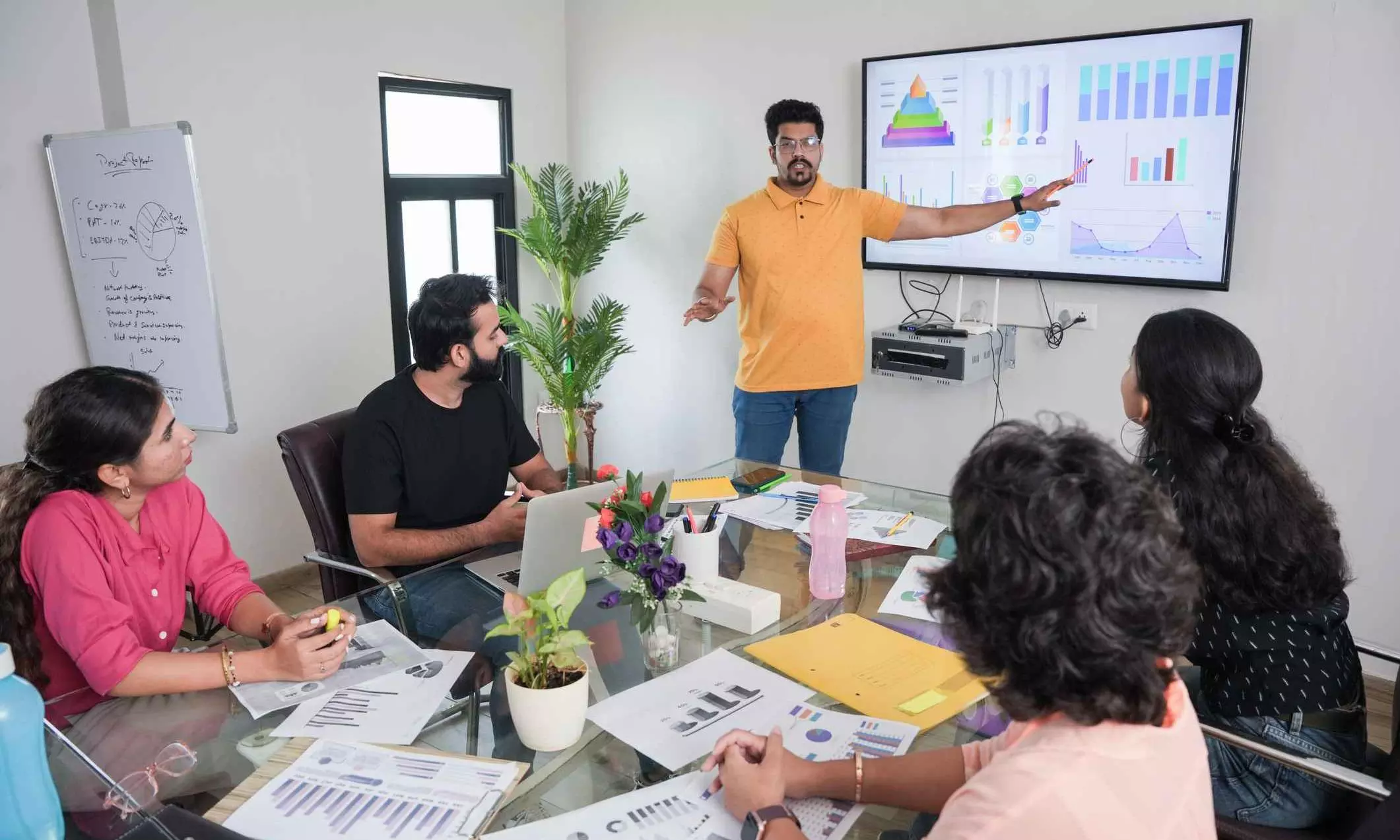
The Savills survey provides an indication of changing preferences, rather than a definitive picture of Gen Z workplace behaviour in India. Representative image: iStock
India's Gen Z prefers office work over millennials, Savills survey finds
Younger employees are placing greater emphasis on workplace connectivity, reliable technology and wellness facilities

India’s Gen Z workforce prefers spending an average of 3.4 days a week in the office, placing greater importance on physical workplaces than millennials, according to a global survey by property consultancy Savills. The findings point to evolving expectations around office spaces, with connectivity, reliable technology and access to lifestyle amenities emerging as important considerations for younger employees.
The survey, conducted by Savills World Research, as part of its Impacts thought leadership programme, collected 645 responses globally between September 4 and 18, 2026. It examined workplace, housing and lifestyle preferences across five generations.
Gen Z workers prefer WFO
Although employees across all age groups currently report attending offices for approximately four days a week, Gen Z respondents expressed a preference for 3.4 days. This compares with 3.2 days for younger millennials and 3.3 days for older millennials. Generation X and baby boomers reported a higher preferred attendance of 3.5 days a week.
Also read: Employee well-being moves up corporate agenda as firms rethink work-life balance
The findings challenge the assumption that younger workers are necessarily more inclined towards remote or hybrid working arrangements. Instead, they suggest that Gen Z employees see value in physical workplaces, provided these environments meet their professional and personal expectations.
Work-life balance nevertheless remains a priority. All Gen Z respondents said it was either moderately or extremely important, highlighting the need for employers to balance in-person collaboration with flexibility.
Connectivity and affordability
Reliable internet connectivity emerged as the most important office amenity across all generations. However, younger respondents placed greater emphasis on access to public transport, while meeting rooms gained importance among older age groups.
The preference for well-connected workplaces is particularly relevant given the commuting patterns of younger employees. According to Savills, 46 per cent of Gen Z respondents travel for at least 41 minutes to reach their workplace, the highest proportion among the generations surveyed.
The consultancy attributed this trend partly to housing affordability, with younger employees more likely to live outside city centres where residential options may be relatively affordable. Longer commutes could therefore increase the importance of office locations with convenient public transport access.
Also read: When less becomes more: Why India's Gen Z is redefining consumption, opting for 'minimalism'
For commercial property developers and office occupiers, the findings highlight the growing significance of location and infrastructure in attracting and retaining younger talent. Connectivity, workplace technology and facilities that encourage interaction could become increasingly important factors in office leasing and workplace design decisions.
Beyond the workplace
Preferences also extend beyond the office. Restaurants ranked as the most popular nearby amenity across all generations, but gyms and wellness centres had stronger appeal among younger respondents. Gen Z participants specifically expressed a preference for gyms and Pilates studios over other wellness-related facilities, including health food stores and padel and tennis courts.
The results suggest that office locations are increasingly evaluated as part of a broader lifestyle ecosystem rather than simply as places to work. Proximity to fitness facilities, restaurants and public transport could influence how employees assess the attractiveness of commercial districts.
Changing expectations
Arvind Nandan, managing director of research and consulting at Savills India, said changing workplace expectations would require organisations to reconsider how office environments support collaboration, career development and employee well-being.
The findings also come as India's office market continues to adapt to changing occupier requirements, with companies balancing employee preferences against the operational benefits of physical workplaces. For landlords and developers, understanding generational differences could help inform decisions on building amenities, location strategies and workplace infrastructure.
Also read: Heart risk among India’s young workforce: Report flags 58.5 pc under-35 employees
However, the survey's findings should be interpreted with some caution. Its 645 responses were collected globally, and Savills said the results reflect the composition of its sample rather than representing every member of each generation or individual regional markets. The research therefore provides an indication of changing preferences, rather than a definitive picture of Gen Z workplace behaviour in India.
As the oldest members of Generation Z approach their late twenties, their growing presence in the workforce is likely to make their expectations increasingly relevant to employers and commercial real estate investors. The challenge for office operators will be to make physical attendance worthwhile through better connectivity, workplace facilities and opportunities for professional interaction.