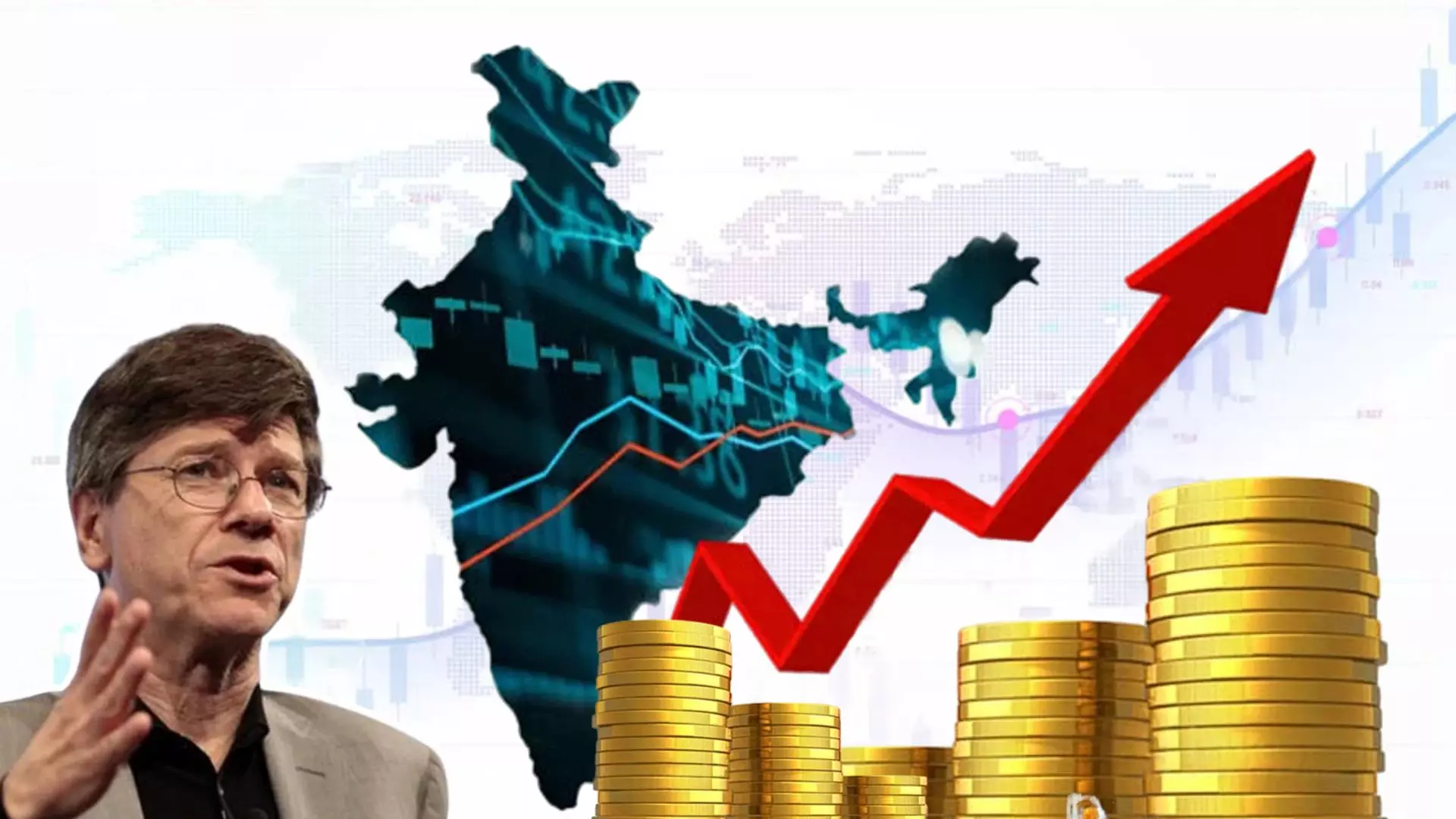
Will India become world’s largest economy by 2100? Jeffrey Sachs’ prediction explained
Economist Jeffrey Sachs predicts India could overtake every other economy by 2100, but says education, infrastructure and climate safety will be crucial to achieving this ambition.

What if India becomes the world's largest economy by 2100? Renowned American economist Jeffrey Sachs believes this ambitious possibility could become a reality.
Speaking at the World Symposium on Ancient Wisdom for Modern Challenges in Varanasi on November 2, Sachs expressed confidence that India could emerge as the world's largest economy by the end of this century.
But what makes him believe India can reach the top, and what will it take to achieve this economic transformation?
Shifting global power
According to Sachs, one of the biggest factors behind India's potential rise is the changing demographic and economic balance across the world. By 2100, India's population could be approximately twice that of China. Meanwhile, Asia and Africa are expected to account for nearly three-quarters of the world's population.
Also read: India's Diwali shopping spend set to fall 6 pc as inflation squeezes household budgets
Sachs believes the centre of global economic power will continue shifting towards these regions, with India emerging as one of the biggest beneficiaries of this transformation.
However, population size alone cannot make India the world's largest economy. The real challenge lies in converting its demographic advantage into economic strength.
Key conditions
Sachs has identified several important conditions that India must address to achieve this ambition.
First is education. India's young population must have access to quality education and acquire the skills required to participate in a modern economy.
Also read: Gold cheaper by Rs 2,500 on Dhanteras; silver falls Rs 2,000
Second is infrastructure. Roads, railways, ports, electricity, and other essential infrastructure must be developed to support large-scale industrial and economic growth.
Third is climate safety. India's economic expansion must be sustainable, while protecting its people and economy from increasing environmental risks.
India's GDP share
Sachs has also highlighted India's growing share of global economic output. According to projections reported by The Energy and Resources Institute, India's share could rise from around 8.5 per cent in 2026 to 13.1 per cent in 2050 and 15.1 per cent by 2100.
These projections illustrate the scale of the economic transformation Sachs envisages for India over the coming decades.
Why it matters
Becoming the world's largest economy would give India greater economic weight and international influence. A larger economy could strengthen its position in international trade, attract investment, expand industrial capacity and give the country a more significant voice in shaping global economic institutions and decisions.
However, the biggest impact of this growth should be felt by ordinary Indians. If economic expansion translates into higher productivity, better employment opportunities, rising incomes and improved living standards, its benefits could reach millions of families.
There is, however, an important distinction between becoming the world's largest economy and having the world's highest income per person. A country can lead in total Gross Domestic Product (GDP) without having the highest per capita income. Nor does economic leadership necessarily mean dominating the world. Sachs has emphasised this distinction.
The road ahead
Is India's rise to become the world's largest economy by 2100 guaranteed? Absolutely not. Its success will depend on the economic and policy decisions made over the coming decades.
Investment in education, infrastructure, climate safety and sound economic development will be crucial to achieving this ambition.
Sachs has presented an ambitious vision of India's economic future. But the bigger question is not simply whether India can become the world's largest economy. It is whether the country can translate that economic strength into prosperity and a better quality of life for its people.
Ultimately, the foundations of India's position in 2100 will be built through the decisions the country makes today.