



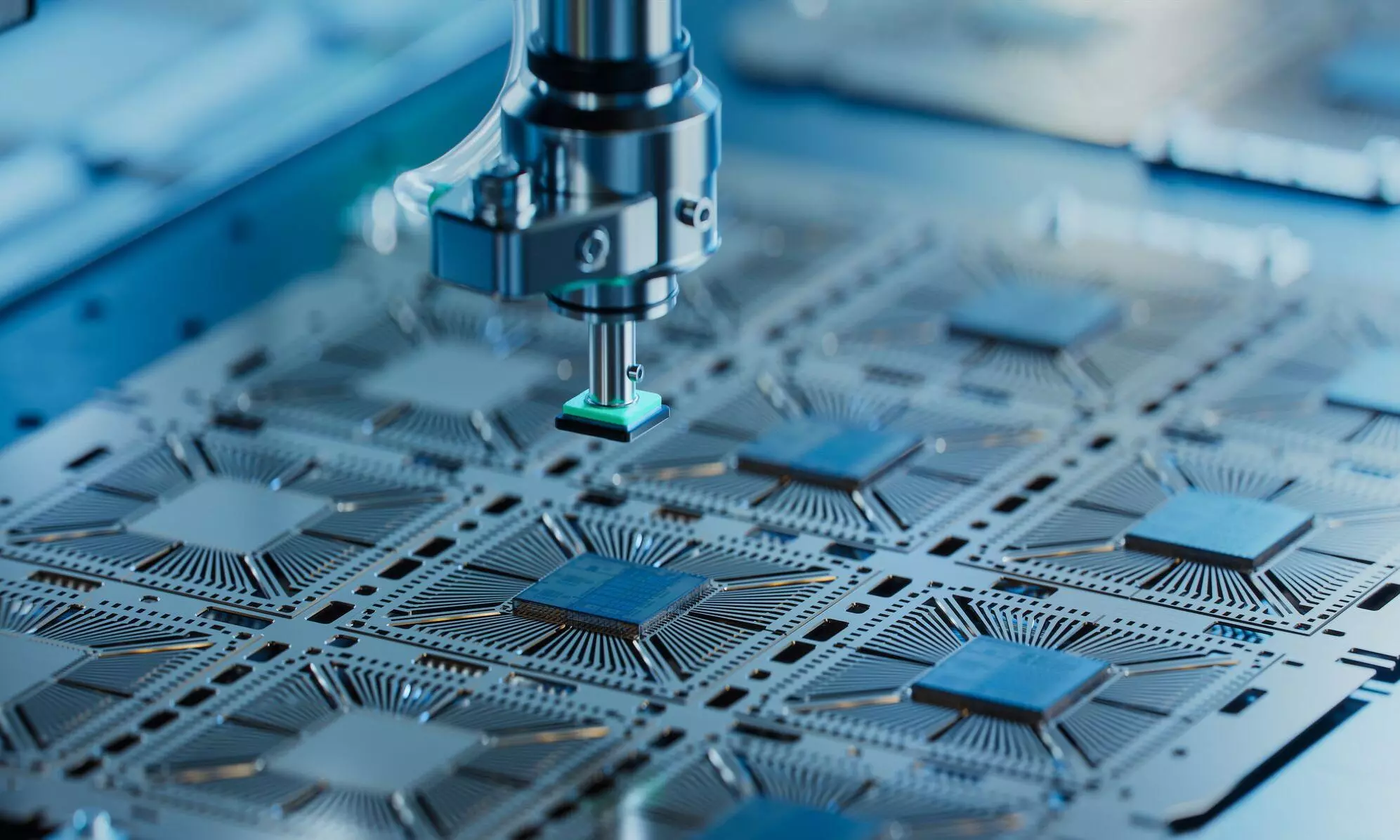
Under ISM 2.0, the government plans to move beyond fabrication alone and focus on producing semiconductor equipment and critical materials within the country. Representational image: iStock
Union Budget 2026 unveils India Semiconductor Mission 2.0, boosts outlay
Budget announces India Semiconductor Mission 2.0, raising electronics components outlay to Rs 40,000 crore to strengthen design, manufacturing and supply chains

Union Finance Minister Nirmala Sitharaman on Sunday (February 1) announced a major expansion of India’s semiconductor push with the launch of India Semiconductor Mission 2.0 (ISM 2.0), backed by an outlay of Rs 40,000 crore. Unveiled as part of the Union Budget 2026-27, the new phase is aimed at strengthening domestic capabilities across the semiconductor value chain amid continuing global supply disruptions.
Sitharaman said Semiconductor Mission 2.0 would build on the foundation laid under the first phase of the mission, which focused largely on chip fabrication. The expanded strategy, she said, would include the domestic production of semiconductor equipment and critical materials.
“India's semiconductor mission, 1.0 expanded India's semiconductor sector capabilities. Building on this, we launch ISM 2.0 to produce equipment and materials, develop full-stack Indian IP, and strengthen supply chains,” the Finance Minister said as quoted by ANI.
'Persistent international uncertainty'
A central objective of the new mission will be the development of full-stack Indian intellectual property, integrating hardware and software design to reduce reliance on global ecosystems. Sitharaman said strengthening and fortifying supply chains had become essential given persistent international uncertainty affecting the electronics sector.
Also Read: Budget 2026: Business as usual in a world that is not
Another major focus under Semiconductor Mission 2.0 will be the creation of industry-led research and training centres. These centres, she said, would help develop new technologies and build a skilled semiconductor workforce capable of supporting long-term capacity expansion.
The Finance Minister also highlighted the performance of the Electronics Components Manufacturing Scheme, launched in April 2025 with an outlay of Rs 22,919 crore. According to her, the scheme has already drawn investment commitments well beyond initial expectations.
“The Electronics Components Manufacturing Scheme… already has investment commitments at double the targets. We propose to increase the outlay to Rs 40,000 crore to capitalise on this momentum,” Sitharaman said.
The backdrop
Earlier, the Ministry of Electronics and Information Technology announced plans to expand artificial intelligence training to 500 universities, building a broader talent pipeline for emerging technologies.
Also Read: What does each state get from Budget 2026-27?
Union Minister Ashwini Vaishnaw said the programme would follow the model used in the semiconductor sector, where students at 315 universities are already involved in chip design.
“You have seen in the case of semiconductors, where 315 universities now have complete staff and students are designing chips,” he said, adding that industry was finalising curricula to ensure market relevance.
Vaishnaw said the expanded training initiative would feed into AI Mission 2.0, expected to be rolled out in the coming months, as the government looks to scale research, skills and technology adoption in parallel.