



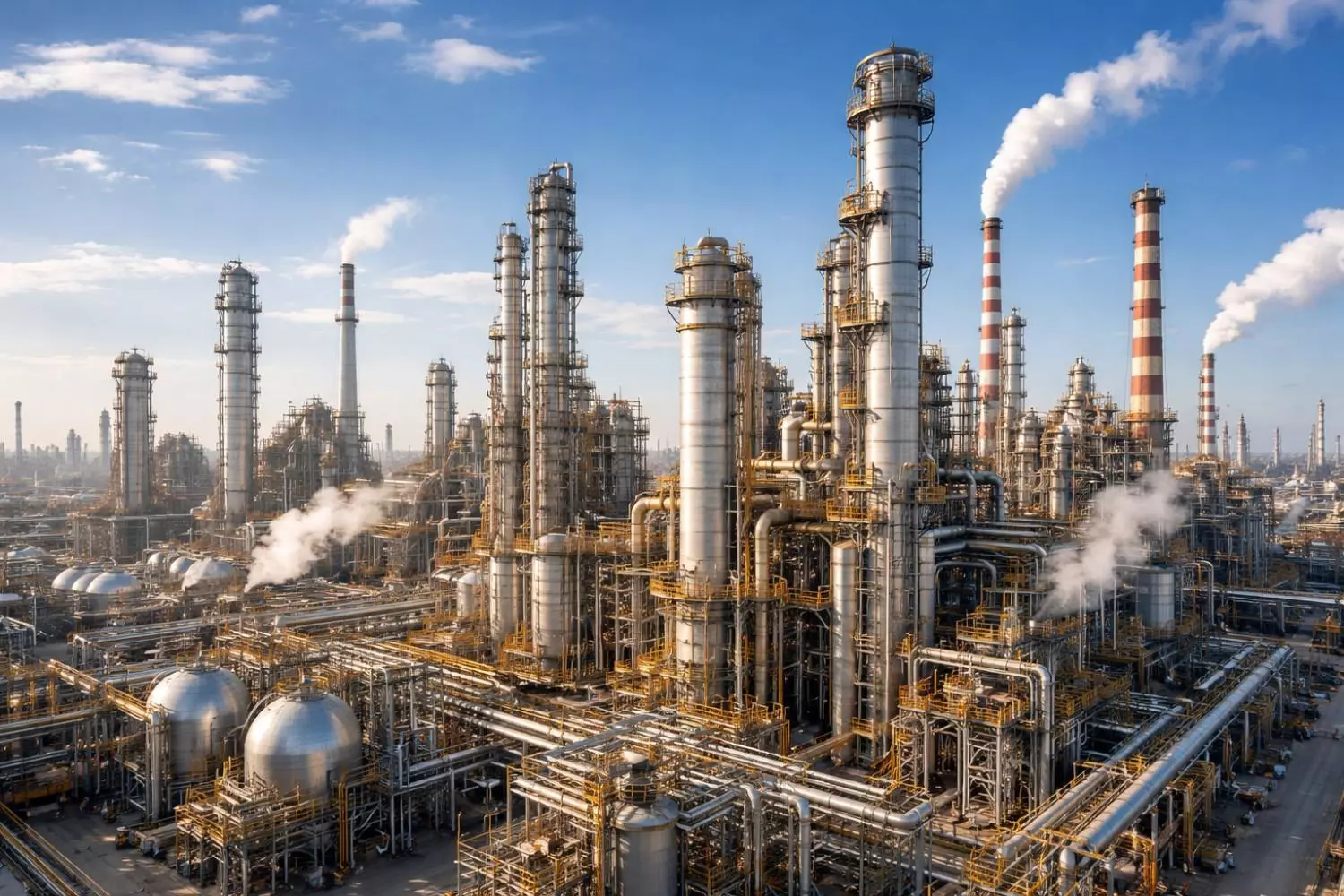
To protect households, the Centre has scrapped duties on 40 key petrochemical products. Photo: AI
From medicines to packaging, how duty cut on petrochemicals will ease everyday prices
In a Rs 1,800 cr intervention, the government waives customs duties on vital industrial feedstocks to prevent the West Asia conflict from hiking prices of essentials

The Centre's decision to exempt critical petrochemicals from customs duty for three months may read like a technical trade measure, but its effects will ripple through some of the most basic products in an Indian household—medicines, packaged food, clothing, car parts, and the plastic containers that carry them.
Also read: Iran war impact: Private fuel retailers Shell, Nayara hike petrol, diesel prices
The finance ministry on Thursday (April 2) announced a full customs duty exemption on 40 petrochemical products until June 30, at a cost to the exchequer of Rs 1,800 crore. The move is a direct response to the West Asia conflict, which has disrupted global supply chains and driven up input costs for industries that depend on petrochemical feedstocks.
The products
The products, including methanol, anhydrous ammonia, toluene, styrene, dichloromethane, vinyl chloride monomer, polybutadiene, styrene butadiene, and unsaturated polyester resins, among others, may not be household names, but they are the invisible building blocks of everyday goods.
Also read: Iran war: Forex reserves fall by USD 30 bn; will it increase India’s challenges?
Styrene and polybutadiene go into synthetic rubber used in tyres, footwear and auto components. Styrene butadiene and unsaturated polyester resins are used in packaging materials, pipes, and construction inputs. Vinyl chloride monomer is the feedstock for PVC—used in everything from water pipes to medical equipment.
Dichloromethane is widely used in pharmaceuticals and as an industrial solvent. Methanol and toluene are key inputs in chemicals, paints and adhesives.
In short, a squeeze on these inputs pushes up costs all the way down the chain—from manufacturers to retailers to consumers.
Govt tries to stabilise domestic prices
Global crude prices have risen nearly 50 per cent since the US and Israel launched strikes against Iran on February 28. For petrochemical-dependent industries, that translates directly into higher input costs, which manufacturers typically pass on through price increases or production cuts. By zeroing out customs duty temporarily, the government is attempting to offset some of that pressure and keep domestic prices stable.
Also read: Iran war effect: ATF price crosses Rs 2 lakh/kl; domestic airlines shielded, for now
Federation of Indian Export Organisations (FIEO) Director General Ajay Sahai described it as “a timely intervention aimed at containing inflationary pressures,” adding that it would also help exporters honour existing contracts at competitive prices during a volatile period.
The government has now moved on multiple fronts in quick succession—slashing excise duty on fuel, allowing Special Economic Zone units to sell in the domestic market, and now exempting petrochemical inputs—in what amounts to a coordinated effort to prevent the Iran war's economic shockwaves from reaching the Indian consumer in full force.
Whether three months will be enough depends entirely on how long the war lasts.