Festive demand stays strong, but buyers turn cautious on big-ticket purchases
Strong festive demand in apparel and appliances contrasts with weaker vehicle and smartphone sales, highlighting growing consumer focus on affordability

The festive shopping season is revealing a more nuanced consumer spending story, with strong demand for apparel and home appliances contrasting with weakness in passenger vehicles and smartphones. As discounts, EMIs, and digital lending make purchases more accessible, affordability is emerging as a key consideration for households financing festive expenses.
The divergence raises an important question: Are consumers becoming more selective about spending and more cautious about borrowing, or are rising prices simply changing how much they pay for purchases?
Navratri sales reflect a mixed consumption picture
According to the Federation of Automobile Dealers Associations (FADA), vehicle retail sales rose 1.95 per cent year-on-year to 10.32 lakh units during the first nine days of Navratri this year. However, passenger vehicle retail sales fell approximately 14 per cent, reflecting a high comparison base created by the GST-led buying surge during the previous festive season. Two-wheelers provided greater support to overall volumes.
Also read: India consumer and retail deals rise 31 pc in Q3 2026: Grant Thornton Bharat
Retail demand has been stronger in other categories. Industry estimates indicate that apparel, footwear and several consumer durables recorded sales growth exceeding 20 per cent during the Navratri-Dussehra period. Air-conditioner sales were particularly strong, although these figures reflect reported industry performance rather than a comprehensive national retail census.
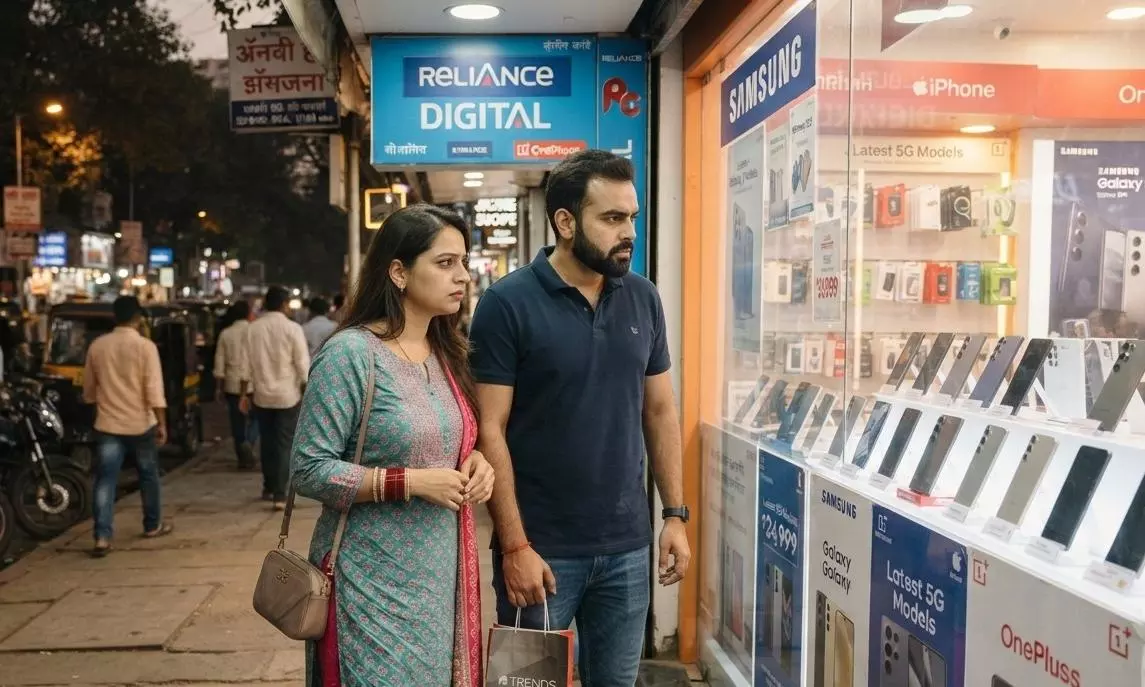
Smartphones, meanwhile, have faced affordability pressures. Counterpoint Research reported that India’s smartphone shipments fell 20 per cent year-on-year in the July-September quarter of 2026, reaching their lowest third-quarter level in a decade. The research firm expects festive-season smartphone sales volumes to decline 12 per cent year-on-year, even as market value increases 5 per cent, partly because higher device prices are lifting average selling prices.
The contrasting trends suggest that consumers are prioritising certain purchases while delaying upgrades in categories where prices have risen sharply.
Personal credit grows, but borrowing quality matters
The Reserve Bank of India’s sectoral credit data for August 2026 showed personal loan growth accelerating to 16.9 per cent year-on-year, compared with 11.9 per cent a year earlier. The data points to continued expansion in household borrowing, but does not establish how much credit is being used specifically for festive shopping or whether borrowers are becoming more cautious.
Also read: Good time to buy gold, but not jewellery, says economist | Interview
BharatLoan reported 67.38 per cent growth during the 2026 festive period. While the figure indicates increased activity at the company, its interpretation depends on the underlying metric and comparison period. It should not be treated as a proxy for growth across India’s digital lending industry.
Shakti Shekhawat, Business Head at BharatLoan, said festive expenditure typically combines planned purchases, family commitments and discretionary spending, making affordability an important consideration when consumers evaluate credit options.
His assessment highlights a distinction between access to credit and the ability to repay it comfortably. Easy loan availability may help households manage planned expenses, but it does not necessarily indicate stronger financial health.
A comparison of BharatLoan’s October–December 2026 data with the corresponding period in 2025 could offer further insights into changing borrowing patterns. However, the current quarter is still underway, and a complete comparison is not yet available.
EMIs offer flexibility, but affordability remains critical
Festive financing can help consumers spread the cost of major purchases. However, processing fees, interest charges and extended repayment periods can increase the total amount payable.
Consumers considering personal loans or EMIs should assess the effective borrowing cost, existing financial commitments and their capacity to meet repayments after the festive season. Borrowing for a planned, affordable purchase differs materially from taking on debt simply to capitalise on a limited-period offer.
Also read: Dubai flat, Greece villa: Financial returns drive Indians’ purchase of foreign property
Shekhawat said responsible borrowing begins with understanding the purpose of a loan, evaluating repayment capacity and choosing an amount aligned with one’s financial circumstances. Consumers should also distinguish essential purchases from discretionary expenses and avoid borrowing merely because credit is readily available.
The real test comes after the festive season
India’s festive economy continues to generate demand, but sales growth alone cannot establish whether households are managing their finances prudently. Stronger evidence would emerge from repayment performance, changes in household liabilities and borrowers’ ability to maintain financial buffers after meeting regular expenses.
Ultimately, responsible festive spending is not about avoiding credit altogether. It is about ensuring that purchases made today do not compromise financial stability in the months ahead.