



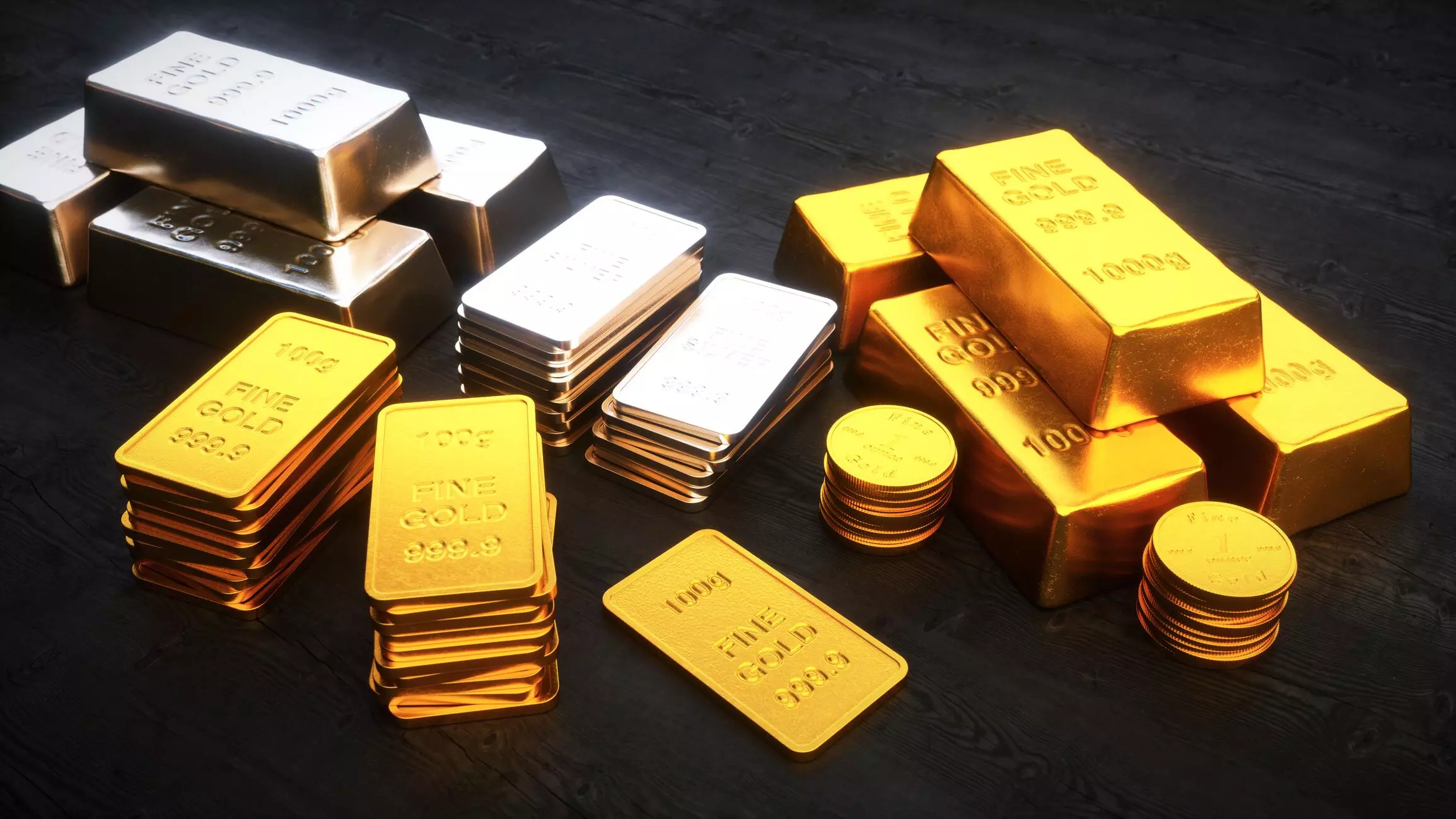
What explains gold, silver's USD 2-trillion 'flash crash' despite Iran conflict?
Rising US bond yields, a resurgent dollar, and forced liquidations trigger sharp sell-off in precious metals, challenging their traditional crisis-hedge status

While precious metals rally in uncertain times, marked by incidents such as wars, Monday (March 23) saw something that defies the conventional wisdom — a sharp fall in prices of gold and silver — globally.
Prices of the yellow metal crashed by more than 10 per cent to Rs 1.29 lakh per 10 grams in futures trade during the day. Silver prices also tumbled by Rs 20,449 to Rs 2.06 per kilogram. This happened in the middle of a global sell-off in the metals driven by macroeconomic pressures.
Also read: As Trump’s deadline to reopen Hormuz looms, what Iran has threatened to hit back with
The situation was no better globally, as in just under three hours of tumultuous trading, approximately $2 trillion in market value for precious metals evaporated, even as oil prices stabilised and US equity futures subtly shifted to positive territory, an unusual phenomenon which was flagged by The Kobeissi Letter, a leading commentary on the global capital markets founded by Adam Kobeissi.
Also globally, gold futures for the April contract depreciated $474.9, or 10.4 per cent, to hit an intraday low of $4,100 per ounce. Over the past week, gold futures plunged $486.8, or 9.6 per cent, to settle at $4,574.9 per ounce.
The yellow metal witnessed an aggressive correction last week, falling by nearly USD 500, its steepest weekly drop since 1983, and is now down nearly 17 per cent over the past three weeks, Renisha Chainani, Head of Research at Augmont, a Mumbai-based integrated gold platform, said.
According to her, the sell-off has largely been driven by forced liquidation and cash raising by institutional players, particularly from the Gulf region.
'Gold becomes a source of funds'
"In times of extreme uncertainty, investors tend to liquidate their most liquid assets first, and gold, being one of the most liquid global assets, becomes a source of funds rather than a safe-haven destination," Chainani said, adding that gold has broken key support levels and may witness further profit-booking.
The bond market
The shift in the bond market has completely rewritten the investment playbook. In just a matter of weeks, the US 10-year Treasury yield has climbed toward 4.4%, as the market wakes up to the reality of persistent inflation and a reportedly "higher-for-longer" interest rate environment.
Also Read: Gold, silver soar as West Asia conflict deepens after US-Israel strikes on Iran
The surging yield is effectively siphoning liquidity out of precious metals and into government debt. This shift has stripped gold of its status as the "ultimate hedge", rebranding it as an overcrowded trade that must now surrender to the new "carry king": high-yielding sovereign paper.
The rising dollar
Compounding the decline is the resurgence of the US dollar as the dominant safe-haven asset. In times of global stress, the greenback often attracts capital flows due to its liquidity and reserve currency status.
Also Read: Gold, silver prices steady after sharp fall, check prices across cities
A stronger dollar creates a dual drag on gold and silver: it makes dollar-denominated metals more expensive for international buyers, while also offering investors a more straightforward refuge. This dynamic has contributed to gold behaving less like a defensive asset and more like a risk-sensitive trade, increasingly moving in tandem with equities.
Leverage and liquidity amplify losses
Beyond macro factors, market structure has played a critical role in accelerating the decline. Months of strong gains had led to heavy leveraged positioning in gold and silver through futures, options, and exchange-traded products.
Once prices breached key technical levels, automated sell-offs were triggered. Stop-loss orders, margin calls and tighter margin requirements forced investors to liquidate positions rapidly, exacerbating the fall. Thin liquidity further intensified the drop, creating sharp intraday swings and “air pockets” where prices fell abruptly due to a lack of buyers.
Also Read: Silver crashes 17 pc, gold falls 9 pc in futures trade in massive single-day fall
Warning for wider markets
While speculation persists about potential large-scale liquidations by major players, no single entity has been identified. However, the pattern — sharp swings, synchronised declines across markets, and forced selling — suggests systemic stress.
More broadly, the episode raises questions about the reliability of traditional safe havens. If rising yields, a strong dollar, and liquidity constraints can trigger such a rapid reversal in gold and silver during a geopolitical crisis, analysts warn similar pressures could ripple across credit markets, emerging economies, and even equities in the weeks ahead.
White metal's fall
It was not too long ago that silver was leading gold, but now even its prices have fallen sharply, despite the escalating tensions in West Asia. Overriding macroeconomic pressures are making it happen, Hareesh V, Head of Commodity Research, Geojit Investments Ltd, an investment services company with a strong presence in the Gulf region, said.
Also read: As West Asia flares up, what's in store for India's energy security?
"Profit-taking and liquidity needs have also triggered selling after metals' earlier rally, with investors cashing out to cover losses elsewhere," he was quoted as saying by news agency PTI.
"Meanwhile, surging oil prices have intensified inflation fears, prompting expectations of delayed interest rate cuts, further putting pressure on assets such as silver. These forces have outweighed safe-haven demand, keeping precious metals under downward pressure," he said.
(With agency inputs)