



El Niño to hit 12 states; govt activates district-level kharif contingency plans
UP, Tamil Nadu, and 10 other states brace for "relatively severe" weather anomalies as government readies localised, contingency measures for vulnerable regions

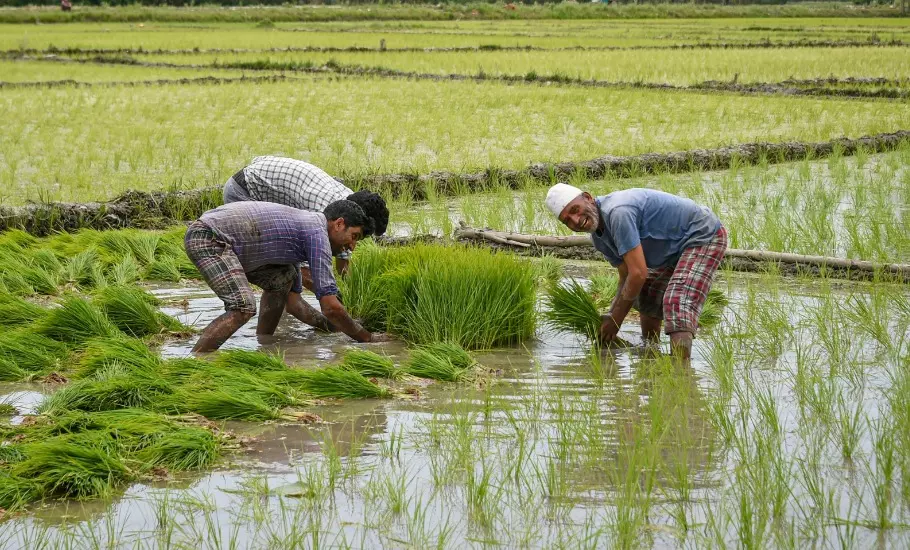
Twelve states, including Uttar Pradesh and Tamil Nadu are all set to suffer the "relatively severe" impact of El Niño weather phenomenon, linked with a weaker monsoon in India, in the kharif season.
During a weekly review meeting on kharif 2026 preparation, the agriculture ministry gave this information and on Tuesday (June 16) directed coordinated action through district-level machinery in the most vulnerable regions.
Other states likely to be impacted by El Niño include Andhra Pradesh, Telangana, Karnataka, Odisha, Gujarat, Rajasthan, Bihar, Madhya Pradesh, Jharkhand and Maharashtra.
Contingency planning
"In 9-10 states where the impact of El Niño may be relatively higher, coordinated meetings should be organised with district magistrates, agriculture departments, Krishi Vigyan Kendras (KVKs) and other extension systems of the identified districts," agriculture minister Shivraj Singh Chouhan, who chaired the weekly review meeting on Kharif 2026 preparations, said.
Also read: India braces for hotter days, erratic monsoon as 'super El Nino' develops
The minister also stressed the need for advance contingency planning in rain-deficient districts, while also pushing for increased acreage under cotton and pulses, an official statement said.
However, after the meeting, a senior ministry official told PTI that a total of 12 states have been identified that may be severely impacted due to El Nino this year and contingency plans for 326 districts in these states are being prepared.
EL Nino impact
El Nino is a climate phenomenon historically linked to weaker monsoons and heightened rainfall uncertainties - a concern that looms large this year.
As per the India Meteorological Department (IMD), El Nino conditions are currently present over the equatorial Pacific Ocean and are expected to strengthen further during the southwest monsoon season (June-September).
IMD has forecast the southwest monsoon at around 90 per cent of the long-period average, signalling a below-normal season.
Chouhan directed state governments to clearly identify vulnerable districts and prepare crop-wise contingency plans in advance, so that farmers can be promptly provided with options, advice, and assistance in the event of any weather challenge, the ministry said in a statement.
"A separate and practical strategy should be developed for each vulnerable district, with special attention to water conservation, moisture management, intercropping, and alternative crop patterns," he said.
The minister underscored that the government's priority is to ensure farmers receive "calm, reliable, and solution-oriented messages based on scientific analysis" rather than alarmist communication.
The meeting reviewed crop-wise targets, sowing progress, and state-wise Kharif 2026 preparations, with particular emphasis on boosting cotton output.
Chouhan called for wider adoption of scientific methods, right variety selection, intercropping, mulching, and moisture conservation to improve both productivity and farm incomes.
Pulses and fertiliser push
The Pulses Self-Sufficiency Mission also figured prominently in the discussions.
Chouhan said the government is working closely with states to expand cultivation of pigeon pea, black gram, and green gram through crop rotation, area expansion, improved seed availability, and technical guidance, with the aim of reducing import dependence.
The review covered fertiliser availability, market prices, reservoir levels, and water storage status across states.
Chouhan assured that fertiliser supply is adequate at the national level and will be further streamlined to states and districts as the monsoon progresses. He directed officials to ensure advance supply in areas facing potential micro-level shortages.
Chouhan stressed the need for tighter coordination among agricultural universities, ICAR institutes, KVKs, and state agriculture departments, noting that technical knowledge is "meaningful only when it reaches the fields in a timely manner.
(With agency inputs)