



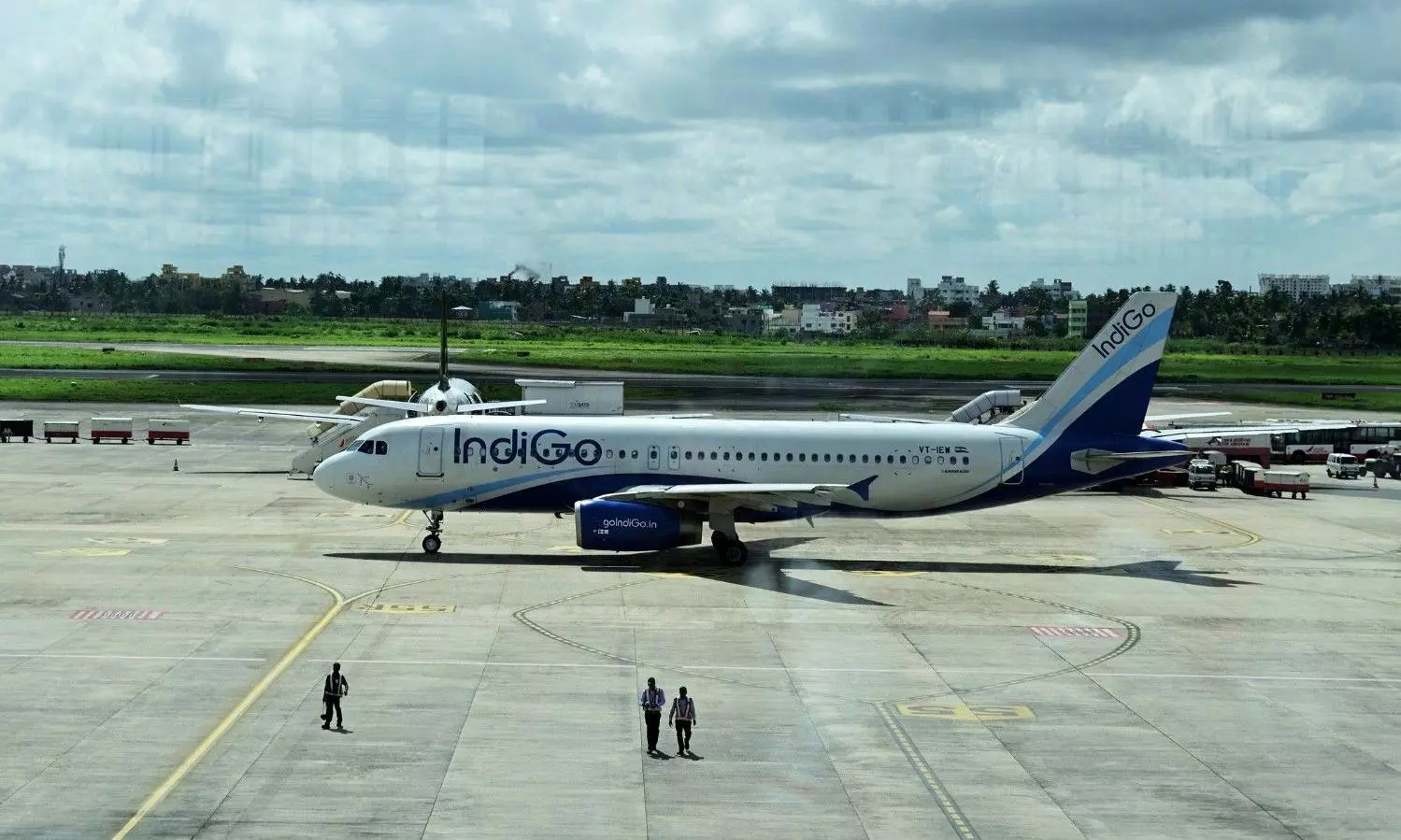
DGCA launches probe, seeks mitigation plan as IndiGo cancels 100-plus flights
IndiGo blames 'unforeseen operational challenges' and new pilot duty norms for chaos; DGCA seeks detailed reduction plan after 1,232 November cancellations

Aviation watchdog DGCA has said it is investigating IndiGo flight disruptions and has asked the airline to submit the reasons for the current situation as well as the plans to reduce flight cancellations and delays.
IndiGo cancelled more than 100 flights at various airports, and scores of services were delayed on Wednesday (December 3) as the country’s largest airline grappled with operational disruptions, mainly due to crew shortage.
Cancellations and rescheduling on cards
As part of the calibrated adjustments announced by IndiGo, there will be cancellations and rescheduling of flights, sources said on Wednesday, a day when airports witnessed chaos as hundreds of passengers faced hardships due to services getting cancelled and delayed for long.
Also read: DGCA continues to face 50 pc manpower shortage; to recruit short-term staff
The airline, which operates around 2,300 domestic and international flights daily, on Wednesday said a “multitude of unforeseen operational challenges” have significantly disrupted its operations across the network for the past two days, and apologised to the passengers for the inconvenience.
The challenges include “minor technology glitches, schedule changes linked to the winter season, adverse weather conditions, increased congestion in the aviation system and the implementation of updated crew rostering rules (Flight Duty Time Limitations)”, which had a negative compounding impact on its “operations in a way that was not feasible to be anticipated”, an airline spokesperson said in a statement.
Crew shortage
Close to 150 IndiGo flights were cancelled at various airports, including Delhi, Bengaluru, Mumbai, Hyderabad, and Kolkata. At least 42 flights were cancelled at the Bengaluru airport, 38 in Delhi, 33 in Mumbai, and 19 at the Hyderabad airport, and 10 in Kolkata. Besides, scores of flights were delayed.
“IndiGo has been facing acute crew shortage since the implementation of the second phase of the FDTL (Flight Duty Time Limitations) norms, leading to cancellations and huge delays in its operations across the airports,” a source told news agency PTI.
“The situation turned bad on Tuesday for the airline and the shortage turned worse on Wednesday with scores of flights cancelled and delayed from across airports in the country,” the source said, adding that there are crew rostering as well as baggage system issues.
Social media was flooded with videos showing frustrated passengers arguing with airline staff over the flight cancellations. IndiGo recorded an On Time Performance (OTP) score of 35 per cent on December 2, according to the latest official data.
1,232 flights cancelled in November
Citing recent operational performance information provided by IndiGo, DGCA said a total of 1,232 flights were cancelled in November, including 755 flights due to crew and FDTL constraints.
As many as 258 flights were cancelled due to “airport/airspace restrictions”, 92 were cancelled due to the ATC (Air Traffic Control) system failure, and 127 on account of other reasons, the statement said.
Also read: After software patch, Airbus finds new quality issues on A320 panels
The latest FDTL norms, which entail increased weekly rest periods to 48 hours, extension of night hours, and limiting the number of night landings to only two, as against six earlier, were initially opposed by the domestic airlines, including IndiGo and Tata Group-owned Air India.
But they were subsequently rolled out by the DGCA following the Delhi High Court’s directives, albeit after a delay of over one year and in a phased manner and with certain variations to airlines like IndiGo and Air India.
FDTL norms
While the first phase of these FDTL norms came into force from July, the second phase, which restricted the night landing to two from six earlier, was implemented from November 1.
The norms were originally to be put in place from March 2024, but airlines, including IndiGo, sought a step-by-step implementation, citing additional crew requirements.
On Wednesday, IndiGo said it has initiated calibrated adjustments to the schedules to contain the disruption and restore stability. The airline did not share any specific numbers.
These measures will remain in place for the next 48 hours and will allow the airline to normalise operations and progressively recover punctuality across the network, it said.
In the statement, IndiGo said its teams are working around the clock to ease customer discomfort and ensure operations stabilise as quickly as possible. “Furthermore, the affected customers are being offered alternate travel arrangements to reach their destinations or refunds, as applicable.”
Pilots blame airline
Airline Pilots’ Association of India (ALPA) on Wednesday said the operational disruptions at IndiGo due to crew issues point to a failure of proactive resource planning by dominant airlines, and claimed that there could also be an effort to pressure regulator DGCA to dilute the new flight duty time limitation norms.
Another pilots’ body, Federation of Indian Pilots (FIP), in a statement, said the recent spate of IndiGo flight cancellations cannot be attributed to FDTL regulations for pilots. All other airlines have provisioned pilots adequately and remain largely unaffected due to timely planning and preparation, the FIP said in the statement.
Also read: India's aircraft MRO market to touch USD 4 billion by 2031: Civil aviation minister
Noting that the current disruption is the direct consequence of IndiGo’s prolonged and unorthodox lean-manpower strategy across departments, particularly in flight operations, it strongly advocated that the DGCA must approve seasonal flight schedules only after airlines prove that they have adequate pilot strength under the new FDTL norms to operate safely and reliably.
“If IndiGo continues to fail in delivering on its commitments to passengers due to its own avoidable staffing shortages, FIP urges DGCA to consider re-evaluating and reallocating slots to airlines, such as Air India, Akasa Air and others, who have the capacity to operate them without disruption during the peak holiday and fog season,” it added.
(With agency inputs)