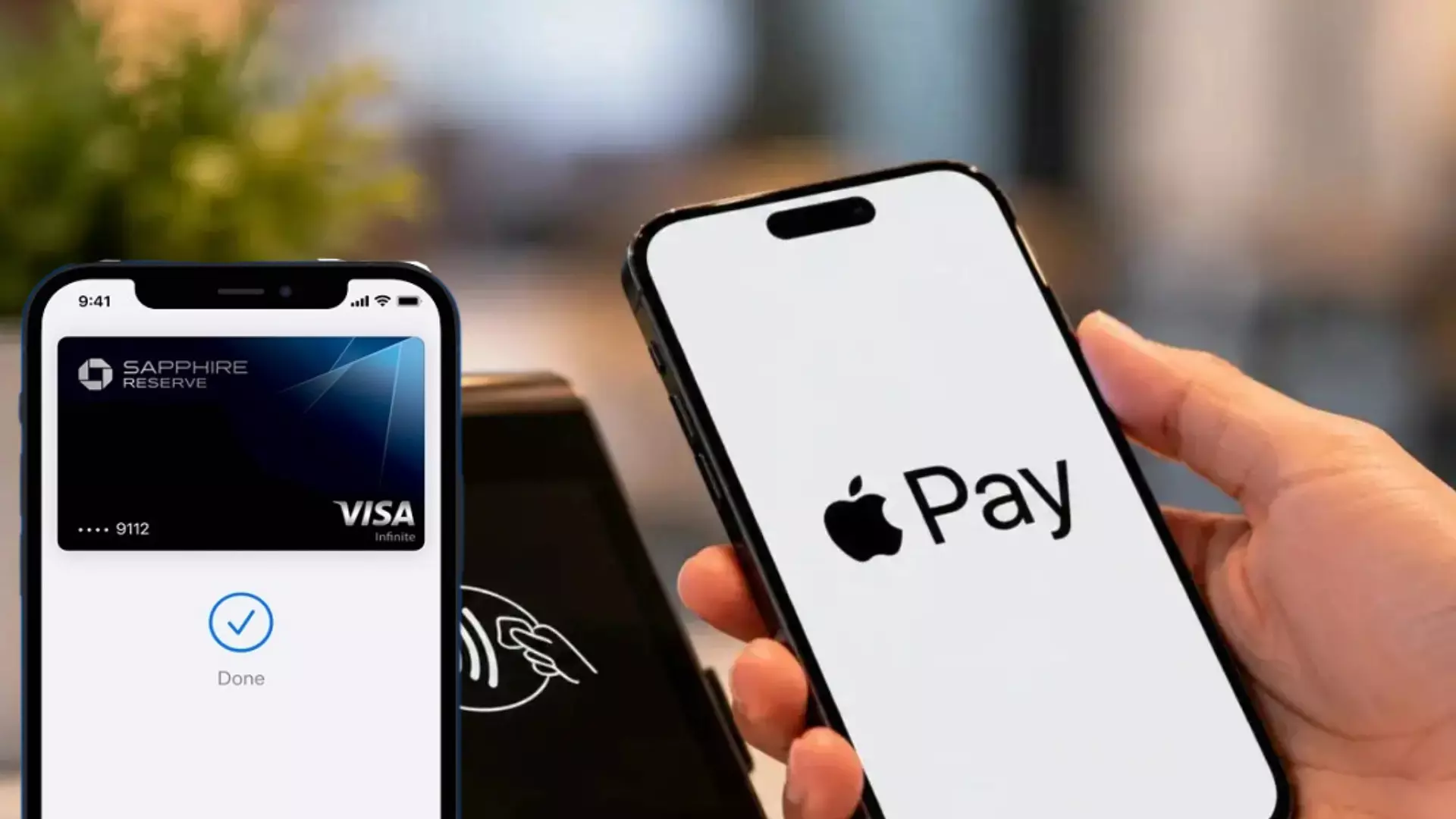
At launch, Apple Pay is expected to function primarily as a contactless card payment service.
Apple Pay’s India bet: Why UPI may not be the real target
Apple Pay’s expected card-based launch could focus on India’s premium credit-card users rather than directly challenging UPI

Apple Pay is poised to enter India at a crucial moment for the country’s digital payments market. The service is expected to focus on tokenised credit card payments through Near Field Communication (NFC), reportedly in partnership with Axis Bank, rather than integrating with UPI.
Its arrival comes as India’s UPI ecosystem prepares for a new merchant fee from October 15, ending five years of zero MDR on UPI transactions. It also comes after years of WhatsApp Pay struggling to gain significant traction despite its enormous potential user base.
How it works
At launch, Apple Pay is expected to function primarily as a contactless card payment service. Eligible Axis credit card holders would be able to add their cards to Apple Wallet, with the card details stored as an encrypted token rather than the actual card number. This means the card details are not shared with merchants.
Also read: Apple Pay may debut in India in October: What users need to know
Users can then tap an iPhone or Apple Watch on an NFC-enabled payment terminal and authenticate the transaction using Face ID, Touch ID or a passcode.
So, can tokenisation help Apple gain a foothold in India, where UPI dominates the digital payments landscape?
Card vs UPI
UPI has become a dominant part of India’s digital payments ecosystem, while Apple Pay, at launch, is expected to remain a card-based service without UPI integration.
UPI itself is also evolving, with the National Payments Corporation of India (NPCI) rolling out tap-and-pay functionality that allows users to make contactless payments without opening a UPI app.
The contrast with WhatsApp Pay is significant. WhatsApp had access to a potential user base of more than 500 million people in India but struggled to gain meaningful traction against established UPI platforms such as PhonePe and Google Pay.
Independent fintech consultant Parijat Garg said Apple Pay’s initial proposition is different, as it is centred on tokenised card-based payments rather than directly targeting UPI.
Apple's advantage
Apple may also be approaching payments through its existing premium customer base rather than trying to reach India's entire digital payments market.
Also read: WhatsApp Pay's India struggle: Can Kunal Shah turn it around?
Speaking to The Federal, Garg said Apple's iPhone market share in India was relatively small, but its users tend to be higher spenders. He also pointed to Apple's long-standing emphasis on privacy and data protection as a potential trust advantage among its customers.
“Apple, though, has maybe just about 7-8 per cent of market share in India, but essentially these are like high-spend users,” Garg said, adding that some studies suggest iPhone users spend significantly more than Android users.
For Apple, that could make the value of its customer base more important than simply maximising the number of payment users.
MDR changes
The timing of Apple Pay's entry also coincides with a significant change in UPI economics.
From October 15, merchants accepting eligible UPI payments above Rs 2,000 will face a merchant discount rate, or MDR, for the first time in five years.
However, credit card transactions already carry merchant fees that are generally higher than the proposed UPI rate.
Also read: Free to fee: What new UPI MDR means for you and your kirana store
“The MDR is, anyways, applicable on credit cards today, and merchants pay anywhere between 1 to 2 per cent. In UPI, it's capped at 0.4 per cent — much lower,” Garg said.
He added that Apple would need NPCI's third-party application certification if it wanted to integrate with UPI. Apple's existing business model globally involves taking a small fee from card issuers for enabling cards on Apple Pay.
This leaves open the possibility of Apple eventually expanding beyond its initial card-based offering if changes to UPI economics alter the payments landscape.
Niche market
Another constraint for Apple Pay is the availability of NFC-enabled payment terminals.
Tap-and-pay infrastructure is more common at larger retailers and premium establishments than at many small neighbourhood businesses. This could limit the service's relevance in India's vast unorganised retail sector.
But Garg said this may not necessarily be a problem if Apple is targeting a specific segment rather than the mass market. “Apple users are also more premium users — about 5x spending power compared to Android users. It's very likely Apple is not necessarily going after the mass market,” he said.
The bigger play
So, what could Apple Pay eventually become in India?
Rather than directly competing with UPI, the service could potentially help drive greater adoption of credit cards among affluent and mass-affluent consumers.
Also read: UPI MDR unlikely to push up cash transactions: Finance Ministry
Garg said Apple Pay could end up functioning more as a credit card adoption driver in India rather than directly competing with UPI.
Therefore, once rolled out in India, Apple Pay may not be looking to compete for the mass market. Instead, it may initially focus on a niche, premium customer base.
However, Apple Pay’s ambitions could evolve after October 15, when changes to UPI economics take effect.