



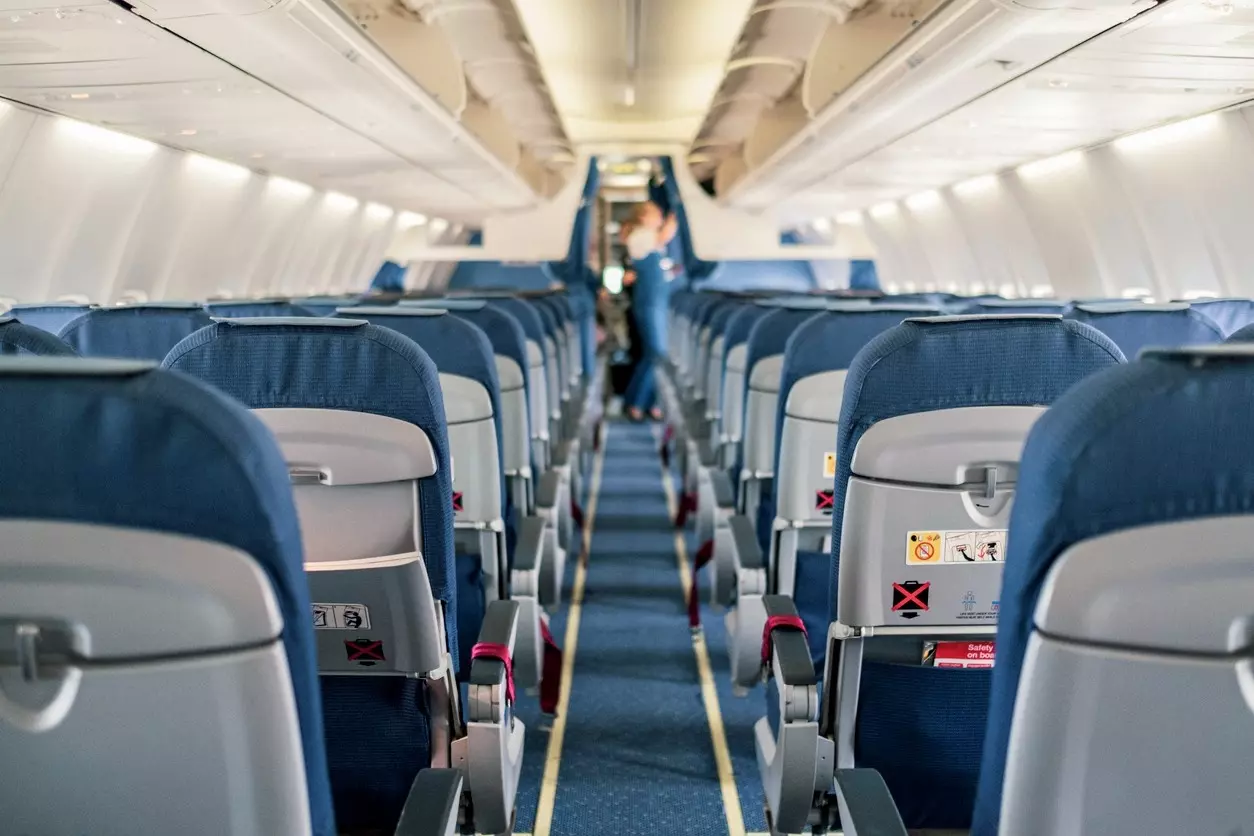
Airlines have pushed back on the government's directive on making selection of at least 60 per cent of seats on every flight free of cost, saying it would lead to inconvenience for all passengers in terms of fare hikes. Representative Photo: iStock
Airlines disagree with govt on 60% free-seat rule, warn of fare hikes
Carriers, which are facing stress due to the West Asian crisis, urge the Centre to scrap new mandate, claiming revenue losses will make ticket prices costlier for all

A day after the Centre stepped in to give relief to air passengers by asking the airlines to see that a minimum of 60 per cent of seats on every flight are accessible without incurring seat-selection charges, the carriers have objected, saying it could see the airfare soaring further.
The Federation of Indian Airlines (FIA), which represents the three major carriers IndiGo, Air India and SpiceJet, has urged the civil aviation ministry to roll back the decision. The three carriers have warned that the 60-per-cent-free-seat rule will compel them to increase the ticket prices to make up for the lost revenues.
Sear-selection charges have irked passengers
Seat-selection charges have been a subject over which air passengers have expressed dissent, arguing that what is claimed as a base fare doesn’t reflect the real cost of flying.
Also read: No Gulf hubs, no cheap tickets: How Iran war grounded low-cost air travel
The civil aviation ministry announced on Wednesday (March 18) that the Directorate General of Civil Aviation (DGCA), which regulates in the sphere of civil aviation, have been asked to direct the airlines about the ‘free seat’ rule to ensure that the passengers get fair access.
It was on the very next day (March 19) that the FIA wrote to Civil Aviation Secretary Samir Kumar Sinha, saying such a move would lead to an unintended and adverse effect for the aviation sector.
'Airlines will recover lost revenues through higher fares'
“The financial impact of the directive on airlines will be significant, compelling airlines to recover the lost revenues through increases in fares. As a result, all passengers, including those who may not wish to preselect seats, will end up paying higher fares,” it said.
The grouping added that seat-selection fees constitute a legitimate component of airline revenue, especially in the high-cost environment where costs rise year-on-year under the regulator AERA (Airports Economic Regulatory Authority)-governed regime that accords full cost recovery besides an assured margin to airports.
“Airlines operate on thin margins and rely on ancillary revenues to offset rising operational costs, including fuel, maintenance, airport charges, etc. Imposing a uniform restriction on ancillary revenue undermines commercial flexibility and interferes with market-driven pricing mechanisms,” it said.
Also read: Billions of dollars at risk as Dubai airport shuts down amid Iran missile threats
Airlines normally charge between Rs 200 and Rs 2,100 for choosing seats, depending on various factors, such as front rows and extra leg room.
The FIA also stated that while free seat selection may initially appear beneficial for passengers, the overall outcome would be adverse, resulting in more expensive tickets and reduced customer choice and affordability.
It also said the decision does not serve the stated objective of passenger welfare, by shifting targeted user-based charges into a blanket fare increase borne by the entire passenger base and disproportionately affecting price-sensitive travellers and eroding affordability.
'Measure to set undesirable precedent'
The grouping also noted that the ministry failed to conduct stakeholder consultations prior to unveiling the decision.
“If applied, this measure will set a precedent for excessive intervention in ancillary pricing with heavy loss of revenues for the airlines, apart from creating uncertainty for airlines regarding future regulatory constraints,” the FIA said, urging that the mandate be withdrawn.
Also read: Seven hours in the air and back on the ground: Air India’s Canada mix-up
The airlines’ reaction to the government’s decision comes at a time when they are facing various operational difficulties, including soaring jet fuel prices, in the midst of the conflict in West Asia.
Meanwhile, sources said the airlines have also told the Ministry about various operational challenges, including rising jet fuel prices, in the wake of the West Asia conflict.
(With agency inputs)