What Rahul, other Opposition leaders can learn from Mamata
By moving the Supreme Court against the Bengal SIR, the CM distinguishes herself from peers through pointed issue-based politics

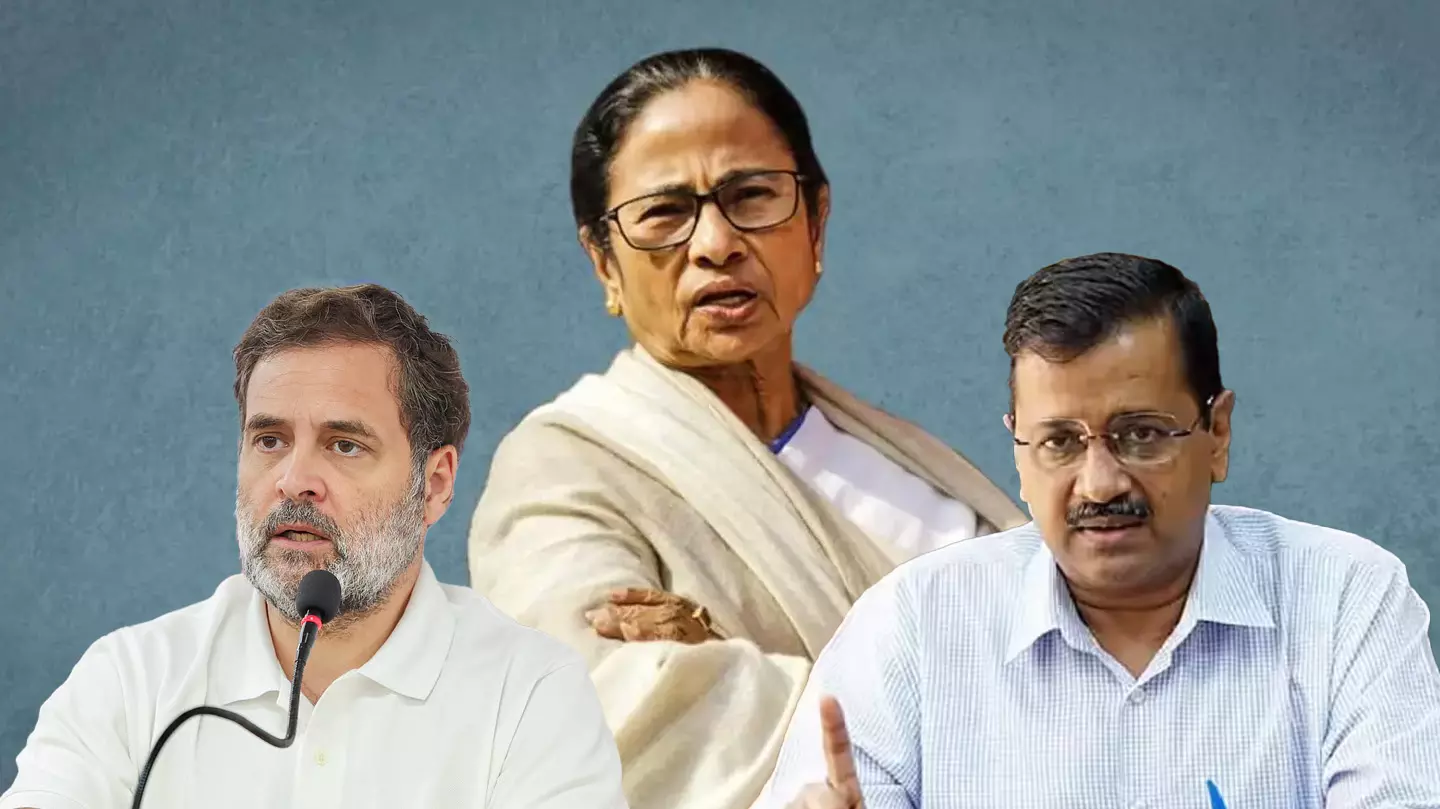
Ahead of the high-stakes Assembly elections in West Bengal, Chief Minister Mamata Banerjee has uniquely positioned herself by turning it into a state-versus-Centre battle. This is quite unlike her peers in other Opposition parties, including the Congress’s main campaigner, Rahul Gandhi, who is also the Leader of the Opposition in the Lok Sabha and a fierce critic of the Narendra Modi government.
Also read: Mamata scores brownie points before polls by taking on EC over SIR in apex court
It is not that leaders of other anti-Bharatiya Janata Party (BJP) outfits oppose the saffron party and Prime Minister Narendra Modi less frequently. Like Rahul, they do take on the Centre often. But what makes them different from Mamata is that they run their campaign less successfully or fail to make a real difference in elections, unlike the Trinamool Congress (TMC) supremo, who has done it with elan in her state for a decade and a half.
Mamata takes on EC in SC
To prolong her sway over Bengal for the next five years, Mamata recently took on the Election Commission (EC) head on in the Supreme Court over the Special Intensive Revision (SIR), which her party has objected to throughout, alleging it to be a deliberate ploy by the poll body to help the BJP in the state polls through the elimination of voters.
Accusing the EC of trying to rewrite the electoral rolls in the state, the chief minister went to the apex court and presented her argument before the judges in person. A three-judge bench comprising Chief Justice Surya Kant that heard her eventually raised the deadline for the publication of the revised electoral rolls by at least a week and ordered a few other steps to smoothen the process and ensure fair play.
The entire exercise could have brought little or no success to the Bengal CM in strict legal terms. Yet, she has been able to prove that she could mark an issue, pinpoint the reasons behind it, and take it to the right and best possible forum to seek redress. In political or electoral terms, she tried to juxtapose the helplessness of a common voter to prove his/her citizenship to retain the basic right to vote and the EC’s intricate ways to ensure the purity of the electoral rolls.
Thus, Mamata could amply demonstrate that she goes by issues rather than the polemics of whatever kind alone. This is something her contemporaries may or may not share with her, but they certainly don’t have the knack, passion or drive to tackle relevant public issues the way she does.
Her current reign in Bengal was a result of her fight against land acquisition by the erstwhile Left Front government in Singur and Nandigram for industrialisation, which culminated in a historic victory in 2011 that ended the Left’s 34-year rule. She returned to power in 2016 and 2021 with massive popular mandates, leaving little for the Opposition to rejoice.
Comparing Rahul's SIR response
Compare Mamata’s initiative against the SIR with that of Rahul. As the LoP, the Congress leader’s task to take on the government over diverse issues is clearly cut out.
Also read: Mamata tears into EC in Supreme Court over Bengal SIR: 'Justice is crying'
After the EC launched the SIR initiative for Bihar all of a sudden last year, just months ahead of Assembly polls and without any prior talks with stakeholders, be it political parties or voters via civil society or community leaders, Rahul responded with a fortnight-long yatra in the state along with leaders of the parties that are in alliance with the Congress there.
This, he thought, would bolster his campaign against the BJP’s alleged “vote chori” (theft of ballots) in past elections.
The saffron party justified the EC’s Bihar move, saying jokingly that it was a “corrective step to eliminate” the Opposition leader’s apprehensions about “vote chori” through an extensive revision of the electoral rolls nationally, starting with that state.
The idea was to clearly blur the focus that Rahul tried to put on alleged anomalies found in voters' lists in select cases in other states, such as Karnataka, Maharashtra, and Haryana, in either the Lok Sabha or the state elections of 2024.
By making an appearance in the Supreme Court personally and taking on the SIR, Mamata conveyed to the BJP that it could not just write her off in the upcoming electoral battle.
The saffron camp’s familiar ploy to trivialise the ‘vote chori’ allegations brought by leaders such as Rahul Gandhi, which was vindicated by the National Democratic Alliance’s massive victory in the Bihar elections, might not be as easy in Bengal now, particularly after the TMC chief flagged the SIR (which Rahul said an institutionalised way of stealing votes, in the context of Bihar) on the highest judicial stage.
For Mamata, there is no complacency
What makes the TMC supremo distinct in her political planning is that she has engaged in preparing a ground for a probable rigging in the next Assembly polls despite exuding immense confidence to win her fourth successive term in 2026. While her own party’s government faces anti-incumbency, too, the firebrand leader knows how to keep her tracks covered even as the BJP seeks to expose her administration’s alleged shortcomings to end the rule.
Also read: Mamata looks to up SIR ante for bigger national footprint
This is something Mamata’s peers in the Opposition have failed to display, as was evident in the polls in Delhi and Bihar last year. In Assam, where the Congress will directly challenge the ruling BJP in the polls also scheduled this year, has the same level of confidence been seen?
Opposition in Bihar, Delhi faltered
In Bihar, for example, despite big mass-mobilisation movements in the state, the Congress and its state ally Rashtriya Janata Dal could not build a pointed narrative and public opinion against the NDA despite the SIR and cash handouts to women from the state exchequer by the Nitish Kumar-led government.
In Delhi, the former ruling Aam Aadmi Party made a case of mass deletions from the voter’s list in party boss and former chief minister Arvind Kejriwal’s constituency, New Delhi, but could not make any political capital out of it either before or after the polls, even as he himself lost the polls.
Mamata is no Kejriwal
Mamata is quite alert. According to reports from her constituency, Bhabanipur, in Kolkata, she has so far held three meetings of her party’s booth-level agents (BLAs) from the seat.
Also read: Bengal BJP borrows rival Mamata's 'Dimbhaat' route to woo voters
This, she thought, was necessary because of reports about the deletion of nearly 45,000 votes in Bhabanipur. Notices have also gone to quite a few other voters in the constituency to address logical discrepancies in their names and regarding other possible anomalies that create doubts about their inclusion in the voter list. Thus, she has decided to sensitise the BLAs from TMC for the constituency so that they may keep a watch.
A leader rooted in state
There is also another difference between Mamata and Rahul or Kejriwal. The former represents Bengal’s strong sub-nationalism, while the other two leaders are conscious of their nationwide image. But it is a fact that currently, power at the Centre and in several states is held by two regional leaders (read Modi and Amit Shah) from Gujarat. Thus, Mamata, also a state leader of long standing, is turning out to be far better placed than others in the Opposition to take on the mighty Gujarati duo of these times.
Also read: I-PAC case: Legal implications of SC order and impact of Centre-state tussle
Thus, it could well be in the latter’s interest to keep Mamata as much engaged in Bengal as possible rather than freeing her up and creating a ‘Mamata-Mukt Bengal’ – because it may well turn her full-time attention to the Centre rather than the state that she loves to head.