Tamil-Muslim platform signals rising discontent with JVP’s stalled reforms in Sri Lanka
Six Tamil and Muslim parties unite on shared issues of devolution, land rights, constitutional reform, warning the government against ignoring minority concerns

Sri Lanka’s ethnic cauldron is stirring again.
For the first time in years, political parties representing Tamil-speaking Sri Lankans have taken a step towards a possible electoral front to take on an increasingly aggressive government of the Marxist Janatha Vimuukthi Peramuna (JVP).
With the JVP-led ruling coalition turning its back on its electoral promises concerning minorities among others, Tamil leaders say they have been left with no choice but to consolidate their strength across the island nation.
Broken promises fuel discontent
The JVP’s electoral sweep in 2024, including in Tamil and Muslim areas, gave hope that finally some of the historical wrongs in the country would be set right. But veterans who lead Tamil and Muslim communities now speak of rising despondency.
Among other things, JVP leaders, including President Anura Dissanayake, had promised while campaigning to repeal the draconian Prevention of Terrorism Act (PTA) and to hold Provincial Council elections with a year of victory.
Also read: Sri Lanka Tamils fight to regain land army seized long ago: 'This govt too playing tricks'
Dissanayake also pledged to return the vast tracts of private land taken by the military from ordinary Tamils during the war against the Tamil Tigers.
None of the promises have been kept.
Ominous possibilities
Forget repealing, critics are still being arrested, although in small numbers, under the PTA, a legislation enacted in 1979 to crush Tamil separatists and which successive governments have promised but refused to axe.
The JVP government says it is committed to repealing the PTA. But it promises to unveil a new law which critics, in Sri Lanka and abroad, warn will be harsher.
The provincial council system is an outcome of the 1987 India-Sri Lanka Accord that sought to provide limited autonomy to all nine provinces, including where Tamils and Muslims live in large numbers.
The government has postponed the already much-delayed Provincial Council ballot on one pretext or the other. JVP leaders say these can be held after ensuring quotas for women; critics call this is an excuse not to hold the battle because the ruling coalition knows the results will be disastrous.
Six parties announce joint platform
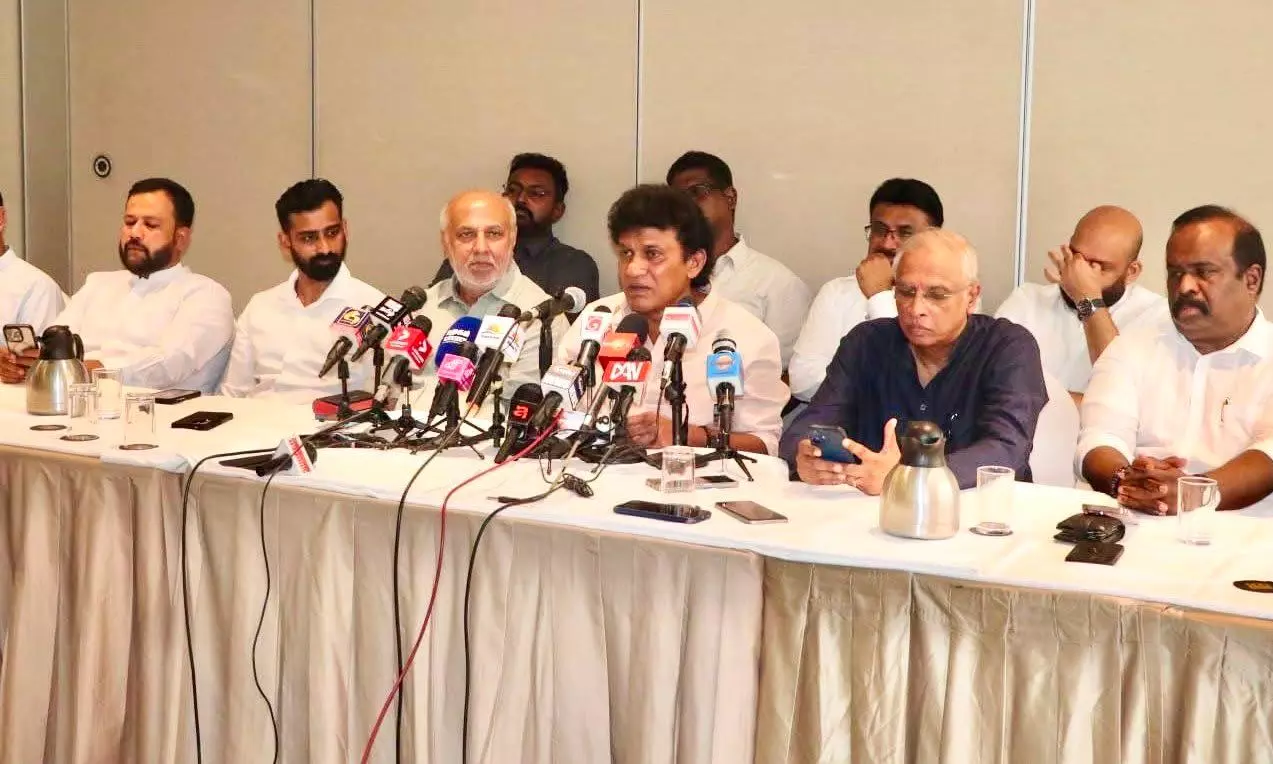
On July 17, six political parties announced they had agreed to establish a common platform for coordination on issues of shared concern including constitutional reforms, provincial council elections and land issues affecting the minorities.
Also read: Sri Lanka’s JVP admits decades of injustice to Indian Tamils
The announcement was made in Colombo by leaders representing the indigenous Tamils who mainly populate the country’s north and east, the so-called ‘Indian Tamils’ who live in the central highlands and adjoining areas, as well as Tamil-speaking Muslims who are otherwise a separate ethnic group.
The initiative brought together the Sri Lanka People’s Congress, the Sri Lanka Muslim Congress, the Ceylon Workers Congress, the Tamil Progressive Alliance, the Ilankai Tamil Arasu Katchi (ITAK) and the Democratic Tamil National Alliance.
The government was pressed to honour its promise to bring a new constitution while ensuring justice, equality and meaningful devolution of power so that Tamils feel they too have a share of power in the Sinhalese-majority country.
Land issues in tea belt
Besides the Tamil-majority north and the multi-racial east, where Muslims are the largest group in two of the three districts, land issues also affect the Indian Tamils who continue to dominate the country’s thriving tea industry.
ITAK general secretary MA Sumanthiran pointed out that it was the first time in decades that political representatives of the northern, eastern, Indian-Tamil and Muslim communities had come together on agreed issues.
He hastened to add that each party would hold on to its independence existence and views.
Also read: Sri Lanka placing roadblocks on Tamil refugees’ return from India
“This is a platform where Tamil-speaking parties can raise a common voice on issues that affect us all. It is not an alliance. Each party remains free to hold its own political views. But where there is a common ground, we will work together because a united voice carries greater strength.”
Minorities push back against marginalisation
Tamil sources say the development is a fall out of the growing disappointment among the minorities—Tamils and Muslims constitute some 15 and 10 per cent of the population respectively compared to 74 per cent Sinhalese—over the way the JVP-led government is charting its course.
Despite their Marxist face and public commitment to equality, JVP leaders continue to pay obeisance to Buddhist monks, irking the minorities, while there is little urgency in tackling issues faced by Tamils and Muslims.
The JVP’s ability to bulldoze its Tamil and Muslim opponents in some of their strongholds as it went on to win a thumping majority in parliament has also forced Tamil and Muslim leaders to forge ranks.
But Tamil sources admit that a united forum may not necessarily lead to a joint electoral front although it cannot be ruled out.
Differences plague grouping
For one, not all the Tamil parties are part of the current umbrella grouping. Also, sharp differences exist among the six parties that have come together. Further, on issues like a merger of the northern and eastern provinces, Tamils and Muslims don’t see eye to eye.
Also read: Sri Lanka’s ‘no’ to bridge with India fuels counter: 'Would raise mutual dependence'
“Our aim is to put pressure on the government for now,” a member of one of the Tamil parties told The Federal. “They are riding roughshod because of their parliamentary majority. Unless we pile up pressure, this government will not listen to even voices of reason.”
Tamil leaders say the government’s much talked about Praja Shakthi programme, ostensibly aimed at eradicating rural poverty through community empowerment, in reality seeks to impose the JVP machinery on official bodies, bypassing elected leaders of other parties.
Electoral implications and challenges ahead
Tamil and Muslim leaders know that President Dissanayake remains popular among voters in areas inhabited by minorities. He makes regular visits to these regions to consolidate ground support as the JVP is widely expected to lose a lot of Sinhalese backing in any next election.
This is the reason the government was hesitant to hold Provincial Council elections, opposition and Tamil leader Mano Ganesan said. “We know what the intelligence agencies have told the government,” he said. “After all, we also have our sources.”
Also read: Sri Lanka: JVP govt’s reluctance to hold provincial polls deepens Tamil anxiety
After mass disgust with traditional Sri Lankan parties following a disastrous economic collapse, the JVP won the presidential and parliamentary elections in 2024. But although it came on top in the local body elections in 2025 too, it did lose millions of votes, indicating voter fatigue within months.
Will the tide turn?
Political analysts say this trend is unlikely to reverse, more so because JVP leaders, once seen to be uncorrupted by the system, were increasingly viewed as haughty and autocratic.
If—it’s a big if—Tamil and Muslim parties bury their differences and fight elections jointly, the JVP will find the going tough in Muslim and Tamil majority regions. But for this, Tamil and Muslim leaders will have to travel a long way. As it is, pro-JVP social media accounts are already accusing the Tamil and Muslim parties of whipping up ethnicity to score political points.