Sri Lanka’s JVP admits decades of injustice to Indian Tamils
Senior JVP minister's rare parliamentary admission on the suffering of Sri Lanka's Indian Tamil community has been welcomed but also met with pointed criticism

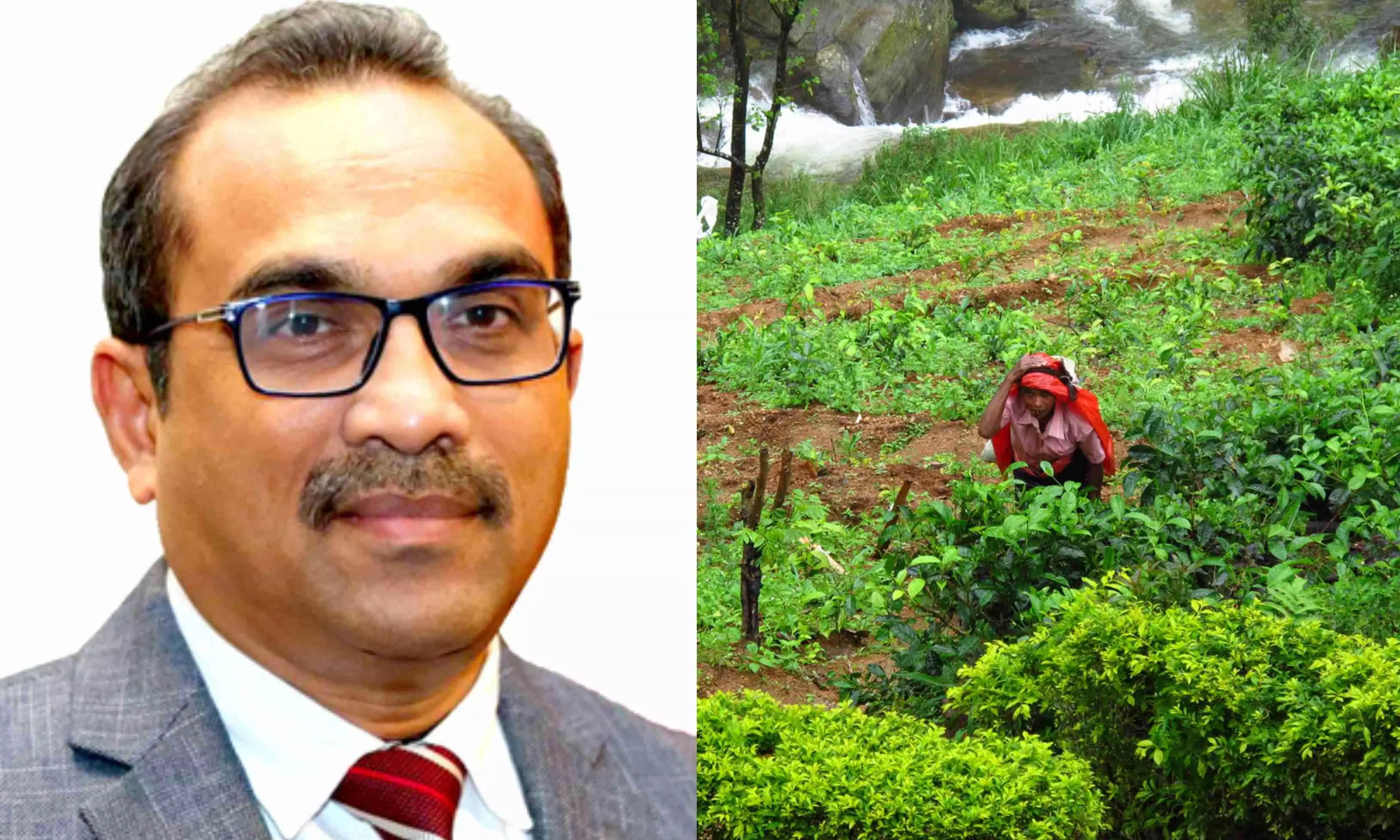
A senior Sri Lankan minister has openly acknowledged that injustices were heaped for decades on Indian Tamils who came to the country as indentured labourers and who remain among the poorest in the island nation.
Leaders of the 1.5 million-strong community have welcomed the admission by Minister of Transport, Highways and Urban Development Bimal Ratnayake but say he has sidestepped the role played in the ugly process by his own party, the now ruling Janatha Vimukthi Peramuna (JVP).
Ratnayake, a Sinhalese, told parliament on May 21 that political decisions, discriminatory policies and political narratives by successive governments contributed to the suffering of the Indian Tamils since Sri Lanka gained independence in 1948.
Citizenship stripped after independence
Ratnayake, a member of the JVP politburo, found fault with the Ceylon Citizenship Acts of 1948 and 1949 that classified nearly a million Indian Tamils as non-citizens, stripping them of voting rights and leaving them stateless.
Also Read: Sri Lanka Tamils fight to regain land army seized long ago: 'This govt too playing tricks'
Disregarding the decades when the impoverished Tamils slogged in the plantation industry in conditions of virtual slavery, the Sinhalese ruling class dubbed them "birds of passage" with no loyalty to the country.
As they pushed the bill through legislature seven months after independence, a minister from the indigenous Tamil community also backed the legislation that later became hugely controversial. India took back many of the disenfranchised Tamils.
Community welcomes acknowledgement
Although some Sri Lankan leaders have admitted that injustice was meted out to the Indian Tamils, the Tamil Progressive Alliance (TPA), which represents the plantation community, welcomed Ratnayake's comments as an affirmation of a long-suppressed truth.
The minister's statement is "hugely significant and one of the most honest acknowledgements ever made by a mainstream Sinhalese political leader in parliament on the treatment meted out to the Indian Tamil community," said Barath Arullsamy, vice president of the TPA.
"For decades, our community carried a painful historical burden which the country's leaders refused to even acknowledge," he added.
Generations confined to tea estates
Since the 1820s, the Indian Tamils worked for meagre wages and lived in ghastly conditions even as they helped to transform Sri Lankan tea into one of the most sought after globally and a leading foreign exchange earner.
However, since making it to Sri Lanka from southern India during the British era, generations were confined to the tea-producing areas in the central hills and worked with little or no autonomy.
Entire families were crammed into single-room "line rooms" built during the colonial times. Women, who mainly plucked the tea leaves, were paid a pittance but made to slog for long hours.
Also Read: JVP govt’s reluctance to hold provincial polls deepens Tamil anxiety
In the process, the socio-economic and health indicators in the tea estates remained among the lowest in Sri Lanka. Besides systemic disenfranchisement, the community suffered political marginalization. More important, most Sri Lankans looked down upon the Indian Tamils.
Arullsamy said: "Our people built roads, cleared jungles and contributed enormously to the country's development. Yet, our leaders had to struggle for long to win citizenship rights."
Minister Ratnayake added that compared to the conditions of the Indian Tamils in Sri Lanka, indentured workers from colonial India had made progress in other countries they sailed to including Malaysia, Fiji, South Africa and Mauritius.
JVP's own role glossed over
The minister pointed his fingers at members of the United National Party (UNP) – which was in power when Sri Lanka became independent but is now pale shadow of its original self – to say they were to blame for the plight of these Tamils.
Arullsamy pointed out that the JVP's longstanding stance on the Indian Tamils was based on suspicion, driving by its Sinhala-nationalist as well as anti-India geopolitical ideologies.
For years since it was founded in 1965, the JVP dubbed the poorly paid Indian-origin Tamil estate workers a "fifth column" of the Indian state to undermine Sri Lanka's sovereignty. India itself was called "expansionist".
The JVP constantly opposed grant of political or regional autonomy to Tamils in general, saying this would play into the hands of Western and Indian interests.
And despite its Marxist face, the JVP opposed any meaningful concessions to the impoverished Tamil plantation workers.
Ethnic riots, hostility and propaganda
As a consequence, hate-filled Sinhalese mobs set upon innocent and defenceless Indian Tamils during ethnic riots in 1977 and 1983 although the community had nothing to do with the separatist campaign the indigenous Tamils led in Sri Lanka's north and east.
"This the minister did not speak about," pointed out TPA's top leader Mano Ganesan, MP. "It is because of the JVP propaganda that many Sinhalese came to believe all that was said about our people." This triggered more hostility.
Arullsamy added: "The JVP for decades portrayed plantation workers as part of a so-called Indian expansionist project."
Because of the influence it enjoyed among the Sinhalese, the JVP accusations deepened the widespread negative feelings about Indian Tamils in the minds of the majority community.
"But I respect minister Rantanayake for honestly bringing our issues into the political conversation in parliament," Arullsamy said.
Housing, land rights still pressing
Community leaders say the more pressing and important tasks were to ensure housing security, land rights, better educational opportunities and greater political representation.
In recent decades, with the advent of education, younger members of the Indian Tamil community have moved away from the tea industry for good and taken to other professions as well as business.
Presently, the Indian Tamils employed in the tea estates total some 100,000, a far cry from the times when lakhs slogged.
Cyclone compounds community's woes
But the community suffered enormously during last year's devastating cyclone, and the TPA had to aggressively seek justice and rehabilitation for those who lost homes as well as whatever little they had.
When they realised that the government was not listening, Mano Ganesan and his colleagues took up what they called as "historical injustice" with the diplomatic community in Colombo.
Also Read: How Indian-origin Tamils in Lanka are quitting tea estates to carve a new identity
Despite Sri Lanka officially commemorating three years ago the 200th anniversary of the arrival of the Indian Tamils to the island, the prejudices against the community have not disappeared.
Indeed, minister Ratnayake spoke in parliament in response to an adjournment motion introduced by TPA leaders following recent attacks in two districts on Indian Tamils by gangs allegedly linked to tea estate industries.