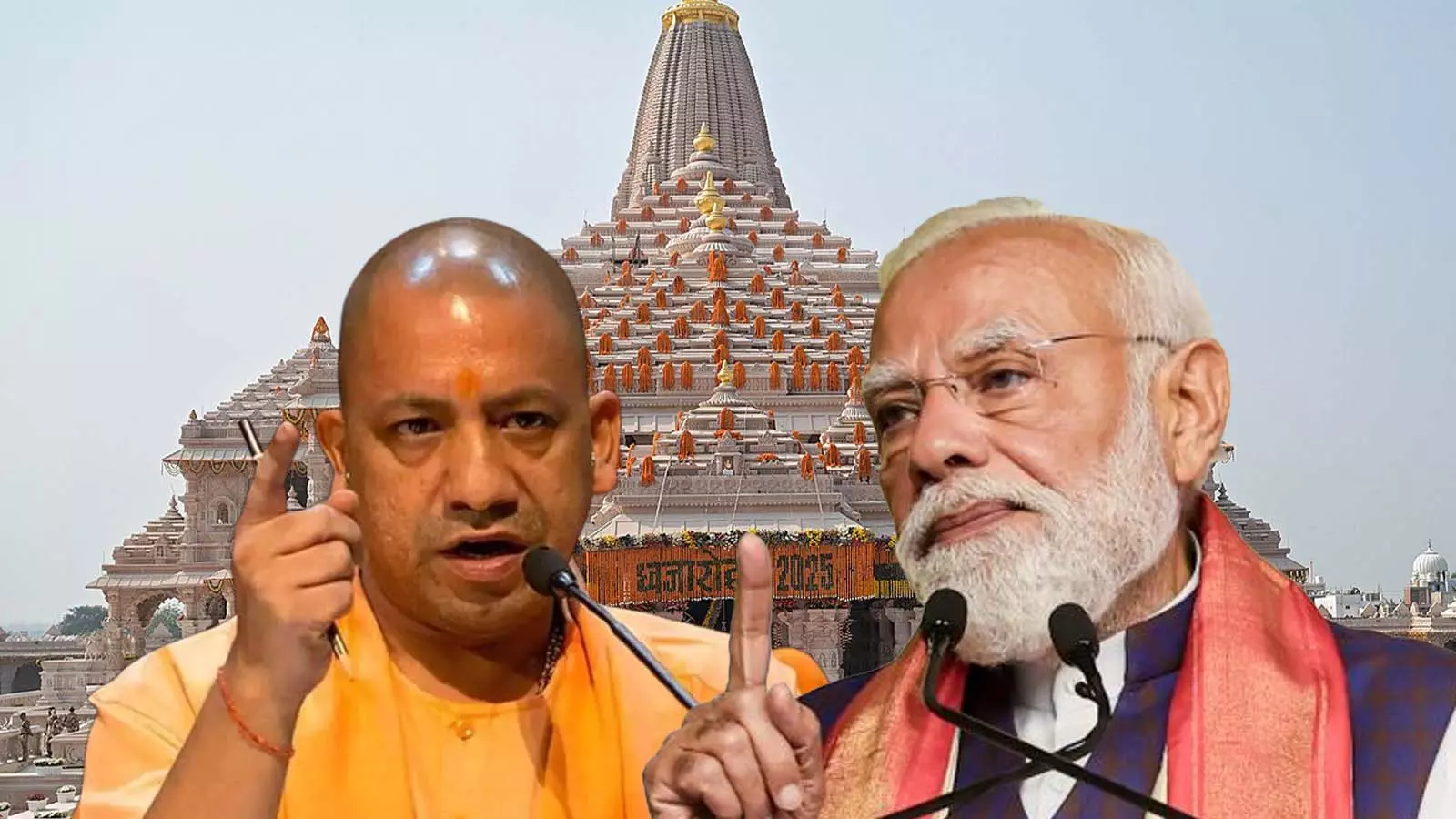
Ram mandir donation scam: Survey on 2027 poll leaves BJP and RSS jittery
Internal survey warns that the donation-theft controversy could trigger a 30-year-old political nightmare for the saffron party—losing power in Uttar Pradesh

The Ram Temple donation-theft case is creating fresh troubles every day for the Sangh Parivar. Perhaps, for the first time in 12 years, serious questions are being raised about the credibility of the ruling BJP at the Centre and in Uttar Pradesh, as well as Parivar organisations RSS and VHP.
Initially, BJP and RSS leaders believed the matter wouldn't escalate much. It turned out to be their biggest miscalculation. After the news broke, VHP leader Ram temple trust chief Champat Rai flatly denied the allegations, and it's this stance that now appears to be weighing heavily on the government, the BJP, and the RSS.
Also read: Ram temple theft: With RSS-BJP cornered, will Congress seize the moment?
For the first few days after the issue exploded, RSS leaders too agreed with Rai's position that resigning would amount to admitting guilt, which would then reflect badly on both the VHP and the RSS. But later, a survey forced senior RSS leaders to change their stance, and Rai was hastily ordered to resign from his post in the temple trust.
On Monday (July 6), the Ram temple trust met in Ayodhya to decide on the resignations of Rai and member Anil Mishra. Discussions are currently underway and the Shri Ram Janmabhoomi Teerth Kshetra Trust is likely to accept the resignations, per media reports.
Sangh camp alarmed
The timing of the episode could not have been worse. Assembly elections in Uttar Pradesh are due in early 2027. The BJP dominated the state that sends the most MPs (80) to the Lok Sabha in two consecutive elections, 2017 and 2022, and is eyeing a hat-trick next year. However, an internal survey conducted after the scandal erupted has reportedly robbed BJP and RSS leaders of sleep.
According to the survey, if elections were held under current conditions, the BJP would win only about 180 of 403 seats in the Uttar Pradesh Assembly. In 2017 and 2022, the party had won over 300 and 250 seats, respectively, in the state.
If the BJP loses power in Uttar Pradesh, it could also affect the stability of the Central government.
If the BJP loses power in Uttar Pradesh, it could also affect the stability of the Central government. Congress leader and Karnataka Home Minister Priyank Kharge has been openly confronting the RSS, and this has fuelled fears among RSS leaders that if the BJP loses power at the Centre in the 2029 general election, a new government could create problems for them.
Also read: Ram temple donation scam: Why is Congress not cashing in on BJP's crisis?
This is why everyone eventually agreed to Rai's resignation — although the current mood in Ayodhya suggests that a resignation alone won't be enough to settle things.
Disappointing 1993 show
Riding the wave of the Ram Rath Yatra combined with social engineering, the BJP first came to power in Uttar Pradesh in 1991, with Kalyan Singh becoming the Chief Minister with a full majority. The saffron party had won 221 of 425 seats (Uttarakhand was still part of UP then), with over 31 per cent of the vote share.
After the demolition of the Babri Masjid in Ayodhya in December 1992, the then PV Narasimha Rao government at the Centre had dismissed four state governments ruled by the BJP, including UP, and imposed President’s Rule.
Also read: Why Yogi's Ram temple theft crackdown has Sangh, BJP shaken | Capital Beat
The BJP’s top leaders had expected to make an even bigger comeback in the next election in the state, but it was not to be. In the 1993 Assembly elections, the saffron party’s vote share rose by nearly two percentage points to more than 33. Yet, its seat count fell from 221 to 177, less than the majority mark.
In that election, Mulayam Singh Yadav’s Samajwadi Party (SP), a new political force then, won 109 seats while Kanshi Ram’s Bahujan Samaj Party (BSP) won 67, and finished just one seat short of the BJP’s tally, at 176. But to keep the BJP out of power, all other parties threw their support behind Mulayam to help his party cross the magic figure of 213.
Booth-level strategy critical
BJP and RSS leaders have realised ahead of the 2027 polls that while booth-level strategy may boost the party’s vote share, many Hindus who normally abstain from voting are also upset over the Ram Temple controversy. And they may turn out simply to “teach the BJP a lesson”, voting for whichever candidate appears the strongest opponent to the BJP in their constituency.
Worried by this prospect, the BJP and RSS are making every effort to get on the same page over this issue, and to minimise the risk of an electoral defeat.