Trump and the US midterms: A political asset or liability for Republicans?
Trump’s loyal MAGA base remains his strength, but rising prices, the Iran war and immigration controversies could cost Republicans crucial votes in the midterm elections

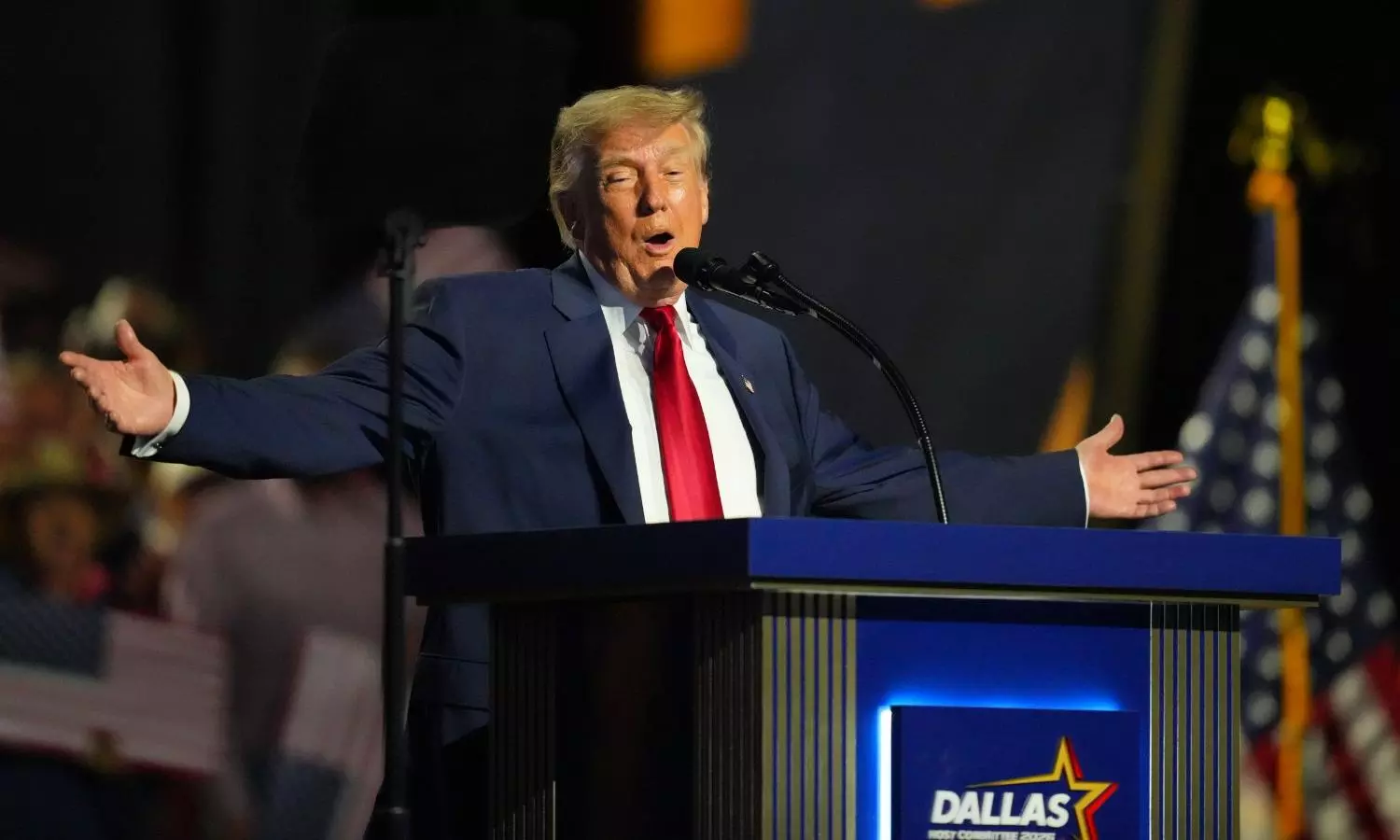
Donald Trump may not be on the ballot in November, but he has made the midterm elections a referendum on his presidency.
He has urged supporters: “Pretend I am on the ballot”, confident that his MAGA base remains loyal. However, the MAGA base alone cannot get his candidates over the line. Republican candidates need the support of independents and fence-sitters.
Despite the erosion in his popularity among the wider electorate, Trump remains the dominant figure in the Republican Party and its most effective vote-getter among his core supporters. Candidates face a dilemma: they cannot afford to distance themselves too far from him for fear of alienating the MAGA base. At the same time, an overt association with Trump could cost them the votes of independents and moderate Republicans. Trump remains the Republicans’ biggest political asset, but could also prove to be its biggest liability.
Trump faces mounting voter discontent
Loyalty to Trump will be tested against a growing list of grievances. Rising fuel prices, his frequent reversals on tariffs, the crackdown on immigrants, and a war with Iran that has disrupted the world’s energy supplies have all worked against him.
Also read | Trump’s Iran war: Why the US midterms could change the game
In 2024, during his presidential campaign, Trump had promised not to plunge the US into another needless foreign war. American lives and money would not be wasted on endless fighting to preserve democracy abroad. Instead, taxpayer money would help resurrect America’s aging infrastructure, put money back in the pockets of ordinary people and create jobs at home.
Yet none of this happened. Trump went to war with Iran, and unlike the military action in Venezuela, there was no easy victory. Iran was able to hold its own. The closure of the Strait of Hormuz and attacks on oil infrastructure in the Gulf states led to a sharp increase in fuel prices at the pump.
Trump himself will not be unseated even if Republicans lose control of both Houses of Congress. What is at stake, however, is his ability to push through his domestic agenda and pursue his foreign policy with little resistance. The elections will offer a measure of how much political damage his policies have inflicted and whether his personal appeal can withstand the consequences.
Republican strongholds become battlegrounds
If Trump loses control of both Houses, the immediate impact will be felt mainly on domestic issues and the control of government spending. Congress has the power of the purse and can block or restrict funding for programmes and policies. It can also exercise oversight over the executive.
Foreign policy, however, is a different matter. The president retains considerable powers, particularly as commander-in-chief. Congress can invoke the War Powers Resolution and restrict military action, but doing so is politically and constitutionally complicated. Trump is already threatening fresh attacks on Iran after the midterms.
Also read | As Iran anticipates fresh US-Israeli strikes, Trump gives a ‘maybe’ answer
For Republicans, the unthinkable is happening. Traditionally Republican strongholds such as Texas and North Carolina are now being fiercely contested. Trump himself has visited Texas several times in the last fortnight to drum up support. Iowa, too, once a reliably Republican state, is now competitive, with races for both the Senate and the House remaining tough.
Trump’s priorities clash with voter concerns
Michigan is receiving considerable media attention, with Democrat Abdul El-Sayed, a physician, challenging Republican Mike Rogers for the Senate. Trump and Barack Obama have both campaigned in the state for their respective candidates.
While campaigning, Obama joked about Trump's preoccupation with White House decor, comparing it to Saddam Hussein opening a cheesecake factory. While this was essentially a jibe, it raised a larger political question. At a time when Americans are worried about the cost of living, their president appears preoccupied with remaking the White House and attaching his name to national institutions. The Washington Post reported that 59 per cent of respondents in a recent poll thought Trump was spending too much time on White House renovations.
What happens if Democrats win both Houses?
If Democrats perform above expectations and wrest control of both Houses, Trump’s ability to govern without hindrance from Congress will be severely tested. Midway through a president’s second term, he is already a lame duck. But if both Houses slip out of Republican hands, his ability to function will be further constrained.
A Democratic opposition emboldened by control of Congress could investigate, obstruct and challenge his agenda. It could demand documents and testimony and subject senior officials to sustained congressional scrutiny. Secretary of War Pete Hegseth would certainly have to face the music.
Elon Musk, the world’s richest man, who has also poured money into supporting Republican candidates, could find himself under scrutiny. Contracts awarded to Musk’s companies, as well as Trump’s efforts to shut down agencies created by Congress, such as USAID, the Consumer Financial Protection Bureau and the Department of Education, could come under the microscope. Trump’s children’s financial dealings could also attract congressional attention.
Democrats might come under pressure from their support base to impeach Trump. However, most American analysts believe they would be wise not to take that path. After all, his term is coming to an end.
Economy and immigration test Trump’s support
If both the Senate and the House flip to Democrats, it would be largely because of the economy. “It's the economy, stupid” still holds true for elections across the world.
Ironically, Joe Biden’s presidency was damaged by high prices, which became a major factor in the 2024 elections. Today, inflation and affordability are again on the agenda, but this time the shoe is on the other foot. Democrats have promised to repeal Trump’s tariffs to bring down the cost of living. If they win both Houses, Trump could face difficulties securing funding for his immigration and deportation policies.
Trump’s emphasis on guarding the border against immigrants resonated with the public at the beginning of his term. His border-control measures and warnings that the country was being overwhelmed by “outsiders” were well received. Yet the administration's rollout of its crackdown on alleged illegal migrants has been a disaster.
Immigration and Customs Enforcement (ICE) agents were often ill-prepared, and some of their actions proved deadly. More than 30 people have reportedly died in detention, while several others have been fatally shot by ICE agents. Renee Good, Alex Pretti, a popular male nurse, and Ruben Martinez were among those whose deaths triggered widespread anger. Good and Pretti were US citizens.
These killings and deaths in detention have alienated many Latinos who had backed Trump and helped secure his victory in the presidential election. The issue could well backfire on him, although there remains broad support across the country for his anti-immigrant stance.
If Democrats win control of Congress, ICE agents are likely to face greater scrutiny, while funding for the administration’s immigration policies could come under pressure.
What are the Democrats offering?
The divisions within the Democratic Party between progressives and centrists have, for now, been pushed under the carpet. Both sides have a common objective: to stop Trump from further weakening the country’s institutions, from the FBI and the attorney general’s office to the independence of government agencies. They are campaigning on the cost of living, healthcare, immigration, and the need to restore institutional checks and balances.
They will also seek to scrutinise Hegseth’s running of the Department of War and his handling of the military leadership.
Aslo read | US asks Middle East allies to prepare for renewed strikes on Iran: Report
For now, their biggest electoral advantage may be public discontent with Trump rather than any great enthusiasm for the Democratic Party. Much of their appeal lies in a promise to return to the old ways of governance, restore institutional checks and balances and protect established democratic norms. That appears to have considerable appeal after Trump’s tumultuous two years in his second term.
The world has spent much of the past two years adjusting to Donald Trump’s America. Now, American voters have a chance to push back. Will they?