Bitter irony: Sri Lanka's death sentences highlight decades of unpunished war crimes
Sri Lanka's Easter bombings verdict marks a rare conviction of top officials, but the lack of accountability over the Chemmani mass grave exposes a stark justice divide

Call it a bitter irony. A Colombo court’s verdict of the death penalty for two top former officials over Sri Lanka’s worst terror attack by Islamists comes amid brazen indifference to punishing the military brass who killed Tamils in hundreds during the war and whose skeletons are now being dug up.
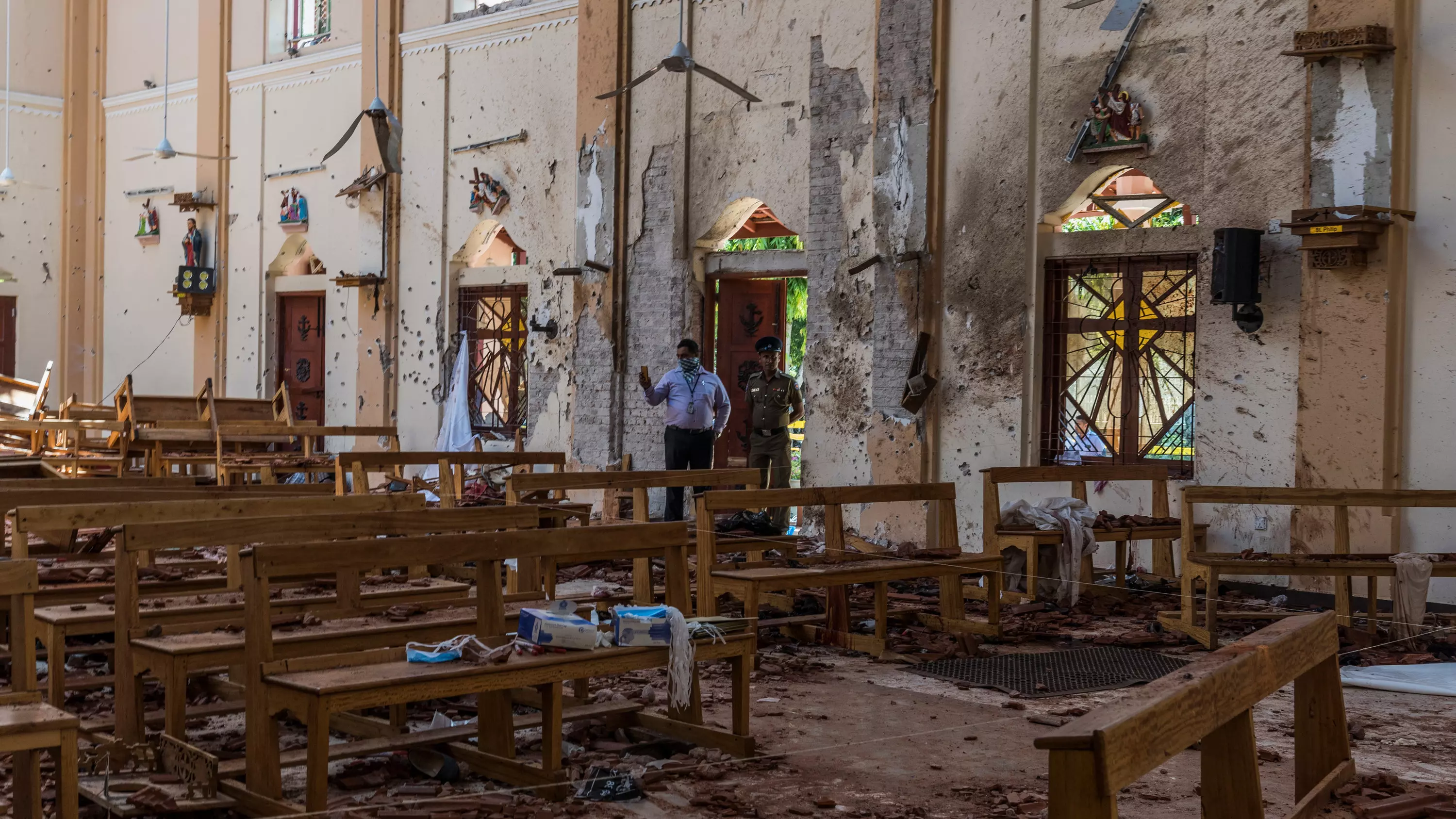
For the first time in Sri Lanka, a court moved to make an example of two men who presided over the country’s security system when Islamists bombed three churches and three hotels on Easter Sunday in April 2019, killing more than 260 locals and foreigners besides injuring hundreds.
It was a startling verdict in a country where the well-connected hardly face any punishment and where thousands of innocents have been killed along with armed militants in more than one insurgency over the decades – even though the identities of the killers are no secret in many cases.
Landmark Easter verdict
The Colombo Permanent High Court Trial-at-Bar verdict on Friday found then Inspector General of Police Pujith Jayasundara and Defence Secretary Hemasiri Fernando guilty of failing to act on intelligence warnings, including three actionable ones from India, ahead of the Easter bloodbath.
Now retired, Jayasundara, 66, and Fernando, 76, were taken into judicial custody after the ruling. Both are expected to appeal in the Supreme Court. They are unlikely to be executed unless Sri Lanka lifts an unofficial moratorium on the death penalty in force since 1976.
Also Read: Sri Lanka’s ‘no’ to bridge with India fuels counter: 'Would raise mutual dependence'
Even as the verdict against Jayasundara and Fernando spread like wildfire across Sri Lanka, there was a palpable sense of continuing injustice in a Tamil area some 400 kilometres north of Colombo where hundreds of skeletons of Tamil men, women and children murdered by the military are being dug up.
The situation has become so gross that international accountability experts and UN officials have urged Sri Lanka to order a full criminal investigation into the mass grave at Chemmani, on Jaffna’s outskirts. It is the biggest such grave in the island nation.
Speaking during a special online discussion in Geneva organised by the International Truth and Justice Project, they argued that the recovery of nearly 500 human remains has established enough grounds for a criminal inquiry and that excavation alone cannot ensure justice.
Chemmani questions persist
The contrasting standards of judicial accountability in the Easter attack and Chemmani could not have been more brazen.
Even before taking power in 2024, President Anura Dissanayake has been a vocal votary of punishing those who neglected intelligence warnings regarding the Easter bombers and thus allowed the devastation to take place. The mayhem happened exactly a decade after Colombo crushed the Tamil Tigers.
On its part, the Catholic Church insists that while the Sri Lankan wing of the Islamic State did carry out the near simultaneous terror attacks, the real plotters were part of a larger conspiracy aimed at bringing to power Gotabaya Rajapaksa, who did become the president after the mayhem.
Also Read: Sri Lanka’s JVP admits decades of injustice to Indian Tamils
In February this year, Dissanayake’s government arrested Suresh Sallay, who headed Sri Lanka’s main intelligence agency under Gotabaya, on charges of orchestrating the Easter bombings. He has denied the charge but remains in custody under the draconian Prevention of Terrorist Act (PTA).
The government’s determination vis-a-vis the Easter terrorism was evident when it appealed against a 2022 court decision – when Dissanayake was in the opposition -- that led to the acquittal of Jayasundara and Fernando, leading to today’s judicial reversal.
Surprisingly, although the Marxist Dissanayake has been stating again and again that he and his government do not look at ethnicity, some Tamils insist that this is very much the case.
Accountability divide
A good example of this is said to be Chemmani in Jaffna, the Tamil heartland.
This is where a Tamil teenage girl was murdered in 1996, followed by the killing of her brother and mother as well as a neighbour. Scores of Tamils were also done to death in the military-controlled area in the 1990s.
Also Read: Sri Lanka Tamils fight to regain land army seized long ago: 'This govt too playing tricks'
One soldier caught for the girl’s murder confessed that many Tamil civilians suspected of being Tamil Tiger sympathisers had been killed and buried in Chemmani on the orders of their seniors. But only seven low-ranking soldiers were convicted. No senior officer was questioned or punished.
Indeed, it was only in 2025, a year after Dissanayake became the President, that a court-ordered excavation of a wide area resumed. This, suspected in 2000, has led to the discovery of nearly 500 human skeleton remains. Tamils insist that such large-scale atrocities could not have happened without the military brass’ nod.
Justice under scrutiny
But Sri Lanka’s Justice Minister Harshana Nanayakkara, after visiting the excavation site recently, said the identities of those responsible for the mass killings were not known, stunning the Tamil community. Dissanayake has maintained a silence on the issue.
“This is shocking,” said Ingrid Massage, chair of the Sri Lanka Campaign and an international researcher on justice and accountability.
Johan Soufi, head of the Sri Lanka Accountability Project at the Office of the UN High Commissioner for Human Rights, pointed out that authorities should not conflate excavation and a criminal investigation.
”Excavation means recovering the bodies from the ground and ensuring they get dignified treatment,” he said. “A criminal investigation is about establishing what happened, who was responsible, and when the crimes were committed.”
Also Read: Sri Lanka placing roadblocks on Tamil refugees’ return from India
This is exactly the problem, said a Tamil lawyer who practises in Colombo and Jaffna but did not want to be named.
“The sentencing of two former officials is welcome, a sign that the size and clout of the accused should never determine the outcome of justice,” he told The Federal. “As for what Tamils may be feeling, I would say we are not holding our breath,” he added.
A Tamil activist in Colombo said thousands of Tamil civilians were killed throughout the ethnic conflict, in particular when the Tamil Tigers were finally crushed in 2009.
“I don’t think this country will deliver justice to even some of them, I am sure about this,” he said. “The Easter bombings had international ramifications. The Tamils who have been slaughtered are just statistics,” he added.
Not punishing any senior officer over the Chemmani mass grave “raises the question of whether those who truly bore responsibility escaped accountability while ordinary soldiers were held responsible”, media reports quoted senior Tamil attorney K.S. Rathnavel as saying.
Verdict's wider impact
The Colombo court acted very differently. It punished two of the once most powerful men in Sri Lanka for dereliction of duty and for ignoring intelligence warnings which, if acted upon, could have foiled the Easter horror.
There are others, Sinhalese included, who say the July 31 judgement, a result of the government’s perseverance, is sure to rattle military personnel who have been accused of killing thousands of Sinhalese and Tamil insurgents from the 1980s until 2009.
Also Read: Sri Lanka’s ‘Indian Tamils’ allege racial bias, seek justice and dignity
One retired officer said: “The government seems to be proceeding with a clear design. How far they will go and who all they will net is to be seen. Now it is clear why they are after Gotabaya.”
Gotabaya Rajapaksa, who is credited with crushing the Tamil Tigers, has also been accused in earlier times of presiding over the extra-judicial killings of activists of the Janatha Vimukthi Peramuna (JVP). The JVP is now Sri Lanka’s dominant ruling party, and its best-known face is President Dissanayake, who himself narrowly escaped death in 1989 during a state-sponsored crackdown.