What Justice Bhuyan’s remarks on judicial transfers reveal about state of judicial independence
Legal Lens | Judge warns that SC Collegium’s move to record and follow government requests on transfers reveals a striking intrusion into judicial autonomy

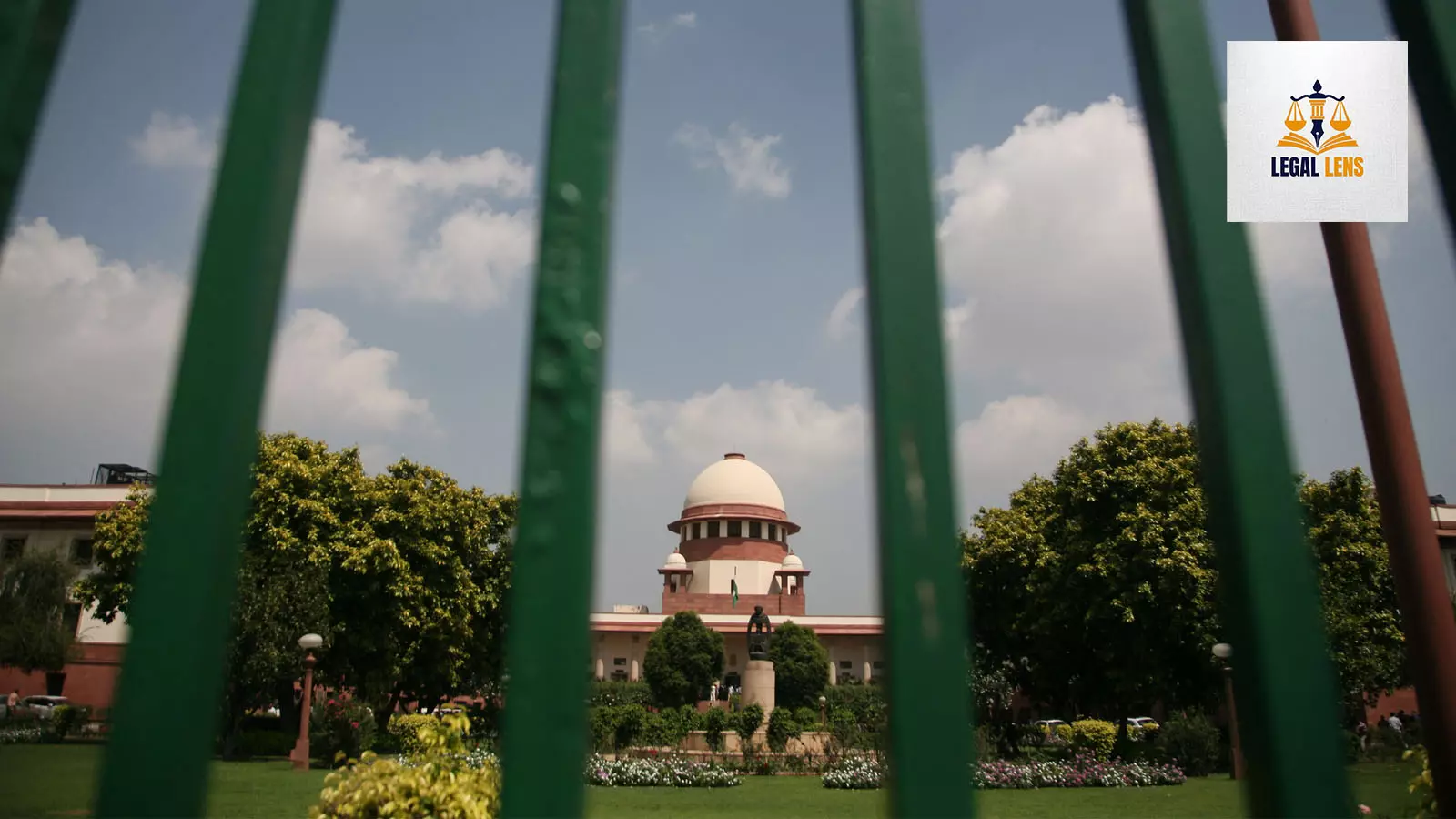
A sitting judge’s public criticism of the Supreme Court Collegium and its recent judgments is a rare development in Indian constitutional practice.
Justice Ujjal Bhuyan’s recent remarks on judicial transfers, during his GV Pandit Memorial Lecture at Pune on January 24, and on public trust in the Supreme Court at an international conference at Panaji the following day, reveal a lot about the current state of judicial independence.
The immediate factual context is the transfer of Justice Atul Sreedharan from the Madhya Pradesh High Court. The Supreme Court Collegium initially recommended his transfer to the Chhattisgarh High Court. That recommendation was later modified, and Justice Sreedharan was instead transferred to the Allahabad High Court.
Crucially, the Collegium’s resolution recorded on October 14, 2025, that this change followed a reconsideration sought by the Union government. This explicit acknowledgment marked a departure from the usual institutional language, which tends to present transfer decisions as unilateral judicial determinations made in the interest of administration.
Should Collegium honour executive request?
Justice Bhuyan’s criticism focused on this very point. He questioned whether the Collegium should revise a transfer proposal in response to an executive request and warned that such a practice risks diluting the constitutional principle that transfers fall within the judiciary’s exclusive domain.
Also read: Bail as punishment and the uneasy legacy of Justice DY Chandrachud
Justice Bhuyan’s remarks resonated because they followed a series of cases in which transfers appeared to coincide with judges presiding over politically sensitive matters. Justice Sreedharan himself had recently been part of a Bench that ordered the registration of an FIR against Kunwar Vijay Shah, a minister in Madhya Pradesh, for making allegedly derogatory remarks against Colonel Sofia Qureshi, who was part of the team briefing the press during Operation Sindoor. The episode heightened public attention to the timing and destination of his transfer.
Curiously, a three-judge Bench led by the Chief Justice Surya Kant, on January 19, gave the state government two weeks to decide on a request to prosecute him in this very case. The request was filed in August 2025. The court had questioned the nature of the “online” apology purportedly tendered by the minister.
What does the law say?
To understand the constitutional stakes, it is necessary to revisit the legal foundations of judicial transfers. Article 222 of the Constitution authorises the President to transfer a high court judge from one high court to another after consultation with the Chief Justice of India. The meaning of “consultation” has been decisively shaped by Supreme Court jurisprudence.
In the Second Judges Case in 1993, a nine-judge Bench of the court held that judicial independence requires primacy to be accorded to the opinion of the Chief Justice of India, formed collectively rather than individually. The subsequent Presidential Reference in 1998 clarified that this primacy must operate through a collegial process involving the five senior-most judges of the Supreme Court.
Also read: Why Supreme Court is concerned with marriage battles choking its docket
These decisions established two important propositions. Transfers are constitutionally permissible only when grounded in public interest and better administration of justice. At the same time, the consent of the transferred judge is not a constitutional requirement. The court reasoned that requiring consent could undermine the very objectives transfers are meant to serve, particularly in situations where local pressures or conflicts of interest necessitate relocation.
Transfers as a punitive measure
Although the doctrine presents transfers as neutral administrative tools, their real-world operation has frequently generated controversies. One of the most cited examples is the transfer of Justice S Muralidhar from the Delhi High Court to the Punjab and Haryana High Court in February 2020. The transfer followed closely on the heels of judicial orders passed by Justice Muralidhar in cases arising from the Delhi riots, including directions to the police regarding the registration of FIRs against political leaders. Justice Muralidhar had noted his unhappiness with the transfer, even as he complied with it. The episode became a reference point in debates about whether transfers, though doctrinally non-punitive, can assume a punitive character in effect.
The subsequent trajectory of Justice Muralidhar’s career further illustrates the structural complexity of the transfer process. He was elevated as Chief Justice of the Orissa High Court in 2021. In 2022, the Collegium recommended his transfer as Chief Justice to the Madras High Court. That recommendation did not materialise. The official explanation pointed to administrative considerations, including his impending retirement and the perceived need for continuity at Madras.
Also read: Outgoing CJI Gavai says judges need not rule against govt to prove independence
Yet the Collegium had to withdraw its recommendation to transfer him to the Madras High Court, in view of the Union government’s inaction on it. Reports had then attributed it to the fact that the government did not want him to head the Madras High Court. The sequence of recommendation, delay, and recall reinforced the perception that executive control over notifications can shape outcomes even where judicial primacy is formally acknowledged.
Transfers and protests
Other recent instances underline similar concerns. In 2019, Justice Vijaya K Tahilramani resigned as the Chief Justice of the Madras High Court after her transfer to the Meghalaya High Court. The Collegium cited administrative reasons, but her resignation was widely understood as a refusal to accept what she regarded as an unfair reassignment.
In 2021, the transfer of Chief Justice Sanjib Banerjee from the Madras High Court to the Meghalaya High Court prompted protests from members of the Bar and calls for greater transparency in transfer decisions. Justice Banerjee himself suggested that his transfer followed his reporting of alleged corruption within the judiciary, adding a further layer of controversy.
Justice Akil Kureshi, who retired as the Rajasthan High Court Chief Justice, was transferred twice unjustly: first from Gujarat High Court to the Bombay High Court, where he had to lose his seniority as the second senior-most judge and later to the Tripura High Court as its Chief Justice, after its initial recommendation to elevate him to the Madhya Pradesh High Court did not find favour with the government.
Executive decision?
Against this background, the Justice Sreedharan episode stands out for a different reason. The Collegium’s resolution did not merely announce a transfer; it disclosed that the destination was altered following a request from the government. That disclosure sharpened long-standing anxieties about executive influence. While the executive’s role in appointments and transfers has always existed at a formal level through the issuance of warrants and notifications, the Collegium system was designed to ensure that such involvement remained largely procedural. Once executive “reconsideration” is seen to affect the substance of a transfer, the boundary between consultation and influence becomes harder to defend.
Also read: Ex-CJI Gavai says never faced govt pressure, warns of ‘judicial terrorism’
The internal mechanics of transfer recommendations are themselves not widely understood. In practice, proposals are initiated by the Chief Justice of India in consultation with the Collegium of senior Supreme Court judges. The views of the Chief Justices of the High Courts concerned are usually sought, though they are not binding. This structure reflects the understanding, crystallised after the Third Judges Case, that decisions of this sensitivity must be institutional rather than personal. Justice Bhuyan’s intervention implicitly questions whether this institutional design is being adhered to with sufficient rigour when executive preferences enter the picture.
Constitutional question
The debate also raises a deeper constitutional question about the nature of the Supreme Court’s authority over high courts. High courts are constitutional courts in their own right, not subordinate tribunals. Their autonomy is protected by the Constitution, even as they remain subject to the Supreme Court’s appellate and supervisory jurisdiction. The transfer power, though expressly provided for in Article 222, sits uneasily with this conception of autonomy. Critics argue that frequent or unexplained transfers risk treating high courts as interchangeable administrative units rather than distinct constitutional institutions rooted in local legal cultures.
Supporters of the transfer power respond by pointing to its systemic utility. Transfers can defuse local pressures, prevent the entrenchment of vested interests, and promote an all-India judicial outlook. They can also serve pragmatic administrative needs, such as strengthening leadership in high courts facing vacancies or institutional stress. The constitutional challenge lies in ensuring that these legitimate objectives are visible and credible in individual cases.
Gap between doctrine and perception
Justice Bhuyan’s remarks highlight a gap between doctrine and perception. Judicial independence depends not only on formal rules but also on confidence, both within the judiciary and among the public. When a sitting judge expresses concern that executive requests are shaping transfer outcomes, it suggests that the existing safeguards do not fully reassure even those operating inside the system.
Addressing this deficit does not require abandoning the transfer power altogether. It does, however, call for greater clarity about the principles guiding its exercise and greater consistency in resisting executive inputs that appear to cross from procedure into preference.
Also read: SC concerned over trend of overturned verdicts by succeeding benches
Justice Bhuyan’s intervention draws attention to the need for institutional self-examination. Whether the judiciary responds by refining its internal processes or by offering more reasoned explanations will shape how future transfers are understood. In that sense, the episode serves as a reminder that judicial independence is sustained through continuous institutional practice, not secured solely by past judgments or constitutional text.