Equal rights may not need a Uniform Civil Code: Shah Bano a case in point
As seen in Shah Bano case, focusing on discriminatory laws rather than dismissing personal laws and enacting a UCC may be the way out to ensure equality

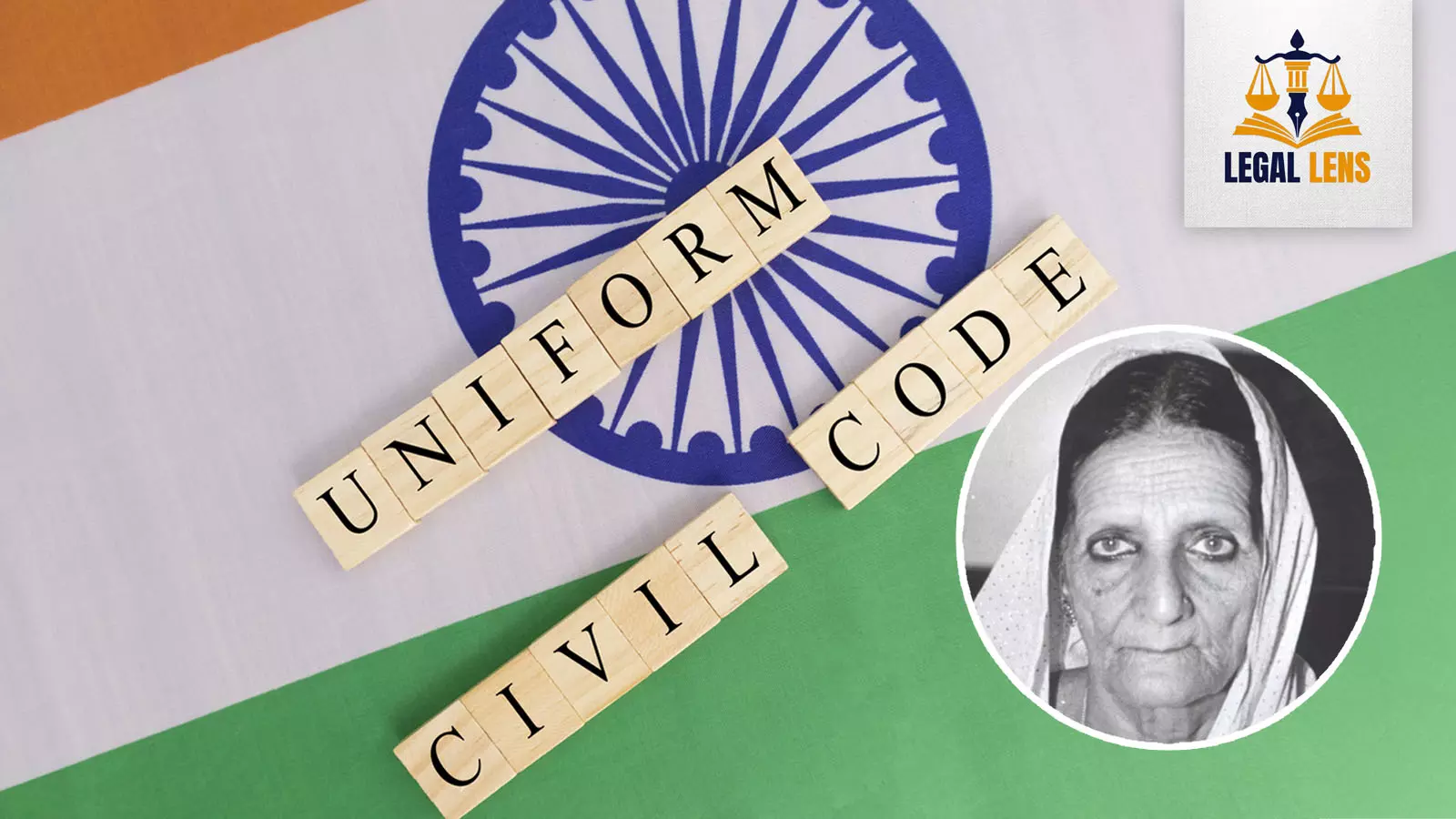
In Haq, the 2025 film inspired by the Shah Bano case, a deserted Muslim woman goes to court seeking maintenance and finds herself at the centre of a larger argument over religion, personal law and equal rights. The film fictionalises the protagonists, but keeps the legal conflict recognisable: can a Muslim woman invoke a secular law that applies irrespective of religion?
More than four decades after the Supreme Court answered that question in Shah Bano Begum’s favour, the less remembered legal afterlife of the case offers a useful lens for the new push towards a Uniform Civil Code (UCC).
Union Home Minister Amit Shah on September 13 said that all 21 states governed by the BJP-led National Democratic Alliance (NDA) would introduce UCCs before the 2029 Lok Sabha election. That promise has revived familiar questions about personal laws and the meaning of “uniformity”. But Shah Bano puts another question alongside them: what is the inequality a new common law is meant to cure, and does a secular remedy already exist?
Also read: UCC by 2029: 75-year-old promise or sharp political strategy?
That is the central lesson of the case. Equal civil rights can sometimes be secured without replacing an entire personal-law system with a comprehensive common code. In Shah Bano’s case, Parliament had already enacted a religion-neutral maintenance remedy. Even after it created a separate Muslim-specific regime in 1986, the Supreme Court ultimately held that the secular remedy had survived alongside it.
Shah Bano and Section 125
Shah Bano approached a magistrate in Indore in 1978 after separating from her husband, advocate Mohammed Ahmed Khan. She sought maintenance under Section 125 of the Code of Criminal Procedure (CrPC), which allowed wives, children, and parents unable to maintain themselves to seek support from a person with sufficient means.
Section 125, invoked in the Shah Bano case, did not rewrite Muslim marriage or divorce law. It placed a common statutory safety net underneath different personal-law systems.
Her husband later divorced her and argued that his obligations were governed by Muslim personal law. A five-judge Supreme Court bench ruled unanimously on April 23, 1985, that Section 125 applied to a divorced Muslim woman who could not maintain herself.
Section 125 did not turn on religion. Its definition of “wife” included a divorced woman who had not remarried. The court called the provision “truly secular in character” and said the religion of the spouses was irrelevant to its application.
The provision therefore did something narrower, but also more revealing, than a UCC. It did not rewrite Muslim marriage or divorce law. It placed a common statutory safety net underneath different personal-law systems.
1986 law, later confusion
The judgment triggered a political storm. The then Rajiv Gandhi government responded with the Muslim Women (Protection of Rights on Divorce) Act, 1986, creating a special statutory framework for women divorced under Muslim law.
The Act entitled a divorced woman to a “reasonable and fair provision and maintenance” from her former husband, to be made and paid within the iddat (a prescribed waiting period), along with mahr, or dower, and property due to her. It also provided for support from relatives and, in specified circumstances, the Wakf Board.
Because the law followed the Shah Bano controversy, it became widely understood as Parliament’s reversal of the judgement. Yet the Act never expressly said that a divorced Muslim woman was barred from independently invoking Section 125. That omission eventually became decisive.
Also read: One nation, many codes: The contradiction inside Amit Shah’s 2029 UCC promise
In Danial Latifi v. Union of India in 2001, a five-judge constitution bench upheld the 1986 Act but interpreted it expansively. The husband had to make a reasonable and fair provision within the iddat period, the court held, but that provision had to take care of the woman’s future beyond iddat. The court remarked on the irony that an enactment intended to reverse Shah Bano had, as interpreted, effectively codified much of its rationale.
The bigger clarification came in 2024.
Section 125 vs 1986 Act: SC’s clarification
In Mohd Abdul Samad v State of Telangana, a Muslim husband argued that his divorced wife had to proceed under the 1986 Act rather than Section 125.
Justices BV Nagarathna and Augustine George Masih rejected that contention on July 10, 2024. In separate but concurring opinions, they held that a divorced Muslim woman could seek maintenance under Section 125, under the 1986 Act, or under both, subject to adjustment to prevent double recovery.
The special law had added a remedy without extinguishing the general one. Justice Nagarathna found neither an express nor an implied statutory bar preventing a divorced Muslim woman from invoking Section 125.
Shah Bano did not have to wait for a UCC before claiming the same statutory protection available to other divorced women. The secular route was already there, and the Supreme Court has now confirmed that even the special law enacted in 1986 did not close it.
The Code of Criminal Procedure has since been replaced by the Bharatiya Nagarik Suraksha Sanhita (BNSS), which came into force on July 1, 2024. Section 144 now carries forward the general maintenance remedy and continues to include a divorced woman who has not remarried within the definition of “wife”.
Seen from 2026, the journey is striking. Shah Bano obtained access to a secular remedy in 1985. Parliament created an additional Muslim-specific route in 1986. Danial Latifi v Union of India protected the substance of the woman’s future claim in 2001, and Mohd Abdul Samad v State of Telangana confirmed in 2024 that the original secular route had remained open as well.
UCC question Shah Bano resolves
This, however, does not establish that every difference among India’s family laws has been resolved. Rules concerning succession, marriage and divorce continue to differ, and supporters of a UCC argue that a comprehensive code can deal with such differences more consistently than piecemeal reform.
Shah Bano, however, changes the way the necessity for uniformity can be examined. Instead of treating the existence of different personal laws itself as the problem, the case directs attention to the particular right at stake.
Also read: A brief history of uniform civil code, and why the idea wouldn't go away
Where citizens belonging to different religions have unequal rights in a specific field, one question is whether a common secular statute already covers it. Where it does not, another is whether a targeted religion-neutral provision can cure that inequality. A comprehensive code is a further option where the differences sought to be addressed require wider restructuring.
The distinction between difference and disadvantage has an institutional history of its own.
Verdict of Law Commissions on UCC
The 21st Law Commission, headed by former Supreme Court judge Justice BS Chauhan, did not submit a final report rejecting a UCC. On August 31, 2018, the last day of its term, it issued a Consultation Paper on Reform of Family Law.
Its central formulation was that resolving inequality did not require the “abolition of difference”. The commission said it had focused on laws that were discriminatory rather than proposing a UCC, which it considered “neither necessary nor desirable at this stage”. Its approach was to identify discriminatory provisions and recommend amendments or other reforms, rather than assume that every difference among communities produced inequality.
The distinction between a consultation paper and a final report is important. The government subsequently confirmed in Parliament that the 21st Law Commission had been unable to finalise its UCC report. The 22nd Law Commission reopened the exercise and invited fresh views from the public and recognised religious organisations on June 14, 2023, but its term too ended on August 31, 2024 without a final report.
Also read: Why BJP’s state-by-state approach for UCC could be part of broader strategy
The present 23rd Law Commission is chaired by former Supreme Court judge Justice Dinesh Maheshwari. Its broad terms include examining laws in the light of the Directive Principles of State Policy and promoting gender equality. The UCC question therefore remains part of an unfinished law-reform history.
First identify the inequality
That unfinished exercise makes the Shah Bano experience particularly relevant to UCC-2029.
The case cannot decide whether India needs a common code across every field of family law. It does, however, provide a way of testing the case for one. Each asserted inequality can be examined separately: who is disadvantaged, what right differs, whether a secular remedy already exists and, if it does not, how extensive a legislative change would be required.
Maintenance demonstrates why those questions matter. Shah Bano did not have to wait for a UCC before claiming the same statutory protection available to other divorced women. The secular route was already there, and the Supreme Court has now confirmed that even the special law enacted in 1986 did not close it.
Also read: How BJP plans to weaponise UCC to gain edge in poll-bound UP, break Oppn unity
That is the less familiar lesson Shah Bano leaves for the 2029 debate. Her case does not resolve the argument for or against a Uniform Civil Code. It puts a prior question on the table: where, precisely, does existing law still leave citizens with unequal civil rights?