One court, one voice: How SC addressed its own discord on UAPA bail
A 100-page order freeing a Kashmiri clerk after 6 years also disciplined the court — smaller benches must follow larger ones or refer the matter up

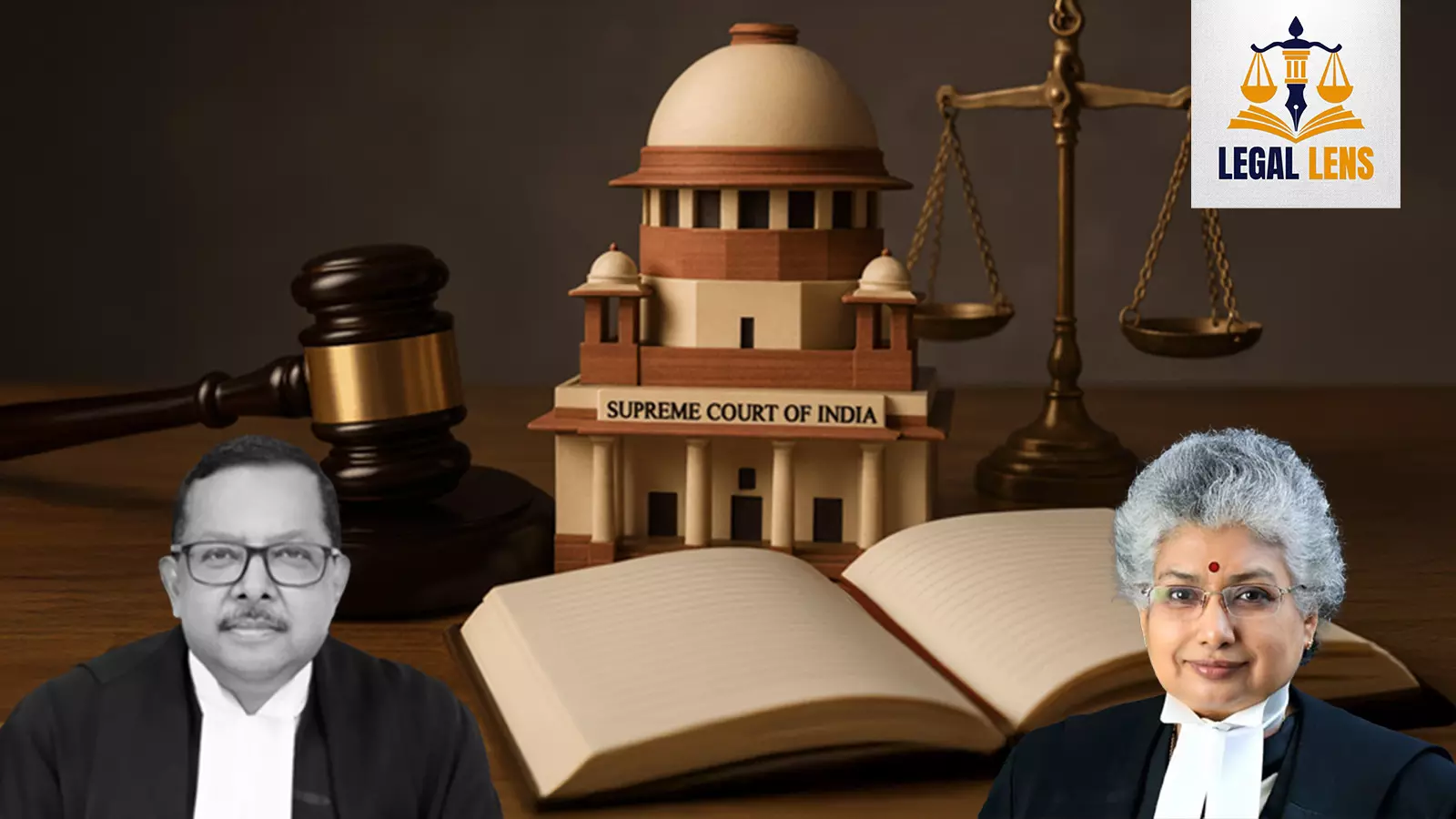
A constitutional court is supposed to speak in one voice. The Supreme Court of India, with 32 judges sitting in benches of varying strength, often does not.
The same statute, the same question of liberty, can yield different answers in different courtrooms on different days. The answer depends on which two or three judges are listed.
Scholars have a word for an institution that speaks in many voices at once — polyvocal. The problem of being polyvocal is unfortunately familiar: in a stringent-bail statute like the Unlawful Activities (Prevention) Act (UAPA), different benches reading the same provision differently can mean the difference between freedom and indefinite custody.
A polyvocal problem
On May 18, the Supreme Court used a 100-page bail order to push back against that drift and against two of its own earlier voices.
The order freed Syed Iftikhar Andrabi, a Kashmiri government clerk who had been in custody for nearly six years. But its larger work was doctrinal. It addressed a question that has been quietly building for four years.
Clarity from SC on UAPA bail rules
♦ Bail is the rule, jail is the exception
♦ Smaller benches cannot dilute larger bench rulings stealthily
♦ Constitutional rights override statutory bars during prolonged detention
♦ A three-judge bench decision remains binding law
♦ Statistically, most UAPA accused are eventually acquitted
♦ Pre-trial custody must not become punitive detention
What happens when smaller benches of the apex court dilute the law laid down by larger ones? When they do so by reinterpretation, without ever expressly disagreeing or referring the matter up?
Justices BV Nagarathna and Ujjal Bhuyan answered both questions in one judgment. They said that bail under UAPA is the rule, jail is the exception. And a two-judge bench cannot rewrite a three-judge bench through stealth.
Tug of war
Section 43-D(5) of UAPA is the bail bar. The court must deny bail if the police report or case diary shows what the law calls a prima facie case. That means a case that holds up on its face, without deep evidentiary scrutiny.
The provision opens with what lawyers call a "non-obstante clause." That is an overriding clause beginning with the words 'notwithstanding anything contained in the Code of Criminal Procedure'.
Plainly speaking, it tells the ordinary bail rules to step aside. In practice, special courts and high courts have read it almost as a one-way valve. The accusation is serious, the chargesheet survives the threshold test, and the accused stays in.
Article 21 of the Constitution promises that no person shall be deprived of life or personal liberty except by procedure established by law. The Supreme Court has long held that a speedy trial is embedded in that promise. Where one provision is statutory and the other constitutional, the constitutional one must prevail. The question is when and how.
Also read: Bail as punishment and the uneasy legacy of Justice DY Chandrachud
The three-judge bench answer came in Union of India vs KA Najeeb in 2021. The rigours of Section 43-D(5), the court held, 'melt down' in two conditions.
First, where the trial has no prospect of finishing in a reasonable time. Second, where the accused has already served a substantial part of the sentence he might face on conviction. In such cases, the constitutional court is 'ordinarily obligated' to release the accused.
Erosion by smaller benches
Two earlier two-judge benches read Najeeb differently. In Gurwinder Singh vs State f Punjab (2024), the court formulated a so-called twin-prong test.
The accused must first clear the prima facie hurdle under Section 43-D (5). Only then will ordinary bail factors come into play, such as whether the accused is likely to abscond before trial, intimidate witnesses, or destroy evidence. Najeeb was distinguished by its facts and shrunk to an exception.
In January, the same approach surfaced in Gulfish Fatima vs State, the order that arose from the Delhi riots conspiracy case. The bench there released five accused but kept Umar Khalid and Sharjeel Imam in custody. Najeeb, the bench said, did not lay down a 'mechanical rule' that mere passage of time entitles an accused to bail. The constitutional inquiry, it held, was contextual.
Read in isolation, neither formulation looks unreasonable. Read together, they do something more. They turn the constitutional safeguard into a subordinate clause of the statutory bar.
Dilution by interpretation is not an option. The judgment puts it plainly: a smaller bench 'cannot dilute, circumvent, or disregard' the binding principle laid down by a larger one.
The three-judge bench in Najeeb had said the statutory bar gives way to Article 21 once incarceration becomes oppressive. Gurwinder Singh and Gulfisha Fatima said the statutory bar must first be cleared before Article 21 can even be reached.
The correction
Justice Bhuyan's judgment in Andrabi takes both decisions on. The reasoning, the court says, proceeds against 'something invented and then destroyed.' Najeeb never said that mere passage of time automatically yields bail. It said that the statutory embargo cannot be the sole reason for indefinite detention. The smaller benches answered a proposition Najeeb never advanced and used the answer to constrict Najeeb itself.
The judicial discipline point is just as sharp. A two-judge bench is bound by a three-judge bench. If it disagrees, the only honest path is reference to the Chief Justice for placement before a larger formation.
Dilution by interpretation is not an option. The judgment puts it plainly: a smaller bench 'cannot dilute, circumvent, or disregard' the binding principle laid down by a larger one.
Behind the textual point sits a structural one. Stare decisis is the principle that courts must follow the decisions of higher and earlier benches on the same point of law. The architecture frays when smaller benches narrow inconvenient precedents through reading down. The proper course is reference to the CJI for resolution by a larger bench.
Litigants in similar cases then get different doctrines depending on which bench they draw. The law becomes, in effect, a panchayat by listing.
Numbers behind doctrine
The judgment buttresses the constitutional argument with arithmetic. The government's own figures, placed before Parliament and drawn from the National Crime Records Bureau, tell a striking story.
Between 2019 and 2023, the conviction rate under UAPA hovered between 1.56 and 6.06 per cent nationally. In Jammu and Kashmir, the annual conviction rate stayed below 1 per cent through the same period. By the prosecution's own data, more than 94 in 100 UAPA accused are eventually acquitted. In Kashmir, the figure rises above 99.
Also read: 'Bail is rule' for offences even under special statutes like UAPA: SC
The court does not say that low conviction rates by themselves justify bail. It says they make the case for treating pre-trial custody as anything other than punitive harder to defend. When acquittal is the statistical norm, prolonged detention without trial becomes a sentence served without conviction.
Andrabi's case
Andrabi worked as a village-level worker in the rural development department in Kupwara. He was first picked up on August 7, 2019, two days after the abrogation of Article 370.
The detaining order invoked the Jammu and Kashmir Public Safety Act, 1978. The high court eventually quashed that detention. In June 2020, he was arrested again. The police had intercepted a vehicle near Handwara and recovered cash and heroin. He was named in the chargesheet on the basis of a disclosure statement to the police and the contents of his mobile phone.
Nothing was recovered from his person or his premises. The disclosure statement is hit by Section 25 of the Evidence Act, which bars confessions to the police. One of the phone numbers said to link him to a militant operative across the border did not survive scrutiny.
On the appellant's submission, it was in fact the customer care line of a Pakistani telecom provider. Four co-accused had already been granted bail. Andrabi, who had served the longest custodial stretch among them, was still in jail.
Prosecution figures gave the rest of the answer. More than 350 prosecution witnesses still remained to be examined. The court found that conclusion of the trial in the near future was, in its phrase, 'well-nigh impossible'.
Najeeb, on its own terms, applied with full force.
And Umar Khalid?
The judgment expresses, in so many words, 'serious reservations' on Gulfisha Fatima, the very order that kept Umar Khalid and Sharjeel Imam in custody.
It does not formally overrule that order, and could not have done so sitting as a two-judge bench. But it states that Najeeb, being a three-judge decision, is 'binding law entitled to the protection of stare decisis.' And it cannot be ignored even by benches of the apex court itself.
That sentence is the substantive corridor through which Khalid and Imam may now apply. Whether the door opens depends on which bench hears them next and how soon. As of May 18, both remain in custody.
A small bench, a large lesson
The lesson Andrabi insists on is clear: Where the court’s larger benches have spoken, its smaller benches must either follow or refer up.
The alternative has played out over four years. It begins with NIA vs Zahoor Ahmad Shah Watali (2019), which read Section 43-D(5) restrictively against the accused. It continues with Gurwinder Singh (2024), which tried to revive that reading.
And it ends, for now, with Gulfisha Fatima in January. The Constitution does not sit below a statute. And a three-judge bench does not sit at the mercy of two.