Can CEC be removed? Decoding INDIA Bloc's impeachment motion
By invoking Judges (Inquiry) Act, Opposition embarks on a quasi-judicial battle, forcing Parliament to weigh 'proven misbehaviour' against a constitutional office

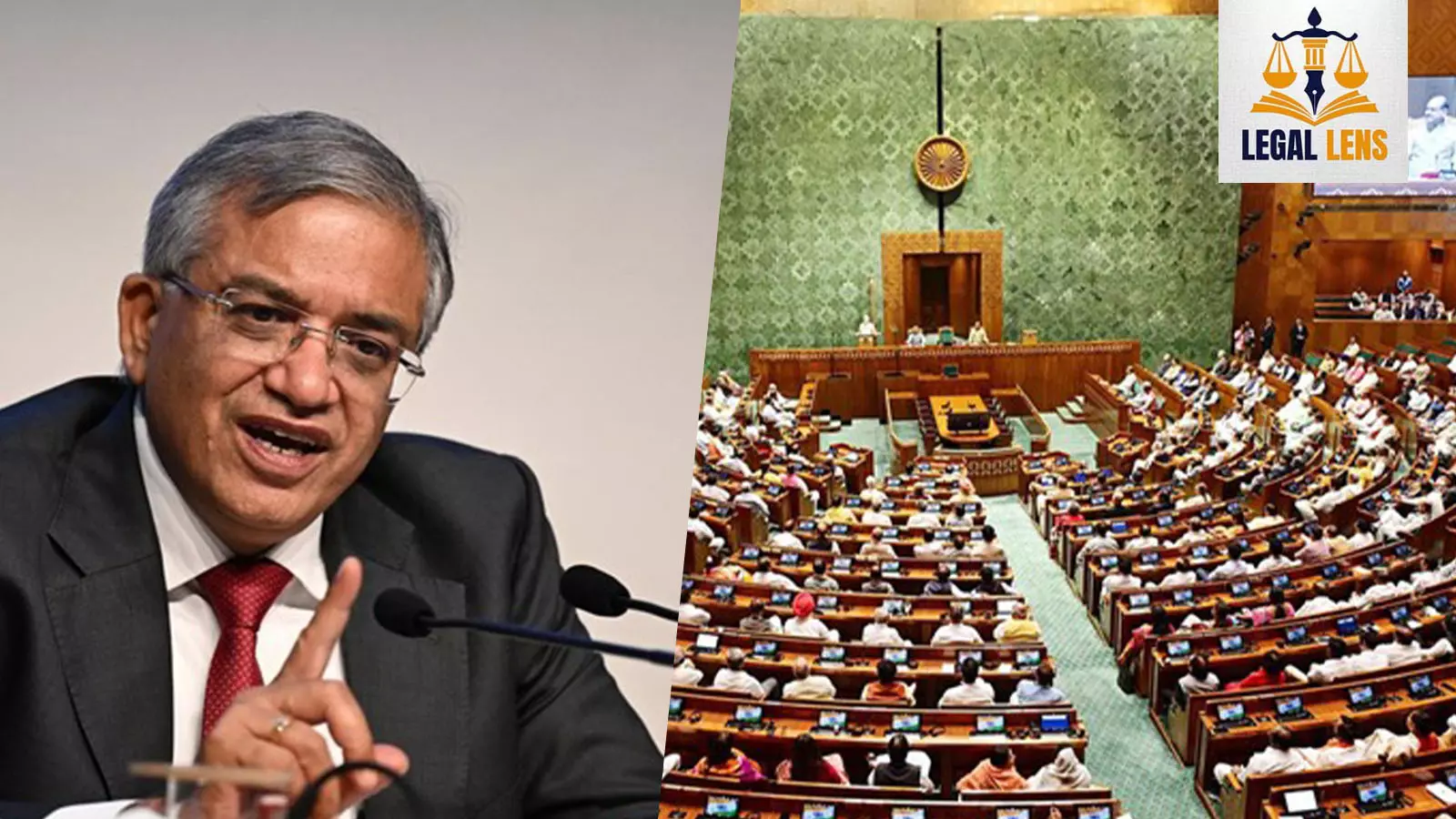
The removal motion against the CEC in Parliament requires signatures of at least 100 Lok Sabha members or 50 Rajya Sabha members; if admitted, a three-member inquiry committee will investigate
Parliament's Budget session has already absorbed one constitutional flashpoint — the no-confidence motion against Lok Sabha Speaker Om Birla. A more consequential confrontation is being set up.
The Opposition INDIA Bloc has announced it will move a motion to remove the Chief Election Commissioner (CEC) Gyanesh Kumar. Trinamool Congress sources confirmed that a removal notice would be submitted. If filed, it will be the first such motion in the history of independent India against a sitting CEC.
The immediate trigger is the Special Intensive Revision (SIR) of electoral rolls in West Bengal ahead of the 2026 Assembly elections.
The Mamata Banerjee government has vigorously contested the exercise, raising allegations of disenfranchisement and taking the matter to the Supreme Court. But the motion does not emerge from the SIR dispute alone. It is the culmination of a sustained deterioration in relations between the INDIA bloc and the Election Commission that began with the controversial 2025 Bihar elections and Rahul Gandhi's allegations of large-scale voter fraud.
Also read: NCERT textbook ban: Judiciary moves fastest when it's the one being judged
Kumar publicly rebutted those allegations in a press conference, demanding either an affidavit from Rahul or a public apology within seven days — an ultimatum from a constitutional authority to the Leader of the Opposition that crystallised the Opposition's resolve to exhaust every available parliamentary remedy.
Removal of CEC
The constitutional foundation is Article 324(5), which provides that the CEC shall not be removed except in like manner and on the like grounds as a Judge of the Supreme Court.
The Constituent Assembly was alive to the risk of an election commission vulnerable to executive displeasure. The procedural assimilation to judicial removal was meant to create a guarantee of independence more robust than mere statutory tenure. The grounds are proved misbehaviour or incapacity, and the process runs through both Houses under the Judges (Inquiry) Act, 1968. A motion requires signatures of at least 100 Lok Sabha members or 50 Rajya Sabha members; if admitted, a three-member inquiry committee investigates.
For removal, both Houses must pass the motion by special majority — a majority of total membership and two-thirds of those present and voting.
The numbers are impossible for the Opposition. The NDA coalition commands comfortable majorities in both Houses. The TMC, the driving force behind the motion, has 29 members in the Lok Sabha and 12 in the Rajya Sabha. Even the combined INDIA bloc, which may secure the 100 signatures needed to file, is far from the two-thirds bar needed to pass.
Mamata Banerjee acknowledged this explicitly during her Delhi visit in February: “We will bring the motion; it will be good to have it on the record of Parliament.” That admission is the key to understanding what the Opposition actually intends.
The motion is not designed to succeed. It is designed to compel an inquiry. If admitted and a committee constituted, the investigation itself — even if the final motion ultimately fails — places the CEC’s conduct under formal parliamentary scrutiny. Charges of proven misbehaviour must be examined on evidence.
Also read: How the Official Secrets Act has become a colonial relic in the AI age
The committee’s deliberations and findings, even if inconclusive, would enter the public and parliamentary record. But the Opposition must demonstrate a solid basis at the threshold; if the charges are insufficient, the motion can be rejected at the admission stage itself.
Constitutional question
This instrumentalisation of the impeachment mechanism raises a constitutional question the Opposition should not evade.
The Supreme Court’s Constitution Bench in T.N. Seshan, CEC v. Union of India (1995) explained why the CEC was given stronger removal protection than the other Election Commissioners: to insulate the office from external political or executive pressures. That insulation runs in both directions. It was not conceived only as a shield against the government of the day; it protects the CEC equally from Opposition parties seeking to weaponise the removal procedure for parliamentary effect.
A motion filed in the admitted knowledge that it cannot succeed, publicly described in advance as good for the record, risks being challenged on the ground that it does not constitute a bona fide invocation of the inquiry process.
The counterargument carries force. Democratic accountability cannot be calibrated in advance to only those instances where the numbers for success exist. If there is credible evidence of partisan conduct, parliamentary attention is appropriate regardless of whether removal will follow. But the INDIA bloc’s credibility depends on the quality of evidence it places before the Speaker when filing the notice.
Symbolic intent does not substitute for justiciable grounds.
Structural irony
There is a structural irony the Opposition would be wise to press, though it requires careful handling. The Chief Election Commissioner and Other Election Commissioners (Appointment, Conditions of Service and Term of Office) Act, 2023 replaced a selection committee that the Supreme Court in Anoop Baranwal v. Union of India (2023) had mandated to include the Chief Justice of India, with one from which the CJI is excluded.
The committee now comprises the Prime Minister, the Leader of the Opposition, and a Cabinet minister nominated by the Prime Minister — the ruling party always holds two votes to the Opposition’s one. Kumar was appointed under this regime in February 2025. The argument that the appointment process was designed to make genuine independence structurally improbable is compelling.
Also read: When Supreme Court had to remind India that women own their bodies
It is complicated by one fact the Opposition cannot easily set aside: Rahul Gandhi sat on the selection committee that chose Kumar and did not block the appointment. His participation in a process he now characterises as structurally compromised is an inconsistency the ECI’s lawyers will press. The constitutional challenge to the 2023 Act remains pending; the Supreme Court declined to stay the law in March 2024.
N Gopalaswami episode
The Gopalaswami episode of 2009 offers an instructive contrast. The then CEC N Gopalaswami recommended to President Pratibha Patil the removal of Election Commissioner Navin Chawla for alleged partisan conduct; the President declined, holding the recommendation non-binding. No parliamentary motion followed. The present situation is more public, more partisan, and more constitutionally charged.
What remains constant is the political impossibility of removal; what has changed is the Opposition’s willingness to institutionalise its grievance through parliamentary procedure.
The no-confidence motion against the Speaker provides partial context, but the comparison should not be pushed too far. A no-confidence motion against the Speaker is an entirely ordinary Opposition instrument. An impeachment motion against the CEC is constitutionally extraordinary.
Constitutional reckoning or noise
The INDIA Bloc risks treating an extreme remedy as routine parliamentary opposition — a conflation that may ultimately weaken the mechanism as a tool of genuine accountability.
Even if disposed of perfunctorily, this motion — the first formal parliamentary challenge to a sitting CEC in seven and a half decades of constitutional democracy — will mark how fractured the relationship between election administration and the political opposition has become. Whether it accelerates a constitutional reckoning or merely adds to the noise will depend on how rigorously the Opposition documents its case.
The motion is a blunt instrument deployed in the absence of finer ones. Restoring those finer instruments — judicial oversight of appointments, statutory standards for proved misbehaviour, parliamentary committee scrutiny of constitutional bodies — is the work that neither a doomed impeachment motion nor its defeat can accomplish.