Bofors collapsed under the weight of weak evidence, and lost time
A scandal powerful enough to shake a government ended through evidentiary failures, failed extraditions, deaths and missed appeals

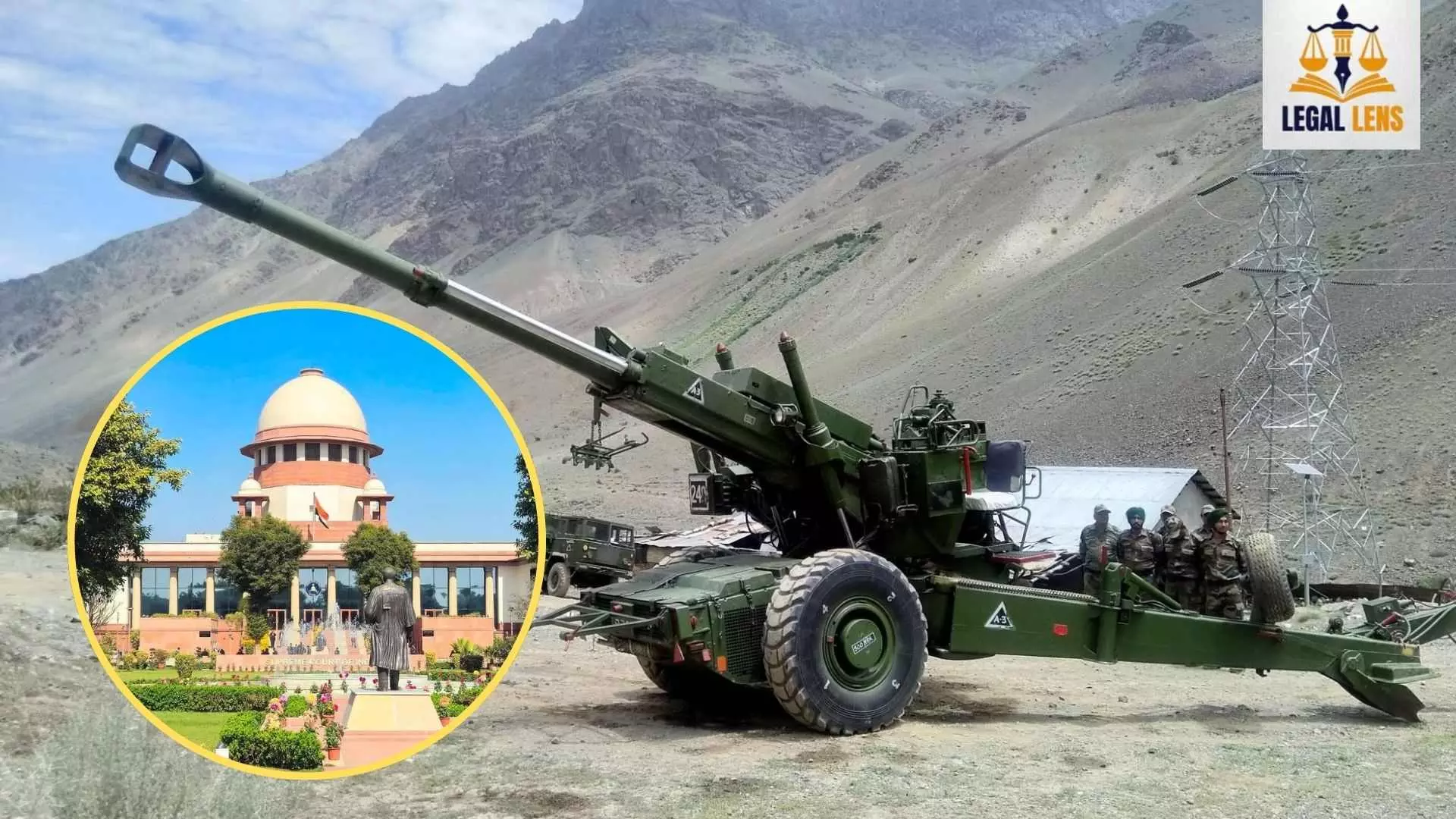
Politically, the Bofors scam moved quickly with devastation of late Prime Minister Rajiv Gandhi's reputation for probity and became a central issue in the 1989 election. Legally, the case moved at the opposite speed.
The Bofors case has finally run out of courtrooms.
On Thursday (August 6), the Supreme Court dismissed the last surviving appeal against the Delhi High Court's 2005 judgment quashing criminal proceedings against the Hinduja brothers and Swedish arms manufacturer AB Bofors. The appellant was advocate Ajay K Agrawal, who had challenged the High Court judgment in 2005 after the CBI itself failed to appeal within the limitation, the legally prescribed time limit within which an appeal or other court proceeding must be filed.
Agrawal appeared virtually before a Bench of Justices J B Pardiwala and K Vinod Chandran and sought four weeks to delete the names of two respondents who had died. The Court declined the adjournment and dismissed the appeal.
Also read: SC dismisses final Bofors case appeal, brings decades-long legal battle to an end
That procedural ending is striking because of what preceded it. A scandal that helped bring down Rajiv Gandhi's government in 1989 has ended without a completed criminal trial conclusively determining who received the alleged Bofors kickbacks.
Nor does the collapse of the prosecution establish that the entire allegation of secret payments was fictitious.
Bofors instead presents a more troubling story: a politically explosive allegation progressively lost its ability to produce a judicial answer.
What the investigation actually found
The controversy began after India signed a contract with AB Bofors on March 24, 1986, for 400 FH-77B howitzers. On April 16, 1987, Swedish Radio reported that Bofors had made secret payments to secure the contract.
The CBI registered its FIR in January 1990.
What followed was an enormous transnational investigation. The Supreme Court's 2003 judgement in Union of India v Prakash P Hinduja records requests for evidence sent to Switzerland, Sweden, Panama, Luxembourg, the Bahamas, Jordan, Liechtenstein and Austria. The first charge-sheet was filed only in 1999, more than 12 years after the original disclosure.
Yet the investigation did uncover evidence of payments to intermediaries.
Also read: How a late-night warning had CBI team rushing from Bern with Bofors docs
The Delhi High Court's judgement of 4 February 2004 recorded material concerning commissions paid by Bofors and money traced to coded accounts associated with Win Chadha, Ottavio Quattrocchi and the Hinduja brothers.
But Justice J D Kapoor drew an important distinction.
The CBI had not produced evidence showing that Rajiv Gandhi, former Defence Secretary S K Bhatnagar or other public servants had received these payments, controlled them or caused the contract to be awarded in exchange for them. The corruption charges involving the public servants were therefore quashed.
At the same time, the Court did not terminate the entire prosecution. Justice Kapoor held that material survived to justify a conspiracy-to-cheat charge against the Hinduja brothers, based on the alleged concealment of agents and commissions, and a forgery charge against Bofors.
The Bofors case had therefore narrowed substantially, but it was still alive.
When documents cannot become evidence
Fourteen months later, what remained of the prosecution collapsed.
Justice R S Sodhi's 31 May 2005 judgement turned largely on a basic criminal-law problem: could the CBI prove the documents on which its surviving case depended?
The prosecution relied heavily on foreign documents, including material contained in what was described as Volume XXII. Many were photocopies. Originals were unavailable. The prosecution could not prove them through their authors or custodians, and the High Court found that the requirements governing authentication of foreign documents had not been satisfied.
That distinction between information and evidence is crucial.
A document may give an investigator an important lead. It may help reconstruct the movement of money. But when criminal liability is to be imposed, the prosecution must establish the document's authenticity and admissibility and, where necessary, prove the truth of what it records.
Also read: Gopichand Hinduja obit: The quiet billionaire who courted power, outlasted scandals
The CBI could not clear that threshold.
Justice Sodhi consequently quashed the remaining proceedings against the Hinduja brothers and discharged them. The forgery charge against Bofors also disappeared.
His judgement sharply criticised an investigation that had continued for 14 years and was said to have cost nearly Rs 250 crore.
The prosecution had suffered a devastating defeat. But one remedy remained obvious.
The CBI could appeal.
It did not.
The appeal that never came
This may be the most consequential institutional failure in the Bofors prosecution.
The limitation period for challenging the May 2005 judgement expired without the CBI approaching the Supreme Court.
Years later, the agency said that its officers had favoured filing a Special Leave Petition but that approval had not been received from the competent authority. Contemporary records subsequently reported in the press showed differences within the legal establishment about whether an appeal should be pursued.
Whatever the reasons, the consequence was irreversible.
It was advocate Ajay K Agrawal, rather than the investigating agency, who challenged Justice Sodhi's judgement in the Supreme Court in 2005.
That fact became enormously important 13 years later.
In 2018, the CBI finally attempted to file its own challenge. On 2 November 2018, the Supreme Court refused to entertain it.
The delay was 4,522 days.
Also read: CBI withdraws plea seeking to further investigate Bofors case
The Court was unconvinced by the explanation. But it noted that the CBI was already a party to Agrawal's pending appeal and could make its submissions there.
Thus, for the next eight years, the final judicial route for challenging the 2005 collapse of the prosecution survived because of an appeal filed by a private advocate, not by the agency that had investigated the case.
The dismissal of Agrawal's appeal on August 6 has now extinguished that last route.
The man India could not bring back
While the prosecution was weakening in Indian courts, another part of it was collapsing overseas.
Ottavio Quattrocchi had left India in 1993. Attempts to extradite him first from Malaysia and later from Argentina failed.
The failures raised questions that went beyond the inherent difficulty of international extradition.
In 2007, an Argentine court rejected the extradition request on technical grounds relating to the documentation supporting Quattrocchi's arrest. Although an appeal was available, India decided not to pursue it.
There had already been difficulties in Malaysia, where courts found problems with India's presentation of the offences for which extradition was sought.
The Argentine proceedings exposed another problem. After the Delhi High Court's 2004 judgement had removed the corruption charges, the legal basis of the earlier warrant had changed. A fresh warrant was obtained in February 2007, but only after Quattrocchi had already been detained in Argentina.
Such failures are sometimes dismissed as technicalities. In transnational criminal investigations, however, the technicalities are the case. Foreign courts act only on properly authenticated documents, legally sustainable warrants and clearly identified extraditable offences.
Quattrocchi was never brought back to India.
Also read: For the Hindujas, the biggest threat comes from within
In 2011, the CBI itself sought permission to withdraw the prosecution against him. The trial court allowed the application, accepting the agency's argument that extradition had repeatedly failed and that further expenditure was unlikely to achieve anything.
Quattrocchi died in 2013.
Investigation after the prosecution
Bofors nevertheless refused to disappear completely.
As recently as February 2025, a Delhi court authorised the CBI to issue a fresh Letter Rogatory to the United States to examine claims made by American private investigator Michael Hershman, who had worked on investigations involving overseas financial transactions in the 1980s. A Letter Rogatory is a formal request from a court in one country seeking evidence or judicial assistance from authorities in another country.
The episode produced an extraordinary paradox.
Almost four decades after the original allegations, investigators were still seeking evidence abroad even though many accused persons had died, others had been discharged, extradition proceedings had failed and the CBI's own appeal against the crucial 2005 judgement had been rejected for extraordinary delay.
The investigation was still searching for evidence after the prosecution had largely ceased to exist.
Political verdict, judicial vacuum
That is what makes Bofors different from an ordinary failed criminal case.
Politically, it moved quickly. The allegations devastated Rajiv Gandhi's reputation for probity and became a central issue in the 1989 election.
Legally, the case moved at the opposite speed.
Also watch: Bofors scam explained- Part 1
The allegations surfaced in 1987. The FIR came in 1990. The first charge-sheet arrived in 1999. The decisive High Court judgements came in 2004 and 2005. Quattrocchi was discharged in 2011. The CBI's belated Supreme Court challenge was rejected in 2018. Fresh foreign evidence was still being sought in 2025. The final appeal disappeared in 2026.
No single explanation accounts for the collapse.
The CBI failed to establish a connection between the traced commission payments and the public servants it accused of corruption. Critical foreign documents could not be converted into admissible evidence. Extradition attempts failed. Governments took consequential decisions about appeals and foreign proceedings. The CBI allowed limitation to expire. Accused persons died. And every passing year transformed problems that might once have been repaired into irreversible ones.
The result should caution against two easy conclusions.
The collapse of the prosecution does not retrospectively prove every allegation made about Bofors. Courts specifically found insufficient evidence to sustain bribery charges against Rajiv Gandhi and other public servants.
Also read: India’s defence exports soar to Rs 38,424 cr; what does India sell and to whom?
But it is equally wrong to say that the judicial record established that nothing improper happened. Courts recorded evidence of commissions and intermediaries, and the 2004 High Court judgement initially considered part of that material sufficient to sustain other criminal charges.
Those charges never reached a full trial.
Thirty-nine years after Swedish Radio first reported the payments, Bofors has therefore acquired legal finality without producing a final judicial determination of its central allegation.
Politics delivered its verdict long ago.
The criminal justice system ran out of time before it could deliver one of its own.